Places
The water mills
54 events
-
1212–1388
The Franks build the first watermills
In 1212 the Franks took Argos and Nafplio. In the period that followed, according to the Ephorate of Antiquities, the first watermills were built at Lerna, driven by the water of the springs. These mills would eventually…
-
1687–1714
The Venetians expand the mills
After the Peloponnese came under Venice in 1687, the Venetians greatly expanded the mills of Lerna. They built connected vaulted granaries, fitted new grinding machinery and surrounded the complex with a stone dam with…
-
1688–1715
A monopoly on the ferry, coffee and eels
Under Venice, transport between Nafplio and the mills was a state concession. The leaseholder had the sole right to carry people and goods by sea between Nafplio and the mills of Kiveri, to bring grain to the mills and…
-
10 July 1694
A Venetian field camp 'at the Mills of Argos'
On 10 July 1694 the Venetian commander-in-chief in the Morea, Marino Michiel, dated a dispatch to the Senate 'from the camp at the Mills of Argos'. Venetian and French writers used that name both for Kefalari near Argos…
-
1698
A water-driven gunpowder workshop
In 1698, according to the Ephorate of Antiquities, the Venetians added a gunpowder workshop to the mills, driven by the water of the springs. How long it worked is not known.
-
1700
Grain by boat, flour back to Nafplio
In his introduction to the Venetian cadastre of Argos, the engineer Francesco Vandeyk describes a castle on a high hill near the sea, called Anasiri, or by many 'Old Argos' or 'Helen's castle'. Below it, he writes, water…
-
1700
1700: ten families and nine working mills
The Venetian land register of Argos, made for governor Francesco Grimani in 1700, lists for "Civeri": 7 local and 3 newly settled families, one Greek church, 12 state houses, 20 ruined houses and 9 working water mills.…
-
1703
'The ruins of Tyrea near the mills'
In his description of the Morea of 1703, Alessandro Pini writes that across the sea from Nafplio one can see 'the ruins of the city of Tyrea towards the mills'. People then called those ruins the Tower of Helen, and the…
-
3 October 1703
Two mills leased for ever to Giannis Glygorakis
Two of the state mills at Kiveri, in a building that housed two more, had been leased for four years to Kyriakos tou Giorgou from Monemvasia for 202 reals; his lease ran out on 21 October 1702. After a public auction…
-
21 November 1703
Timber for the saltpetre works at Kiveri
On 21 November 1703 a Venetian record notes timber being taken to Kiveri 'for the saltpetre works', the raw material for gunpowder. It fits the water-driven gunpowder workshop that, according to the Ephorate of…
-
c. 1704
The whole Venetian fleet takes water at the Mills
A Venetian description of the Kingdom of the Morea from around 1704, attributed to G. E. Alberghetti, notes that in the southernmost part of the plain of Argos lie 'the Mills, where the whole navy takes on water'. The…
-
1710
The mills grind too little for Nafplio
In 1710 the Venetian commander-in-chief Marco Loredan complained that the mills of Kiveri ground only 15 stara of grain a day, about 1,245 kilos. That was not enough for the ship's biscuit (paximadi) of the city and the…
-
21 July 1715 – 4 August 1715
The Ottoman army camps at the mills of Tziveri
On 21 July 1715, the day after Nafplio fell to the Ottomans, Grand Vizier Damat Ali Pasha moved his army away from the stench of the dead to the western end of the gulf, below a hill with the remains of an ancient city.…
-
21 July 1715
The captured Venetian commander Bon is found in the camp
In the same camp the Venetian provveditore generale of the Morea, Alessandro Bon, was found in the tent of a janissary, wounded in the shoulder, and put in chains. On 29 July he, General 'Zaco', Balbi and other officers…
-
1 August 1715
Five Venetian officers are executed at the camp
On 1 August 1715, in the camp at Tziveri, Osman Aga received the rank of pasha of two horsetails, the governorship of Erzurum and the command of Nafplio. The same day five Venetian officers of the Nafplio garrison were…
-
21 September 1715 – 5 October 1715
Back at 'the camp of the Mills'
After conquering the rest of the Morea, the Grand Vizier returned on 21 September 1715 to Tziveri, 'the camp of the Mills', west of the gulf and three leagues from Nafplio. On 23 September the troops received three…
-
22 September 1715
The Sultan's gifts for the conqueror of the Morea
On 22 September 1715, in the camp of the Mills, the Sultan's sword-bearer (silahdar) handed the Grand Vizier an imperial decree, a sable fur and a sabre set with diamonds and turquoises, as a reward for the reconquest of…
-
1804–1806
Gell: the lake has become a mill dam
The English topographer William Gell, who travelled the Morea in 1804–1806, wrote that the ancient Alcyonian lake 'is now become a species of mill dam', turning mills 'which give the name of Myli to the spot'. 'There are…
-
1806
The gardens of the Kapudan Pasha and the mill dam
South of the mills Leake saw a stone dam 250 yards long along the beach, with two shorter cross walls, built to hold water for the mills. Next to it lay gardens full of orange and other fruit trees, which 'formerly…
-
1806
Leake: the 'Afendiki Myli' are government mills of Nafplio
The British officer and topographer William Martin Leake visited the mills in 1806. He called them the Afendiki Myli, 'mills of Anapli [Nafplio], to which town they belong', and explained the Greek term as 'government…
-
1806
A ship from Smyrna unloads iron at the wharf
Leake found the southern mills close to the shore and to 'a small wharf where vessels load or disembark their cargoes'. A ship from Smyrna lay at anchor, unloading iron, and a row of storehouses stretched from the mills…
-
1810
Barbié du Bocage notes six mills
In 1810 the French geographer Jean-Denis Barbié du Bocage recorded six mills at Lerna. It is the same number that Benjamin Brue had seen turning on six channels in 1715.
-
c. 1815
Ottoman frigates anchor off 'the Mills'
Pouqueville noted that the frigates of the Kapudan Pasha, the Ottoman admiral, had to anchor off the beach of Lerna, 'commonly called the Mills', and that ships calling there took on fresh water. A century after the…
-
1816
'The mills of Nauplia', two hours from Nafplio and from Argos
In his critical notes on Chateaubriand's travels, printed in Padua in 1816, the Argos physician Avramiotti wrote that 'everyone knows' Lerna is the marsh a hundred paces from 'the mills of Nauplia', at the foot of Mount…
-
1822–1826
A German volunteer describes fortified Myli
The philhellene Gottfried Müller from Bremen wrote that Myli had several long houses along the sea and a former Turkish garden with a high wall, which the Greeks had turned into a stronghold. The spring drove a mill with…
-
July 1822
Kolokotronis makes the mills his headquarters
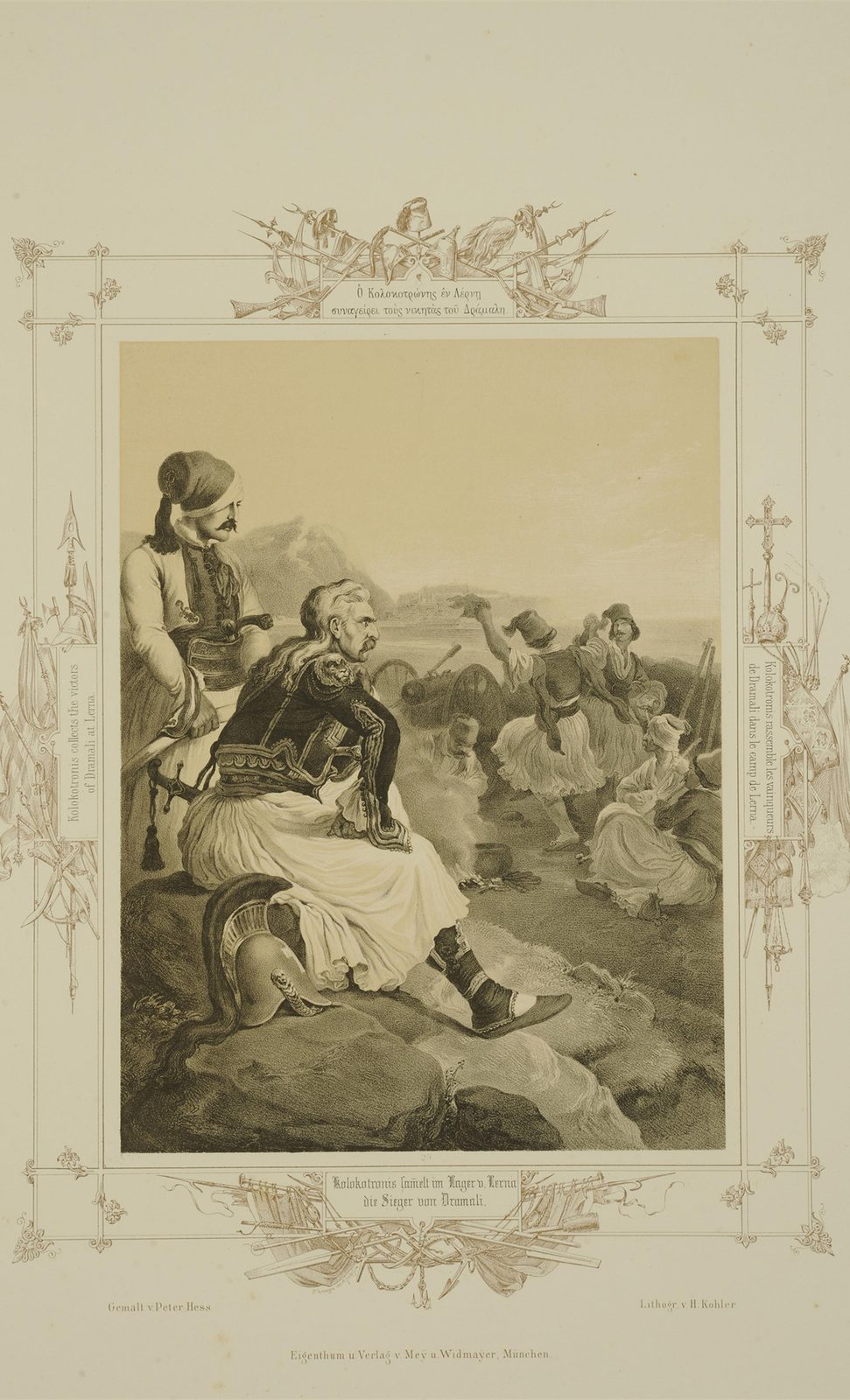
In the summer of 1822, as Dramali's army stood in the plain of Argos, Theodoros Kolokotronis made the mills of Lerna his headquarters. According to Samuel Howe he gathered up to 6,000 armed peasants there before the…
-
July 1822
The Greek senate takes refuge at Myli
When Dramali's Ottoman army poured into the Argolid in July 1822, the Greek senate fled to Myli. Dimitrios Ypsilantis fell back there with about 600 men, taking position between the sea and the foot of the steep…
-
March 1824 – June 1824
Myloi, seat of the Greek government
For more than two months in the spring of 1824, the Executive of Georgios Kountouriotis governed from Myloi and the ships off its shore. Proclamations and letters of the time are signed 'from Myloi of Nafplio'; the…
-
30 March 1824
The government arrives by sea at the mills
During the civil war of 1824, two brigs carrying the members of the government dropped anchor in the roadstead of the mills of Lerna. Nafplio was in the hands of their opponents, so the mills became their foothold on the…
-
31 March 1824
Admiral Miaoulis fires on the mills
Panos Kolokotronis, son of the general and on the opposing side in the civil war, had placed two small cannon at the mills. Admiral Andreas Miaoulis fired on them from the sea; the soldiers fled to Argos and government…
-
25 April 1824
Colonel Stanhope comes ashore at the mills
The British philhellene Colonel Leicester Stanhope landed at the mills and went on to Kiveri, where he addressed the Greek senate.
-
June 1825
Admiral de Rigny warns Makriyannis
While the defences were going up, the French admiral Henri de Rigny visited the mills and told Makriyannis that his men were too few and the position too weak to stand against Ibrahim's cannon. Makriyannis answered that…
-
June 1825
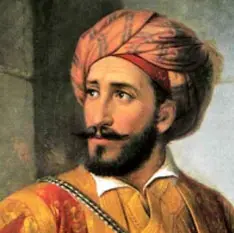
Makriyannis fortifies the mills
Makriyannis and the war minister Andreas Metaxas chose to stop Ibrahim at Myloi, then a hamlet of about thirty houses. Makriyannis built ramparts, cut loopholes in the garden wall and strengthened the old stone tower.…
-
24 June 1825
Women and children taken aboard a French ship
On the evening before the battle, Admiral de Rigny, at anchor in the roadstead of the mills, took the women and children of the place on board his ship. After the fighting he sent rum to the Greek defenders.
-
24 June 1825
Food and ammunition stored at the mills
As Ibrahim Pasha marched on Nafplio, a corps of 250 men was sent at once to seize the position of the mills, where large stores of food and ammunition had been laid up. A newspaper of the time wrote that this was exactly…
-
25 June 1825
The Battle of Myloi
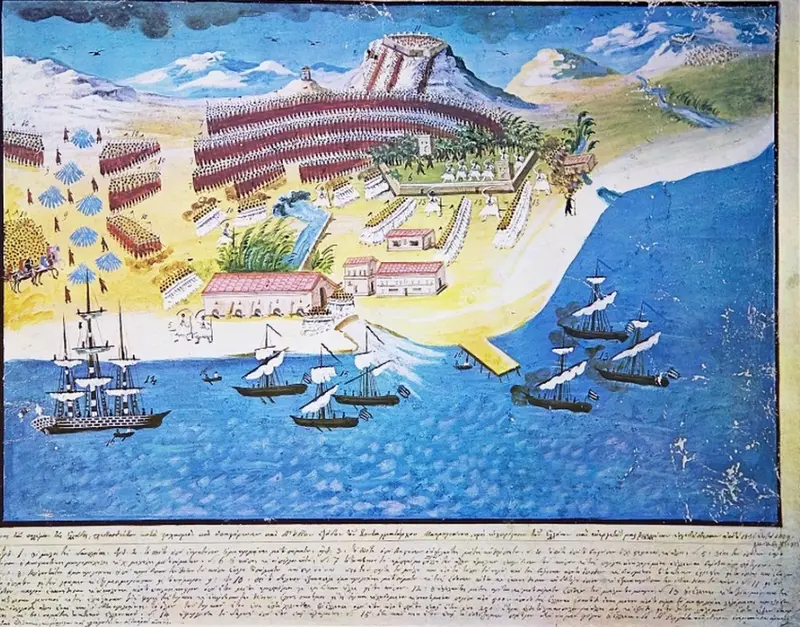
Ibrahim Pasha's army attacked the fortified mills in the late afternoon, in three columns along the Argos road, over the hill and from the Kiveri side. A few hundred Greeks under Dimitrios Ypsilantis, Makriyannis and…
-
25 June 1825
A French eyewitness describes the battle lines
According to Jourdain, the French general Roche met Ypsilantis and Mavromichalis in the mills that morning. He counted 227 Greeks: 100 to the right of the mills, 100 on the slope to the left and the rest behind the…
-
25 June 1825
Makriyannis wounded, few Greek losses
Makriyannis was wounded in the fighting but kept leading his men without letting them see it. The Greeks lost only a handful of men, among them a philhellene, while more than a hundred of Ibrahim's soldiers were killed…
-
25 June 1825
Two Americans among the defenders
Samuel Gridley Howe described the position as some mills on the seashore, surrounded by a wall, with a garden and an outer wall. A boat from Nafplio brought about twenty volunteers, among them three Swiss and two…
-
7 July 1825
Horsemen sent to burn Kiveri are driven off
Twelve days after the battle the enemy sent sixty horsemen to set fire to Kiveri. Greeks who came out from the mills drove them away.
-
18 February 1826
Barber Ali's watermill is sold
Under the law on the sale of former Ottoman property, decree no. 16,817 sold the watermill of "Barber Ali" by the Kroi spring, with about 40 stremmata of land, to six men from Nafplio for 1,441 thalers. In 1832 they…
-
9 October 1826
Troops hold the fortifications of the mills
More than a year after the battle the mills were still a military post. A newspaper reported that the fortifications of the mills were occupied by troops under General Giannakis Rangos and Mitros Deligeorgis.
-
1827
Generals agree to cut the garrison at the mills
Because promised food supplies did not arrive, the generals Stratos, Grivas and Veris decided to reduce the number of soldiers 'at the Mills and in Nafplio'. In the same months a man was held at Myloi by soldiers because…
-
14 October 1827
'No water for the mills': a captain's threat
In the civil strife around Nafplio in 1827, the mills of Myloi ground the grain for the fortress. Konstantis Veris wrote to Kolettis that he was asked to allow 10,000 oka of grain to be milled for the fortress, but that…
-
30 May 1831
American sailors find 'a little collection of huts'
Officers of the American frigate USS Constellation visited Lerna. Enoch Wines wrote that the water from the spring was led away in a canal and turned a few mills, which gave the name Mylos to a little group of huts built…
-
1836–1839
Makriyannis has the battle painted
In the later 1830s Makriyannis asked the folk painter Panagiotis Zografos and his sons to paint the battles of the Revolution as he remembered them. One of the series shows the Battle of the Mills of Nafplio, with the…
-
1865
A miller from Kynouria leases the mill
In 1865 the heirs of the Nafplio buyers leased Barber Ali's mill to Georgios V. Vasilopoulos from Mesorrachi in Kynouria. His family would keep the mill for almost a century.
-
13 February 1874
The state leases the fishery up to the 'Mill of Barberaga'
A state tender for the fisheries of the Argolid described the fishery of the river of Argos and the Almyros as running from Litharakia to the Almyros 'at the place of the Mill of Barberaga'. Eels were caught in these…
-
1875
Vasilopoulos buys Barber Ali's mill
In 1875 Georgios Vasilopoulos bought the mill he had been renting for about 7,000 drachmas, to be paid off over ten years.
-
1883
Baedeker: the 'Skala' with the most important mill
The German Baedeker guide of 1883 described Myli as a village stretching along the road at the foot of Pontinos. Below the road, near the chapel of Agios Ioannis, a mighty spring broke out. Part of the village, the…
-
April 1907
First stone of the ice factory Amymone
In early April 1907 the first stone of the first ice factory of Myloi was laid behind Barber Ali's watermill. The founders were the cousins Ioannis Vasilopoulos, a distiller in Tripoli, and Konstantinos G. Vasilopoulos,…
-
13 July 1941
Aerial photo: the northern water mill on the shore
North of the village the photographs of 13 July 1941 show a mill building of about 21 by 7 metres on the shore, fed by a walled, dead-straight mill race from the northern spring at the foot of Pontinos, with an outlet…
-
1945?
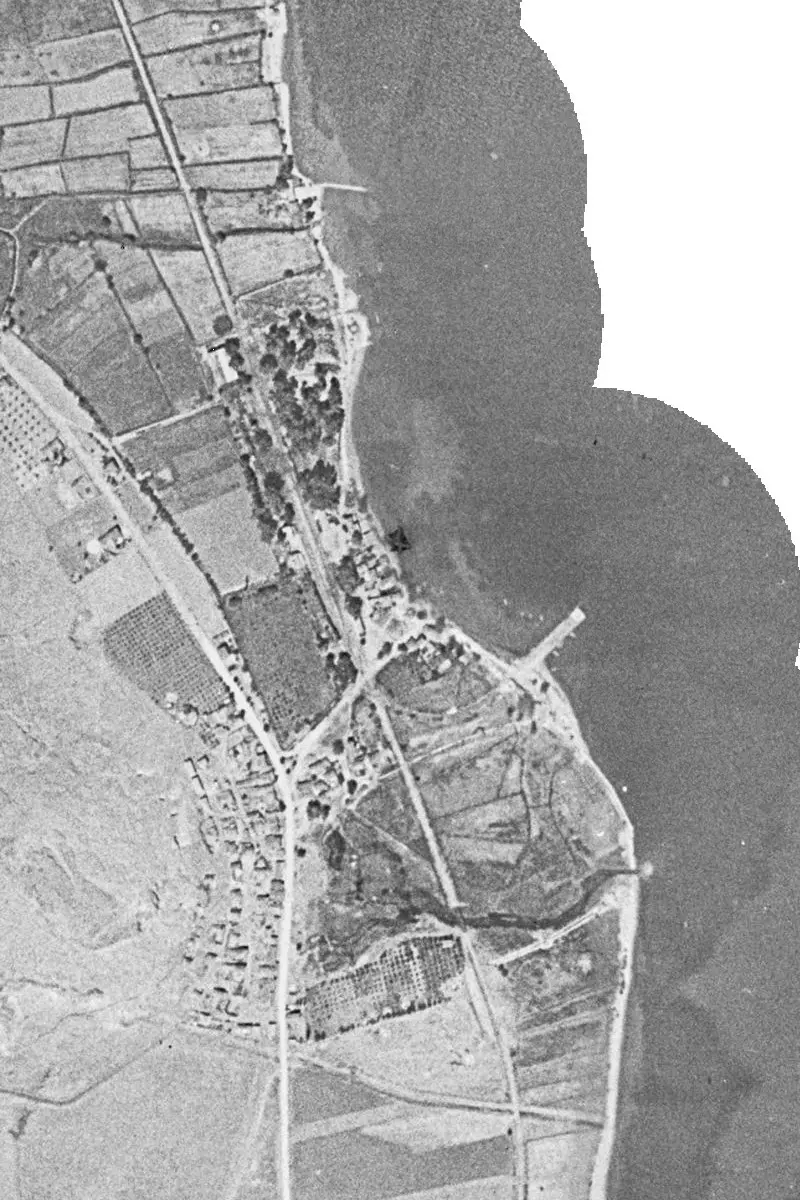
Postwar orthophoto: the pier and a stone coastal dam
A historic orthophoto of the Greek cadastre, probably from 1945, shows the railway pier at about 70 metres long, a smaller jetty to the north, the railway and the orchards. From the root of the pier a straight coastal…
-
1957
Barber Ali's mill is still at work
In 1957 the local historian A. P. Tsakopoulos wrote that of the Turkish watermills only the one of "Barber Ali" by the Kroi spring, north of Myloi, survived and was still working. It still carried the name of its Ottoman…
People
- Marino Michiel Venetian commander-in-chief (provveditore generale) of the Morea
- Francesco Vandeyk Venetian public engineer and mapmaker
- Francesco Grimani Venetian commander-in-chief (provveditore generale) of the Morea
- Alessandro Pini Author of a Venetian description of the Peloponnese (1703)
- Marco Loredan Venetian commander-in-chief (provveditore generale) of the Morea
- Benjamin Brue Interpreter of the King of France at the Ottoman court, eyewitness of 1715
- Silahdar Damat Ali Pasha Ottoman grand vizier (1713–1716), conqueror of the Morea in 1715
- Alessandro Bon Venetian commander-in-chief (provveditore generale) of the Morea in 1715
- William Gell English classical topographer and traveller
- William Martin Leake British officer, topographer and traveller
- Jean-Denis Barbié du Bocage French geographer and mapmaker of ancient Greece
- François Pouqueville French consul, traveller and historian
- G. D. Avramiotti Physician in Argos and critic of Chateaubriand
- Gottfried Müller Philhellene from Bremen and author
- Theodoros Kolokotronis Commander-in-chief of the Revolution in the Peloponnese
- Dimitrios Ypsilantis Commander in the Greek Revolution
- Georgios Kountouriotis Shipowner from Hydra, president of the Executive
- Ioannis Kolettis Politician, member of the Executive and later prime minister
- Andreas Miaoulis Admiral of the Greek fleet
- Leicester Stanhope British colonel and philhellene
- Ioannis Makriyannis General of the Greek Revolution, politician and memoir writer
- Henri de Rigny French admiral
- Konstantinos Mavromichalis Maniot commander in the Greek Revolution
- Ibrahim Pasha Commander of the Egyptian army in the Peloponnese
- J.-P.-P. Jourdain French officer in Greek service and author
- Samuel Gridley Howe American doctor, philhellene and author
- Jonathan Peckham Miller American philhellene from Vermont
- Konstantis Veris Captain from Roumeli in the Revolution
- Enoch Cobb Wines American navy teacher and travel writer
- Panagiotis Zografos Folk painter from Sparta
- Georgios V. Vasilopoulos Owner of Barber Ali's watermill
- Konstantinos G. Vasilopoulos Co-founder of the ice factory Amymone
- A. P. Tsakopoulos Local historian (1957)
Pictures
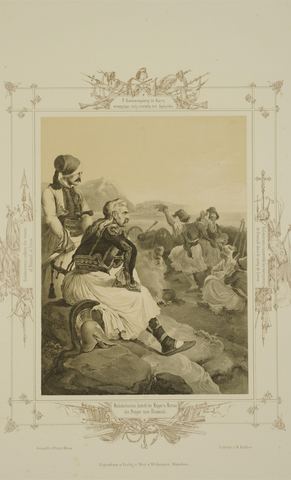
Lithograph "Kolokotronis gathers the victors over Dramalis at Lerna" (1822 camp scene) with a four-language caption; idealised landscape. Peter von Hess (painter), H. Kohler (lithographer), Mey & Widmayer, Munich; National Historical Museum, Athens
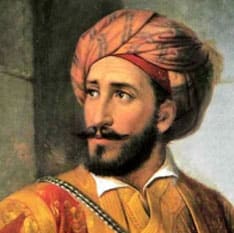
Portrait of Ioannis Makriyannis. Visit Myloi collection
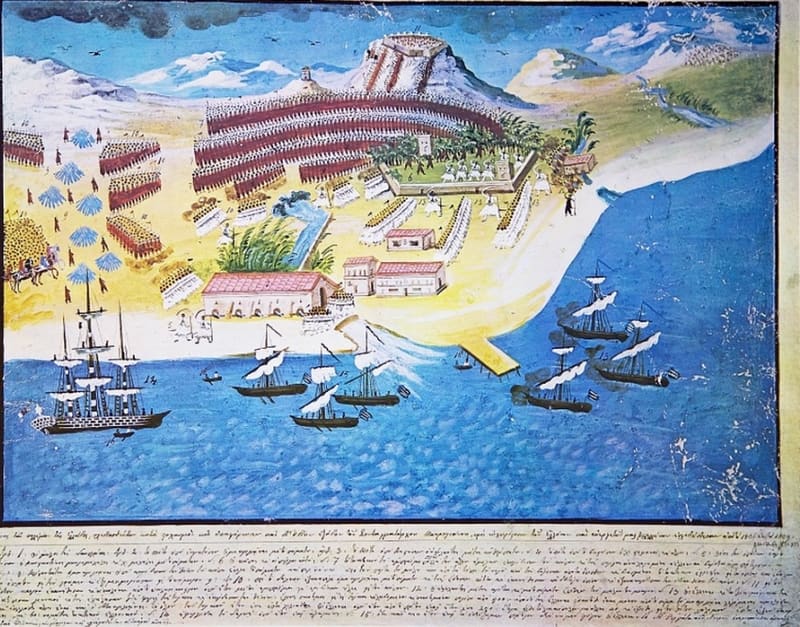
Panagiotis Zografos for General Makriyannis (c. 1836–39), plate 14: the Battle of the Mills (Myloi) near Nafplio, June 1825. Public domain
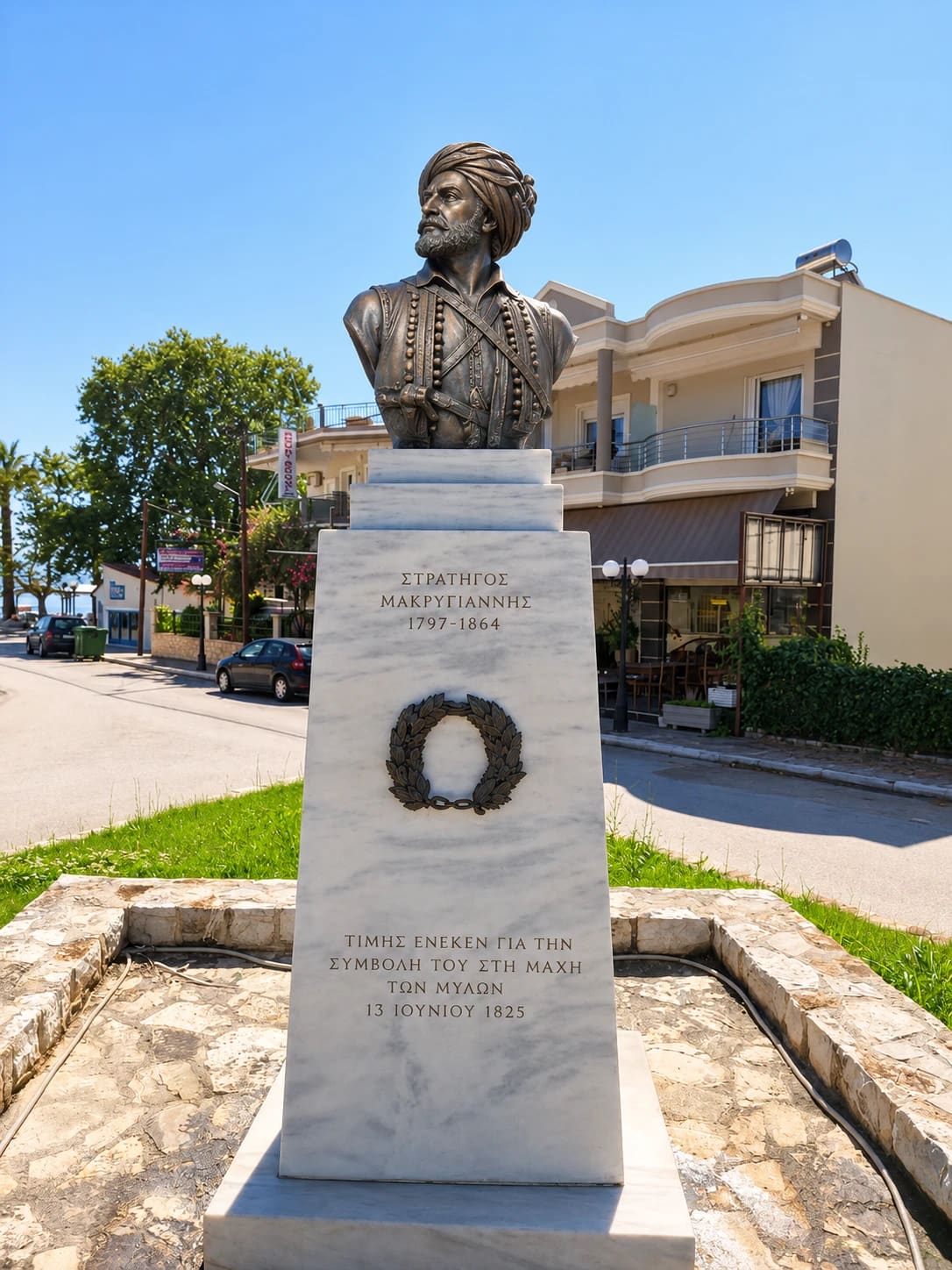
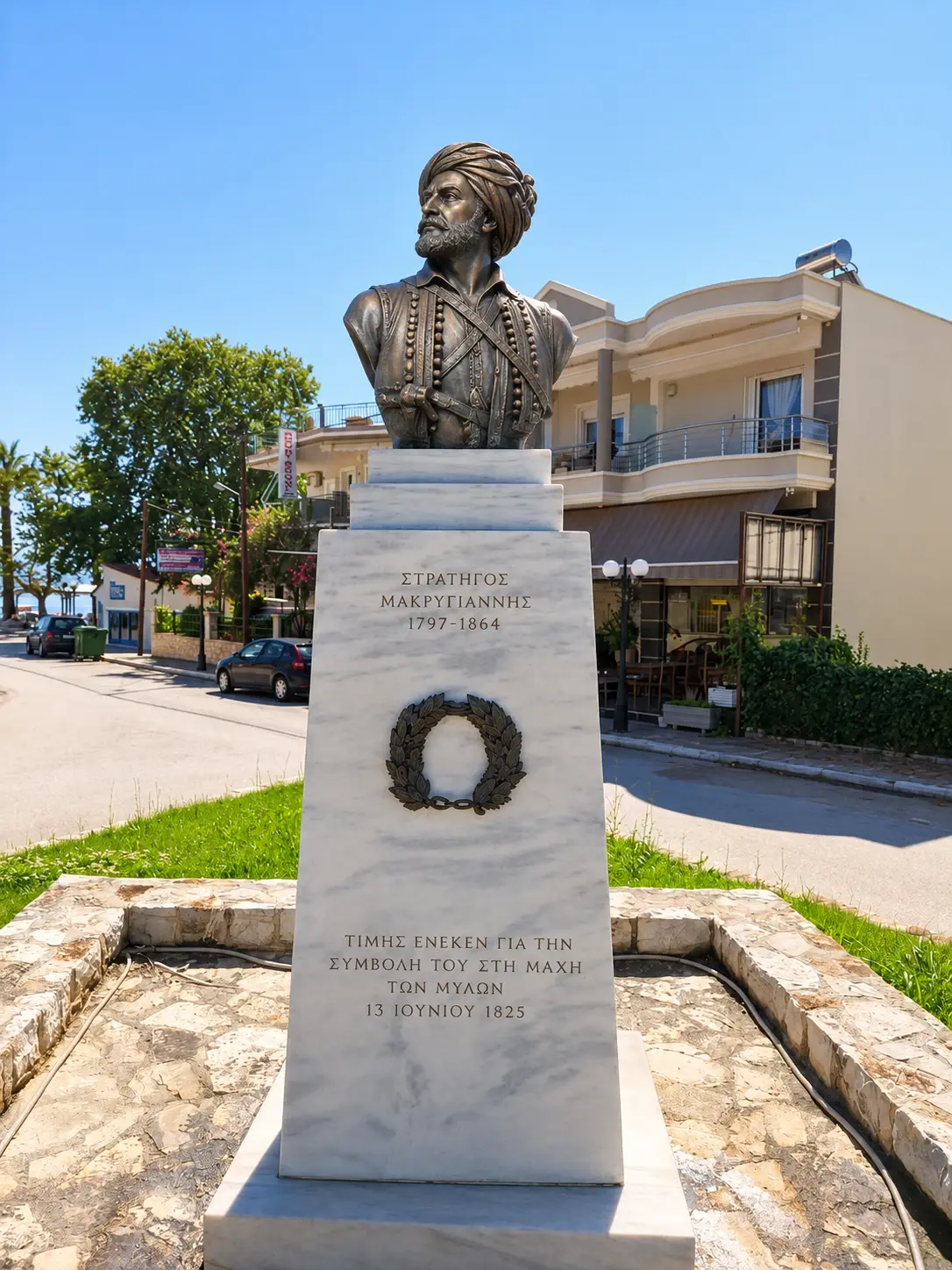
The bronze bust of General Makriyannis (1797–1864) in Myloi, on a marble pedestal “in honour of his contribution to the Battle of the Mills, 13 June 1825”. Visit Myloi
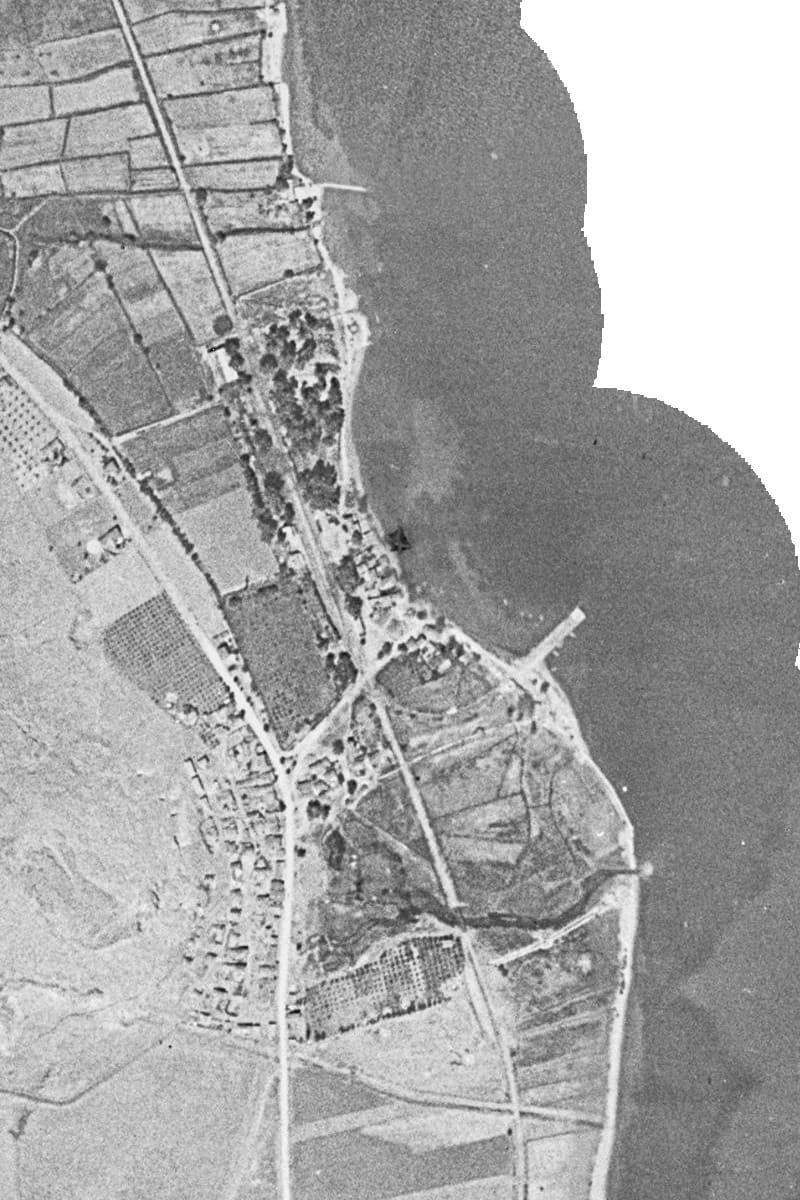
Historic orthophoto (1945 or 1960): the pier, the smaller jetty to the north, the railway and the orchards. Hellenic Cadastre, historic orthophoto layer 1945/60