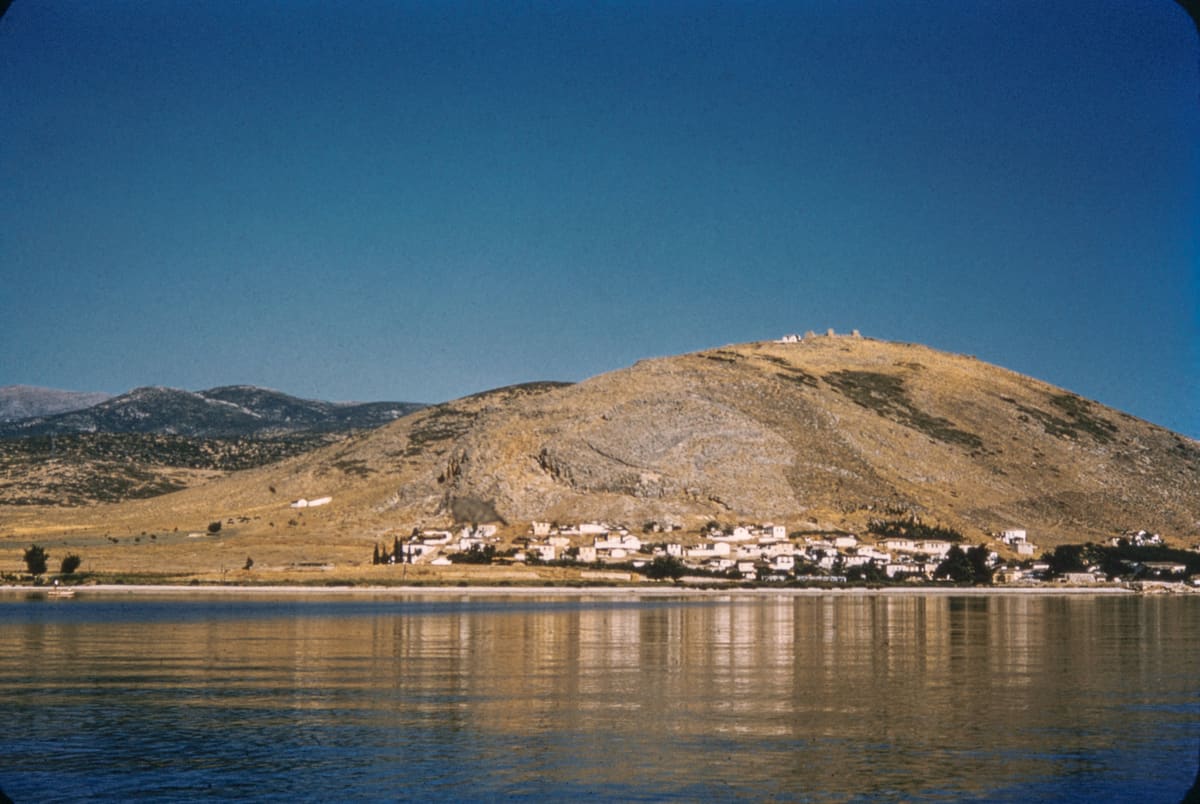
History of Myloi
A timeline from the Neolithic to the twentieth century.

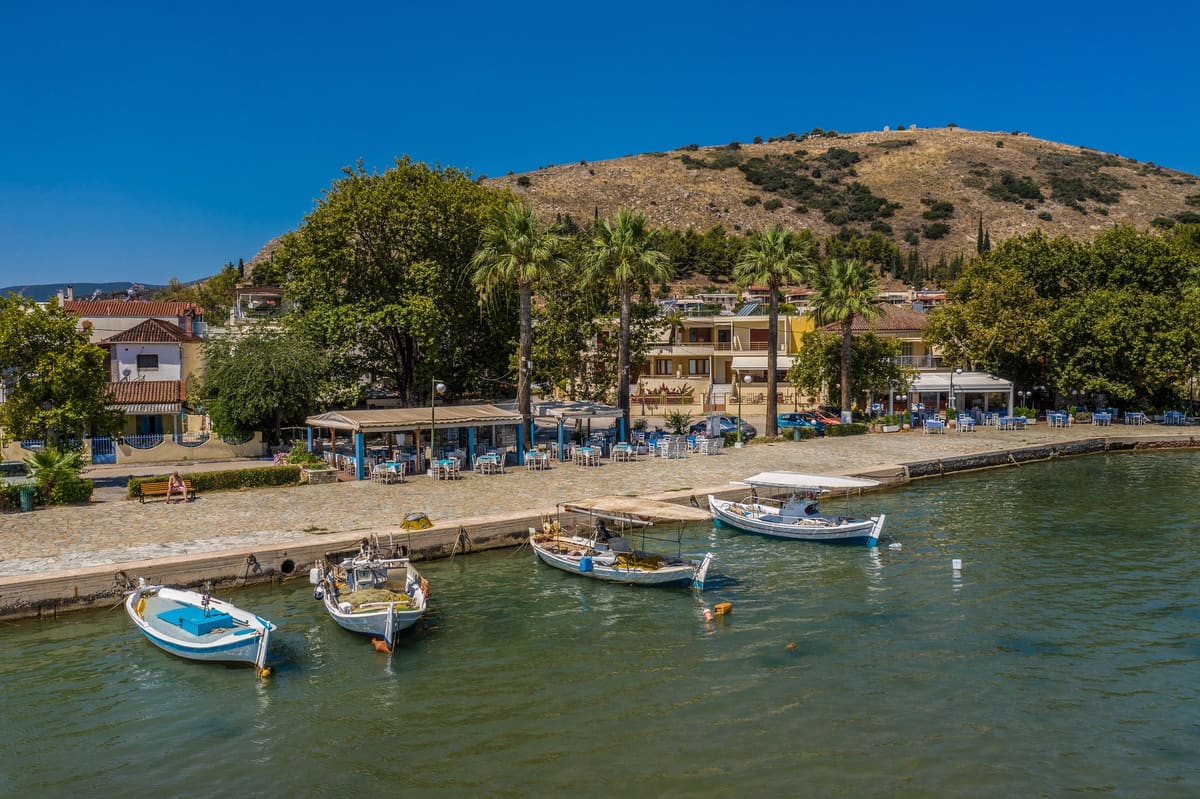
Photo: Fred Kok
History & Mythology
Six thousand years of settlement, a monster from Greek myth, a Frankish castle, a battle of the Greek Revolution and a railway junction: all within walking distance of the harbour.
Myloi takes its name from the water mills that once turned on the springs of Lerna. Those same springs drew people here in the Neolithic, gave the ancient Greeks their story of the Hydra, and made the village a strategic point for every power that held the Argolid.
On this site we keep two kinds of story apart. History is what archaeology and written sources can show. Legend is what people told about this place. Both belong to Myloi, but you can always see which is which.
A timeline from the Neolithic to the twentieth century.
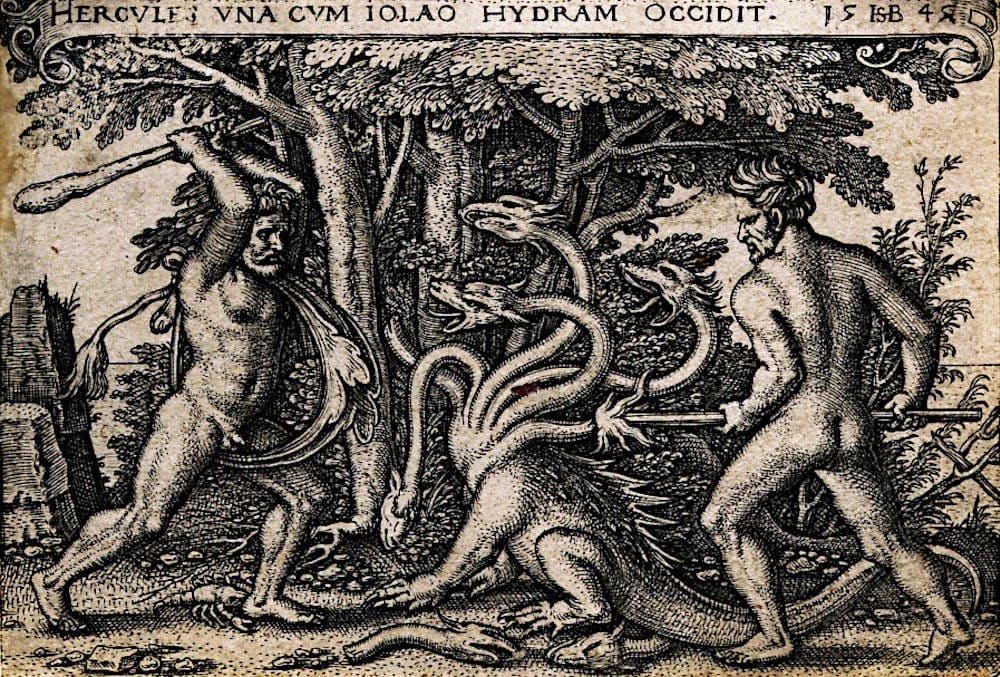
The Hydra, Heracles, Amymone and the mysteries of Lerna.
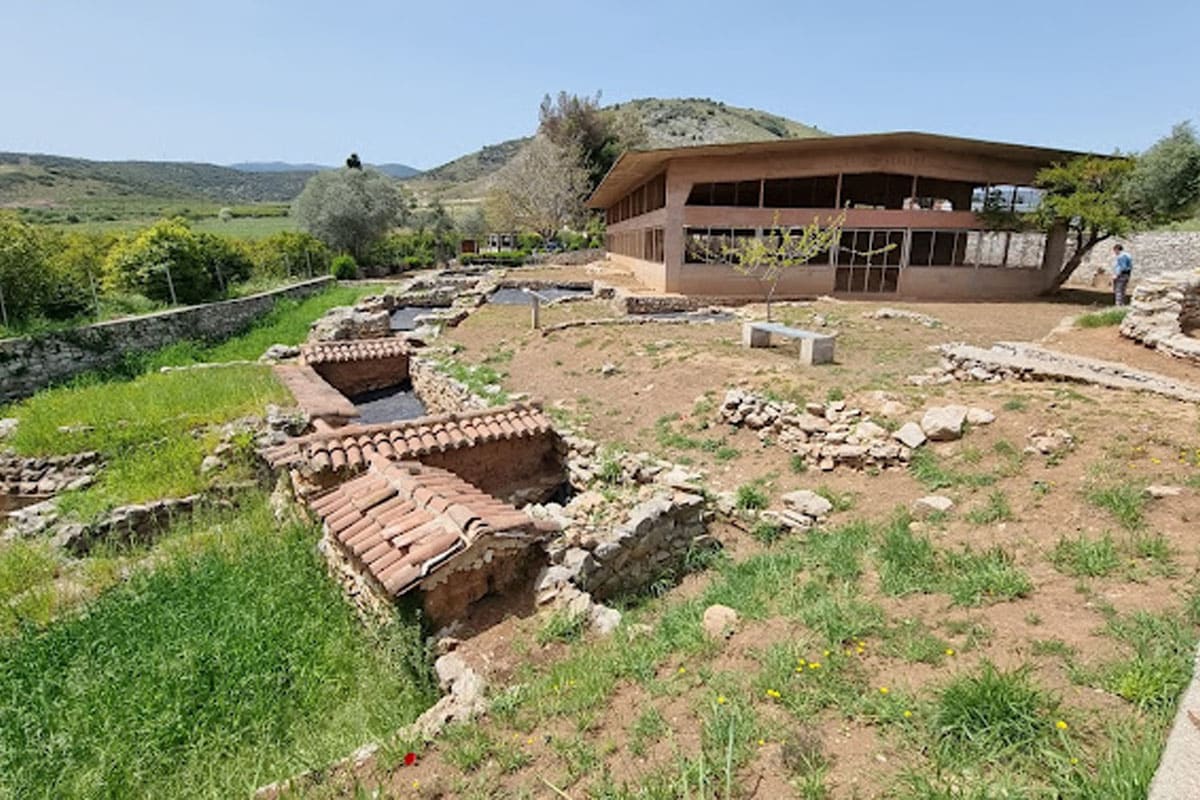
The prehistoric mound and the House of the Tiles.
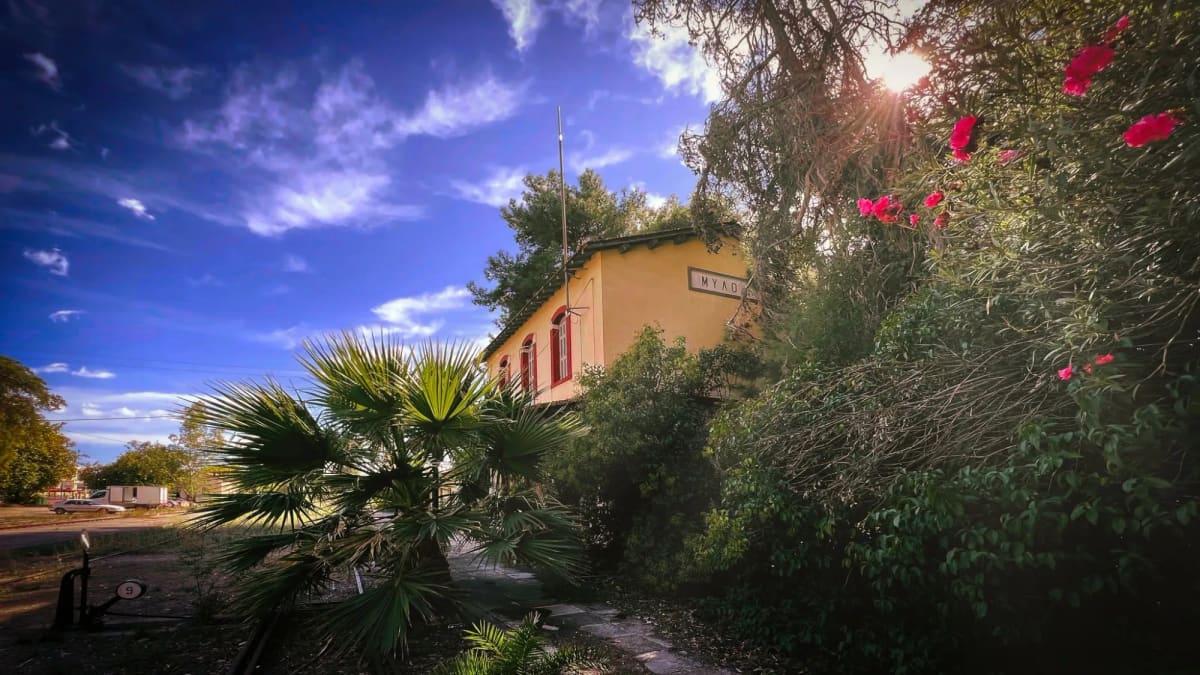
The railway junction
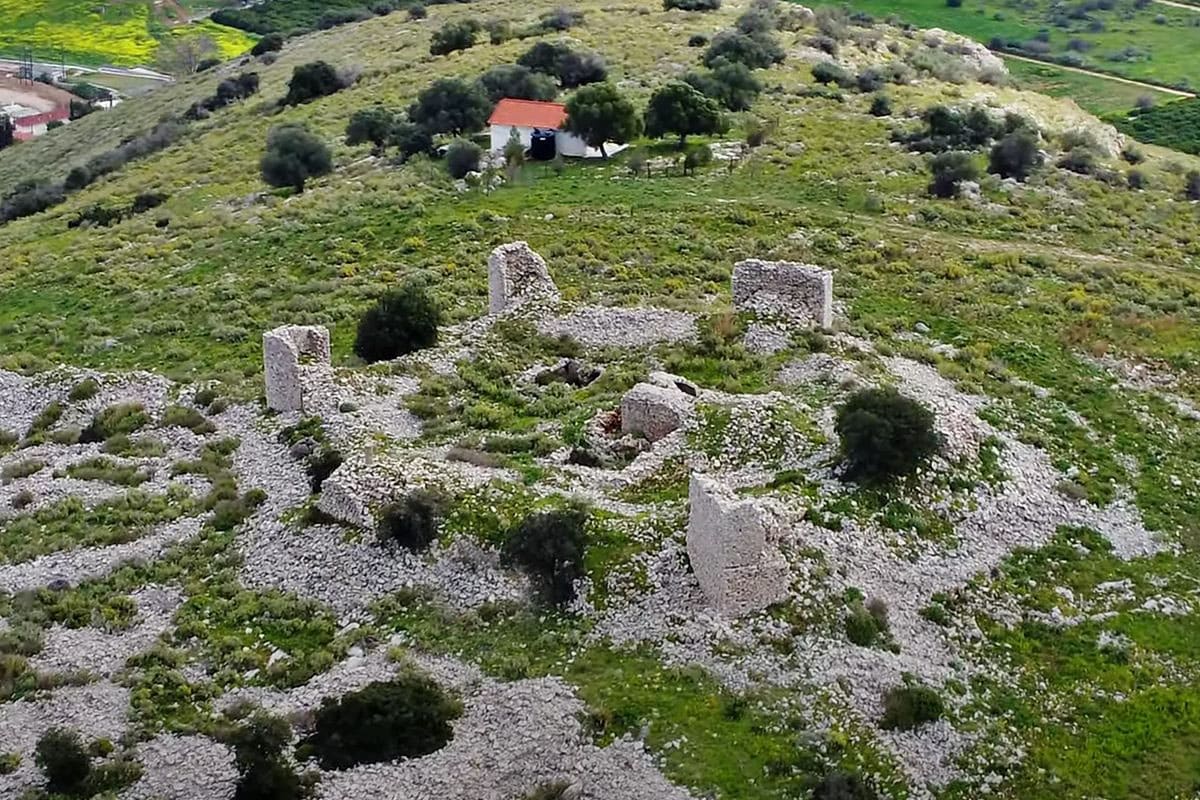
Again and again, people have looked at the same hill above Myloi and tried to understand what earlier generations left behind there.
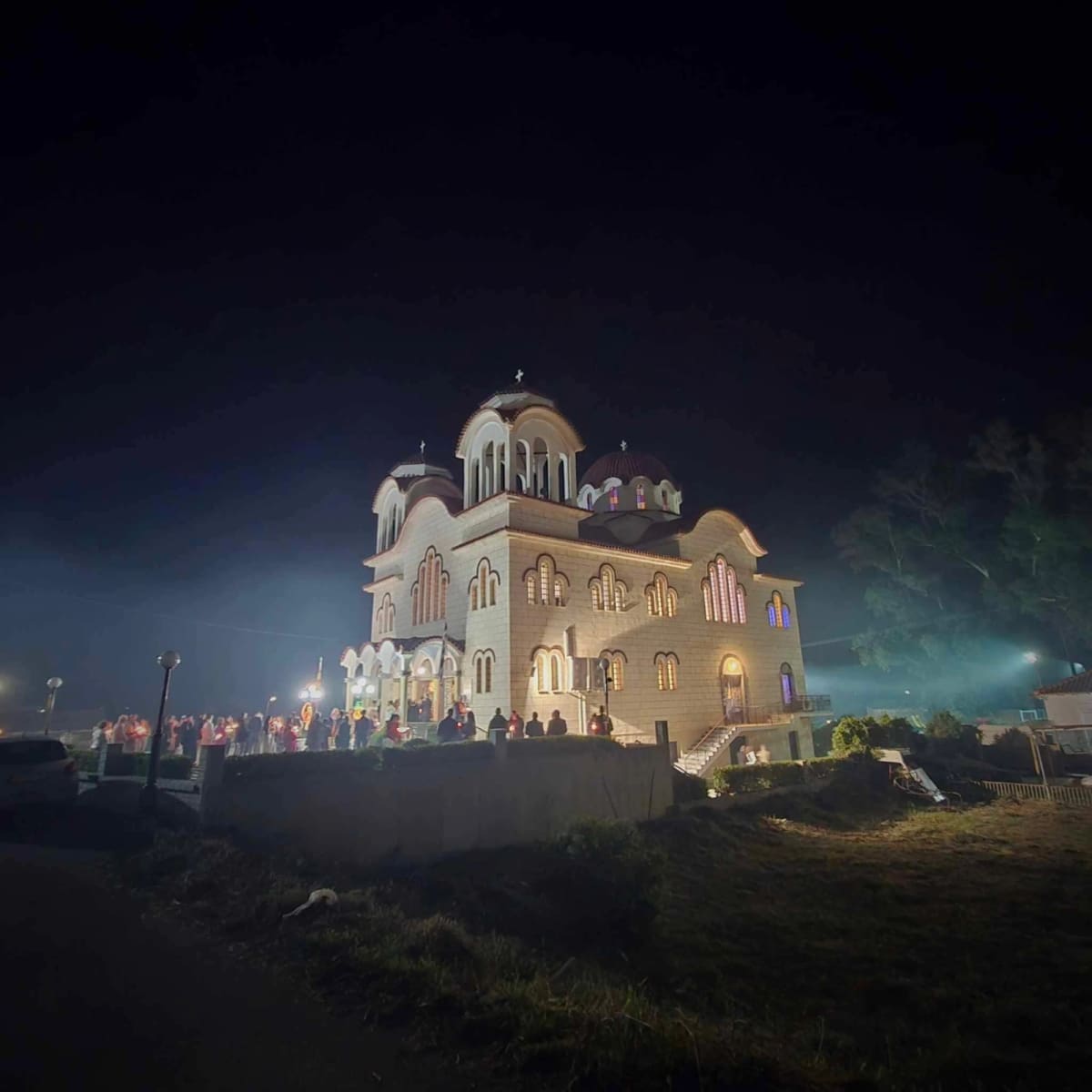
Faith and tradition
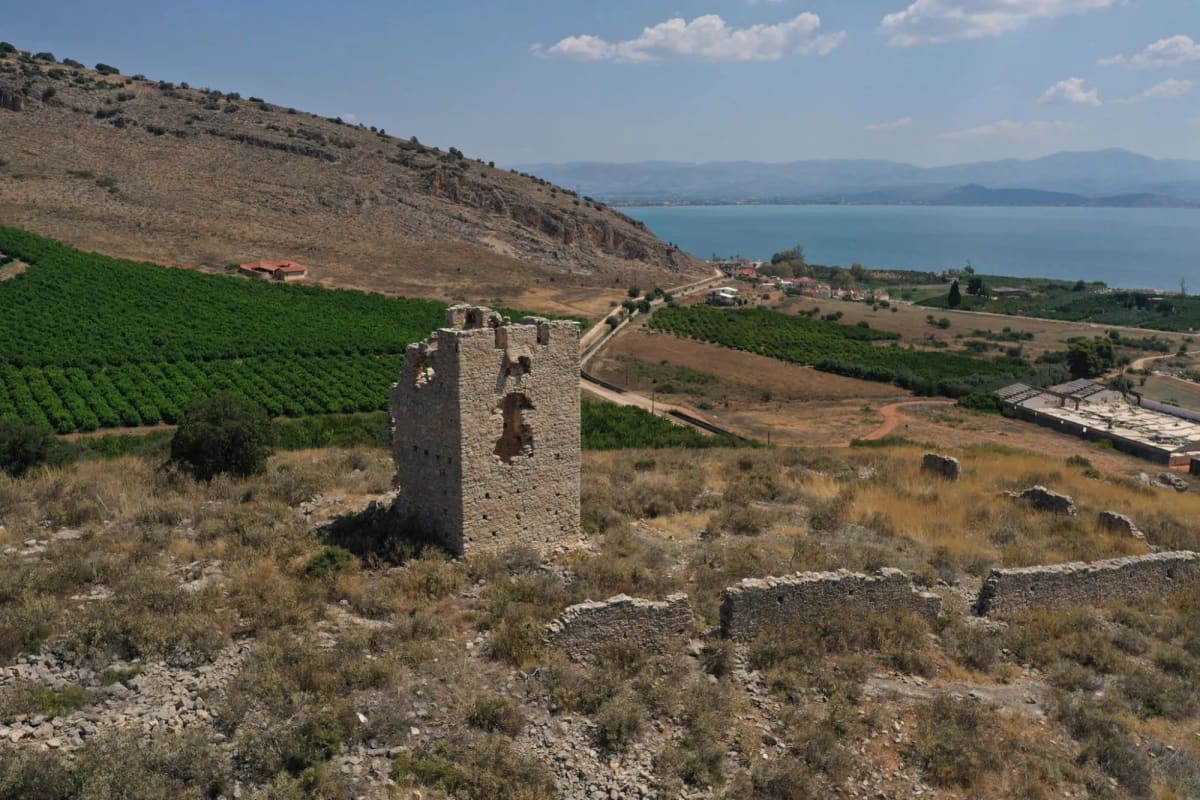
The legend
See the walking route
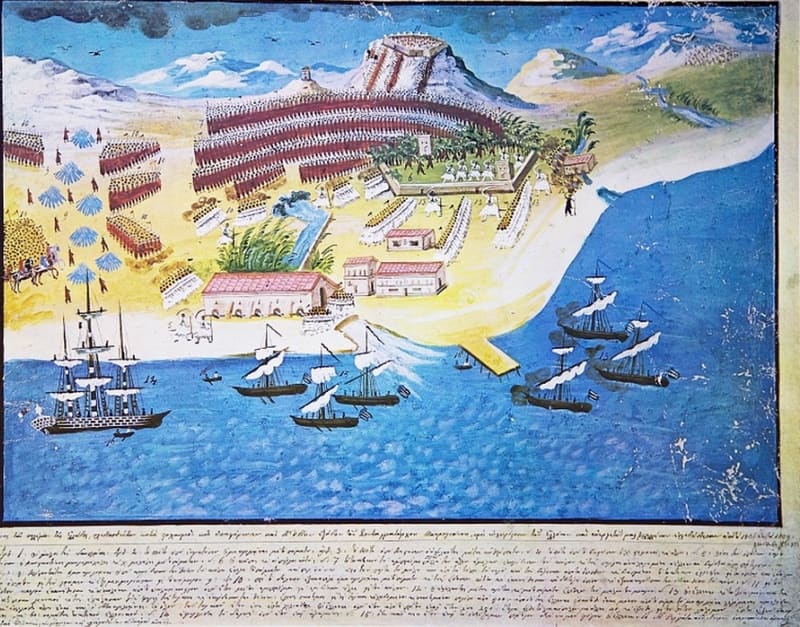
On 13 June 1825 (Old Style) a few hundred Greeks under Makriyannis, Ypsilantis and Mavromichalis held the mills against Ibrahim Pasha's army: one of the first Greek successes against the Egyptian forces.
Read more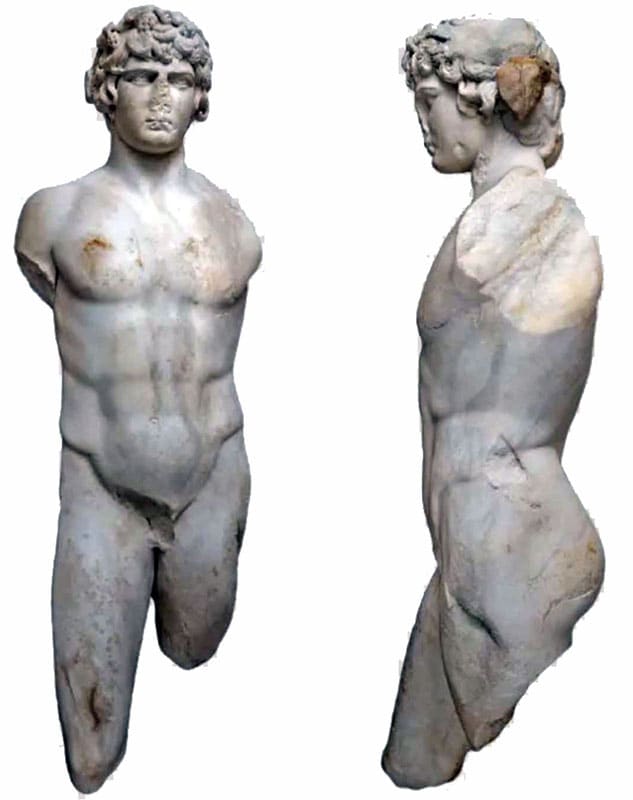
A marble statue of Antinoos, the deified favourite of Emperor Hadrian, was found near the village and is now in the care of the Archaeological Museum of Argos.
Read moreAmerican archaeologist John L. Caskey excavated Lerna for the American School of Classical Studies at Athens and turned a name from myth into one of the key sites of the Greek Bronze Age.
Read more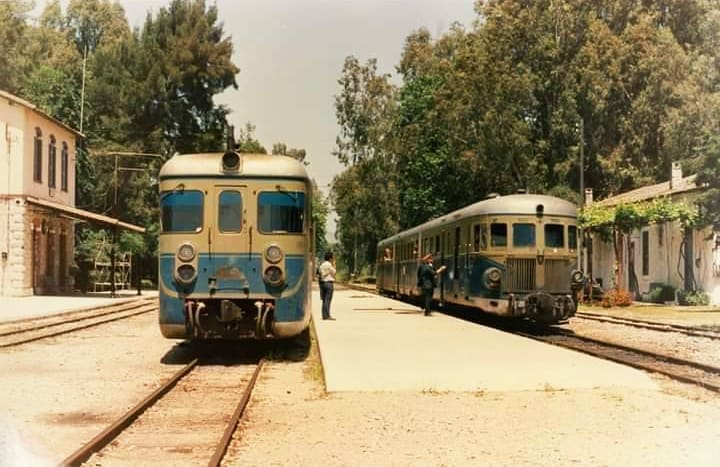
The railway reached Myloi on 4 August 1886, and from 1892 the line climbed inland to Tripoli and Kalamata. Five buildings of the junction survive: two stations, a goods warehouse, a café and a stone locomotive shed.
Read moreDuring the Allied evacuation of Greece, General Henry Maitland Wilson and General Bernard Freyberg both had their headquarters at Myloi on 26 April 1941.
Read more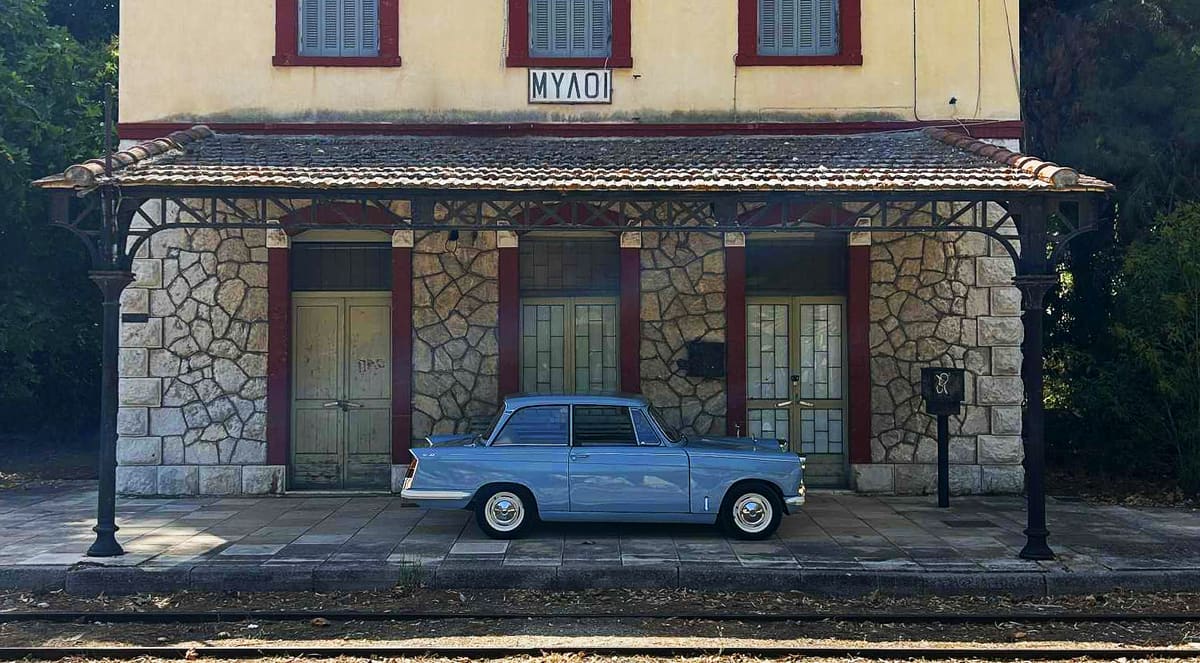
Kostantinos Doris and his 1960s Triumph Herald, a familiar sight at village weddings.
Read moreSettlement mound inhabited from the Neolithic to the Mycenaean period; best known for the Early Bronze Age House of the Tiles.
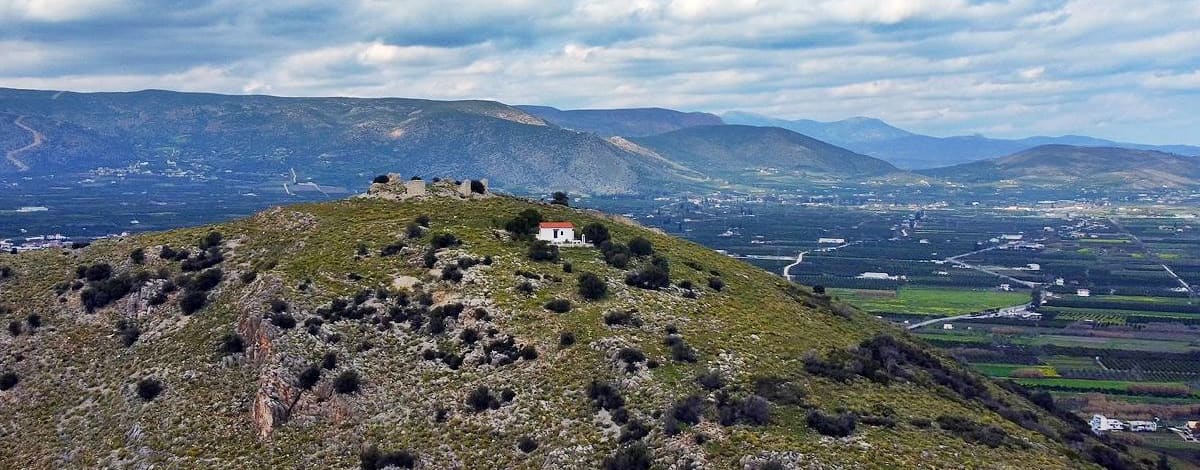
Directions (opens in a new tab)Ruins of a medieval castle on the hill above the village, first mentioned in 1347. The white chapel of Profitis Ilias now stands on the summit.
Directions (opens in a new tab)A medieval tower almost ten metres high in a walled court on a ridge south of the village, known locally as the Tower of the Princess.
Directions (opens in a new tab)The junction of the Peloponnese railway from 1886: two stations, a goods warehouse, a café and a stone locomotive shed.
Directions (opens in a new tab)The large stone shed with two long halls where the trains to Tripoli and Kalamata were kept; the most remarkable building of the station.
Directions (opens in a new tab)Small white chapel inside the castle on Pontinos hill; feast day 20 July.
Directions (opens in a new tab)Village church; feast day of the Holy Apostles on 30 June.
Directions (opens in a new tab)Bust of General Yannis Makriyannis (1797–1864), hero of the Battle of Myloi and author of the famous Memoirs.
Directions (opens in a new tab)Church on the southern edge of the village, near the springs of Lerna; feast day 26 October.
Directions (opens in a new tab)