
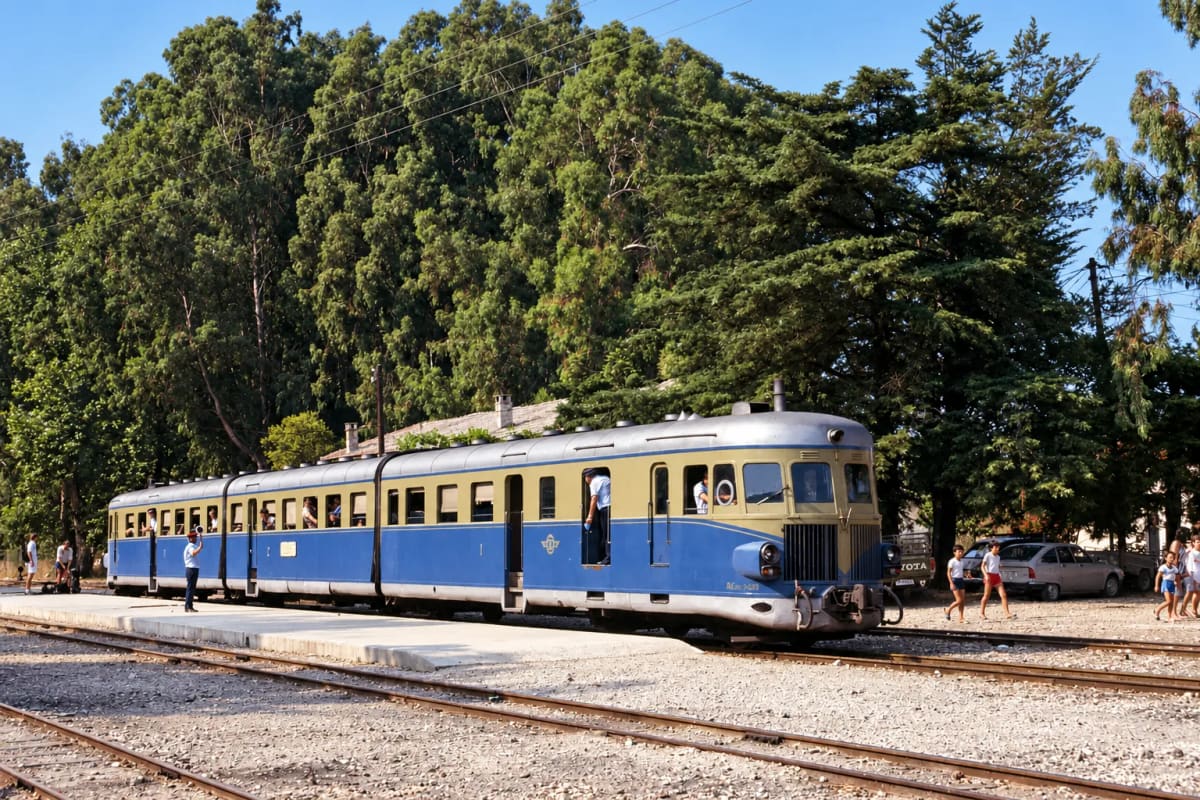
Photo: Visit Myloi collection
The railway junction
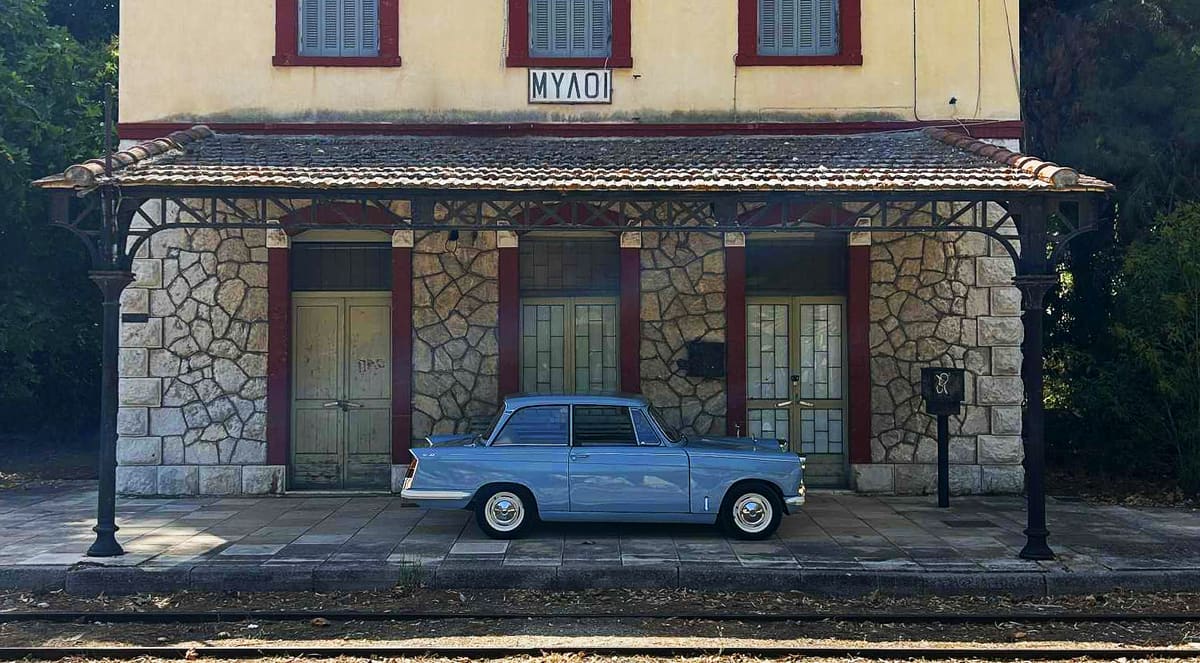
Myloi railway station
For more than a century, Myloi was where the trains from Corinth and Argos met the line climbing into the mountains of Arcadia. The station buildings still stand beside the silent tracks.
Where the line turned inland
The Peloponnese railway was built on a narrow metre gauge from 1882 onwards. On 4 August 1886 the line from Argos reached Myloi, on the coast at the foot of Pontinos hill.
Myloi then became the starting point of a second, much harder line: up through the mountains to Tripoli and on to Kalamata. The section to Tripoli opened on 1 February 1892. For decades every train between Argos and the south passed through the village, which explains why such a small place has such a large station.
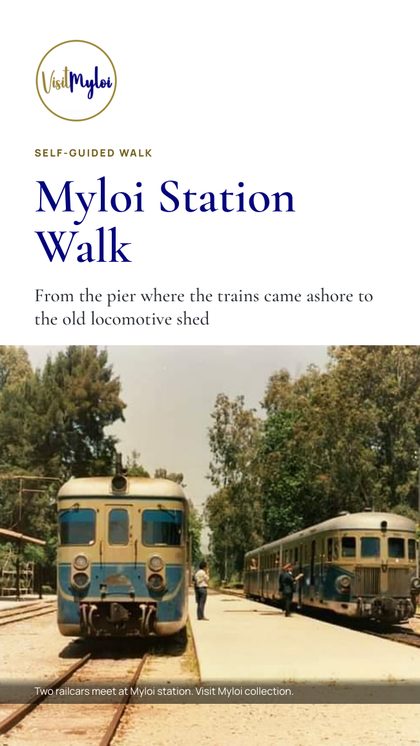
Self-guided walk
Myloi Station Walk
A short walk through the station yard, from the pier where the trains came ashore to the old locomotive shed: eight stops, a map, a guide to the locomotives and historic photographs. Made to read on your phone.
About 700 m · 30–45 minutes · flat
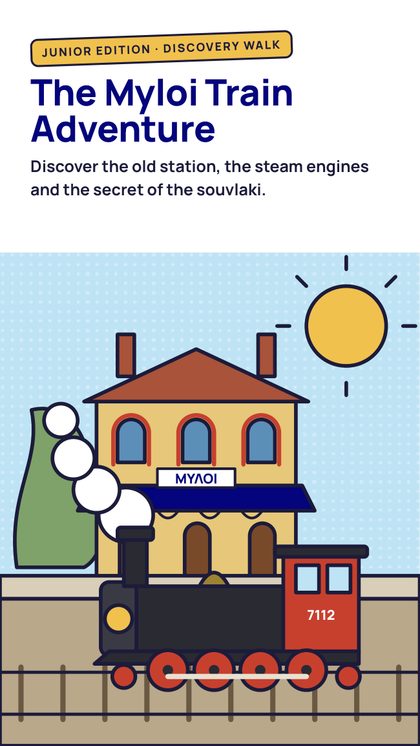
Junior edition · ages 9 to 12
The Myloi Train Adventure
The same walk as a discovery trail for young train fans, with Kostas as their guide: illustrated stories, discovery tasks, how a steam engine works and a trainspotter’s guide. Everyone who finishes can show their medal at the village kiosk and collect a free paper model of the station.
Please note: the paper models of the station are out of stock at the moment. New ones are being made as soon as possible.
Always with an accompanying adult · about 45 minutes
Myloi Food Village
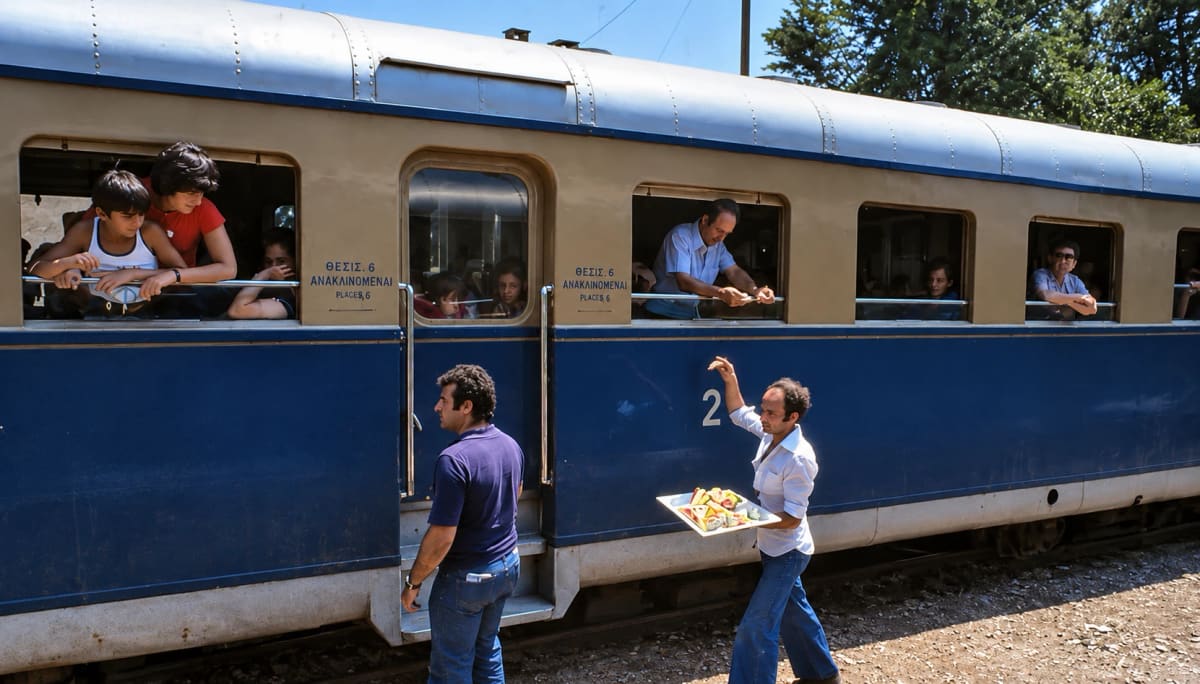
Souvlaki through the window
Because so many trains stopped at the junction, Myloi became known for something else: souvlaki. Sellers walked along the carriages with trays of skewers and passed them up to the passengers at the open windows.
The trains have stopped, but the grill houses near the station and the crossroads kept the tradition alive. Today Myloi's souvlaki is one of the reasons people still stop in the village.
Myloi Food Village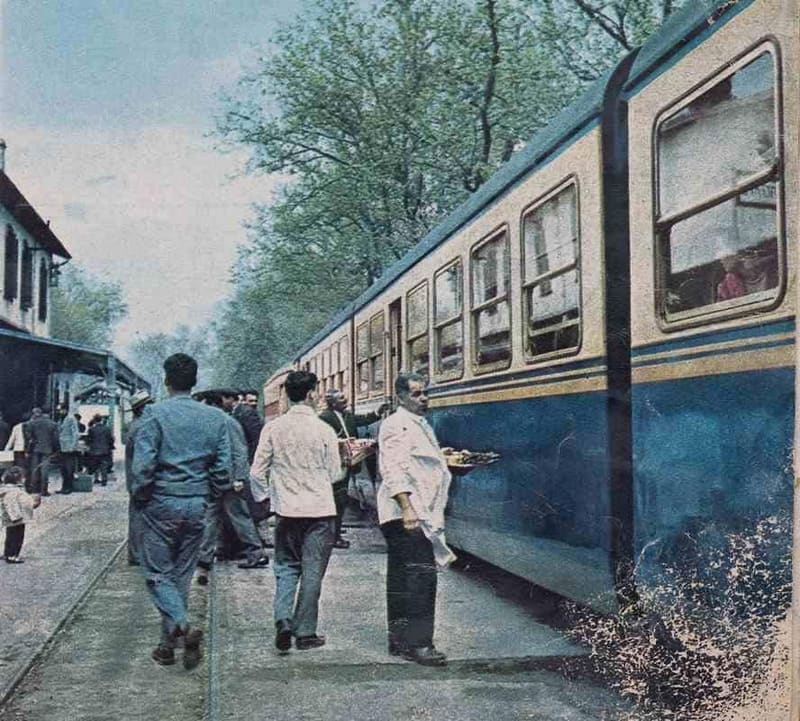
Five buildings
The station area has kept all five of its original buildings:
-
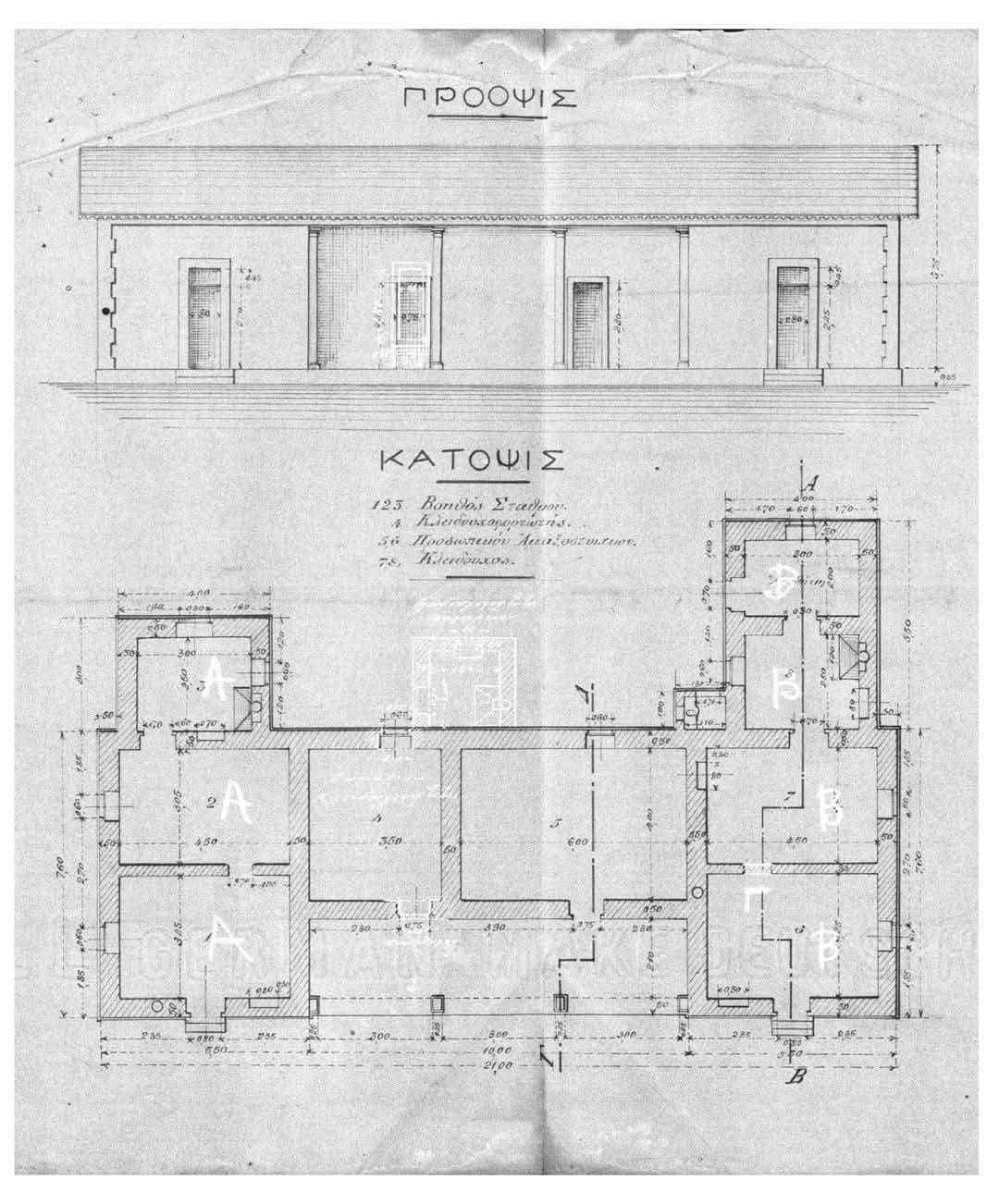
Locomotive shed 1886
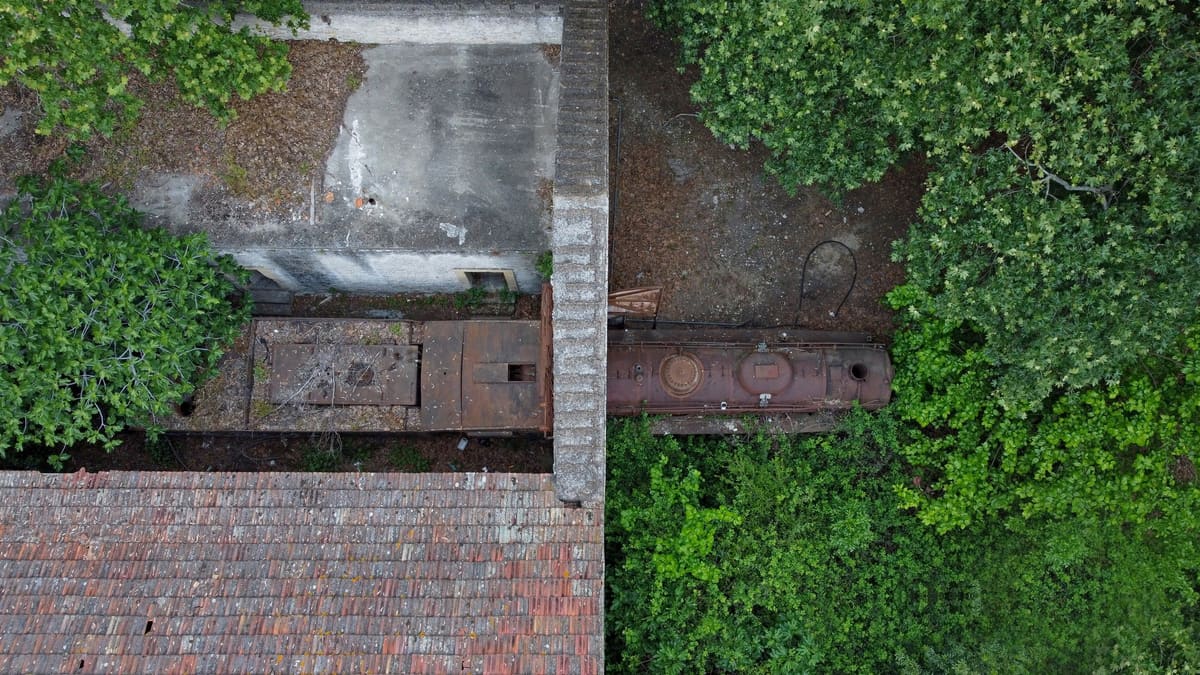
The largest and most remarkable building of the station: two long stone halls where the trains of the line to Tripoli and Kalamata were kept, with dressed cornerstones on every façade. One of the two roofs has been lost.
-
Σ.Μ.Ε. station until 1891
The small ticket office of the Southern Greece Railways. When the company was absorbed in 1891 it became the guard's house; today it is partly used as a summer home.
-
Goods warehouse
Trains stopped in front of its sliding doors, set at wagon height, to load and unload goods. Stone walls, wooden floors and a timber roof.
-
Station café
The plainest building of the group, but a busy one: from the first years it served passengers waiting for their train.
-
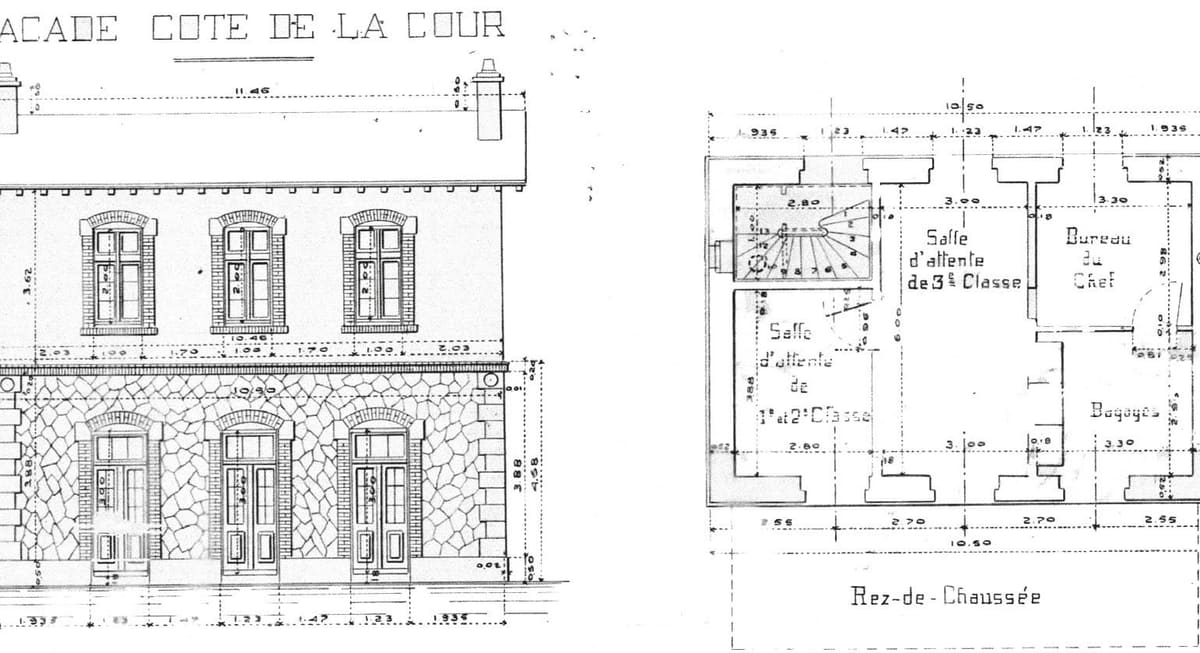
Σ.Π.Α.Π. station
The main station: a two-storey third-class station, a typical example of Greek railway architecture. Below were the ticket office and the waiting rooms; upstairs lived the station master, until he moved into the former Σ.Μ.Ε. building opposite. Today the upper floor is a summer home.
The original drawings
Timeline
- 1882
Construction of the Peloponnese railway network begins under the Trikoupis government, on metre gauge.
- 15 April 1886
Regular services begin between Corinth, Argos and Nafplio.
- 4 August 1886
The line from Argos to Myloi opens.
- 1888
A contract is signed with a Belgian-represented company to build the line from Myloi to Kalamata within three years.
- December 1889
Specialised Armenian workers are brought in for the foundations of the railway bridge at Lake Lerna.
- June 1890
The Southern Greece Railways company (Σ.Μ.Ε.) is founded to operate the Myloi–Kalamata line.
- 1891
After difficult negotiations the Myloi–Kalamata line passes to the Piraeus–Athens–Peloponnese Railways (Σ.Π.Α.Π.); the Σ.Μ.Ε. station closes and becomes the guard's house.
- 1 February 1892
The line from Myloi to Tripoli opens to traffic.
- 1942–1944
Railway infrastructure in the Peloponnese is destroyed by German troops, including the bridge at Achladokampos in 1944.
- 1970
The railway passes to the Hellenic Railways Organisation (Ο.Σ.Ε.).
- 2003–2010
The Corinth–Argos–Kalamata line is renovated, but when the work is finished in 2010 regular services in the Peloponnese are suspended.
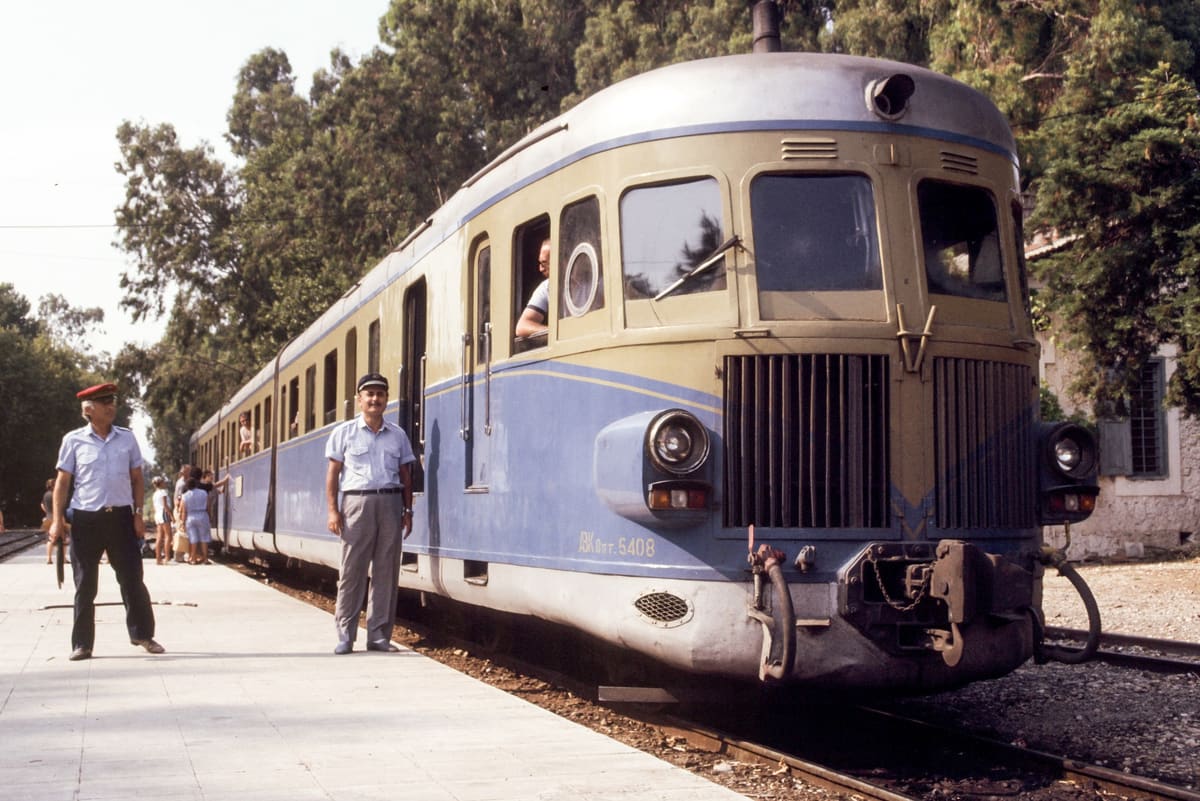
From the archive
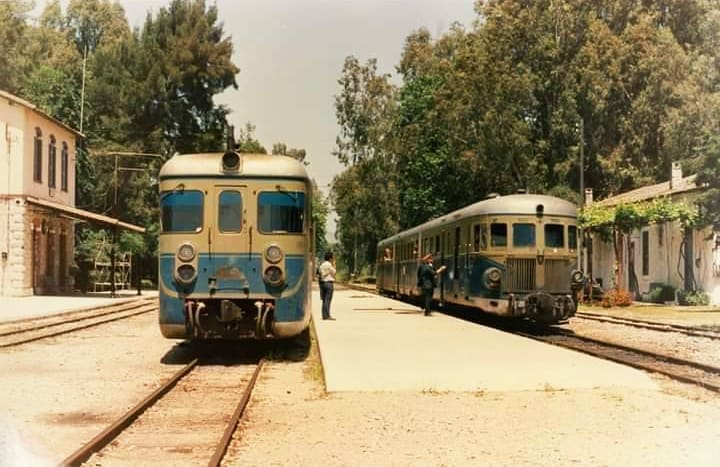
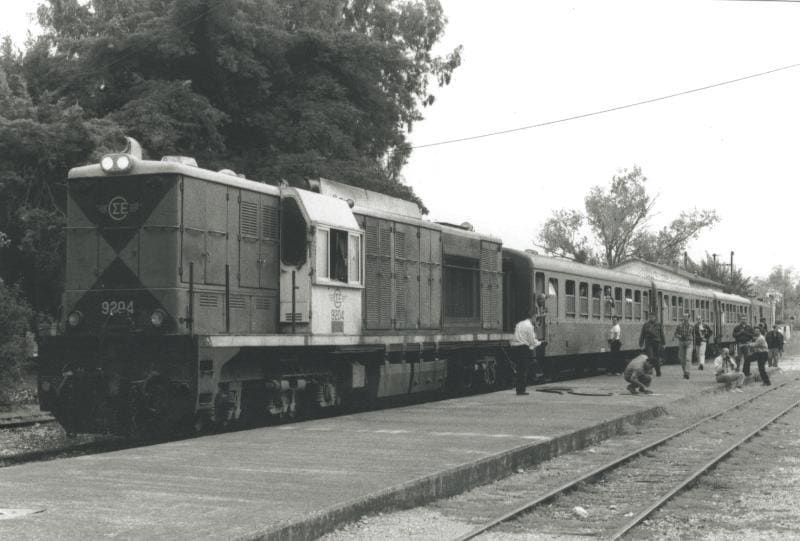
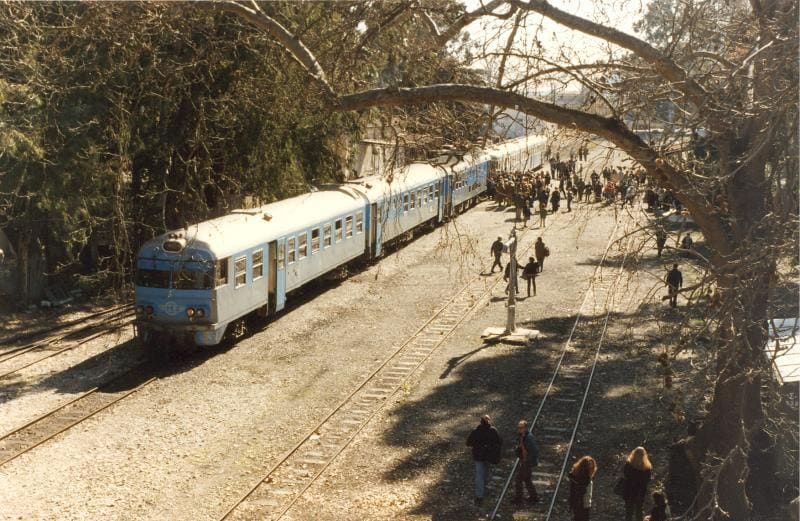
A future for the station?
In 2015 an architecture thesis at the Democritus University of Thrace documented all five buildings in detail and proposed restoring the station as a railway museum, with the locomotive shed at its centre. It remains a proposal.
Source: E. Roussou, Αποκατάσταση & επανάχρηση του σιδηροδρομικού σταθμού των Μύλων Αργολίδος (diploma thesis, Democritus University of Thrace, 2015), citing the newspapers Άργος, Δαναός, Αργολίς and Πρόοδος. Photographs: Visit Myloi collection; © Ole Holbech (souvlaki seller); magazine scan, 1960s.