Places
Railway station
39 events
Show on a map (opens in a new tab)
-
7 August 1886
State commission accepts the line Argos–Myloi
On Saturday 7 August 1886 a state commission inspected and accepted the new 10 km section from Myloi to Argos. The line ran dead straight through currant vineyards and tobacco fields, with an iron bridge of 15 m over the…
-
9 August 1886
A big station: Myloi meant to be the port of the Peloponnese
A reporter wrote that Myloi station was built 'very spacious, with matching warehouses', because this harbour was to become the port of the whole Peloponnese. The station stood right opposite a 'very high ancient…
-
11 August 1886
The first timetable: local trains Nafplio–Argos–Myloi
The new timetable linked Myloi to the Corinth–Argos trains by a special train, plus four local trains between Nafplio, Argos and Myloi. Return tickets from Piraeus or Athens to Myloi were valid for four days, and freight…
-
16 August 1886
The train reaches Myloi
On Monday 16 August 1886 (4 August by the old calendar) the new line from Argos to Myloi was opened to the public, together with the line from Kiato. Myloi now had a station on the metre-gauge Peloponnese railway.
-
22 September 1886
'Myloi station has excellent staff'
A month after the opening, the Argos newspaper denied a rumour that the station master of Myloi, K. Koupassaris, was to leave. It called him capable, honest and very friendly, and also praised the telegraphist and the…
-
1887
Myloi of Nafplio or Myloi of Argos?
In 1887 the Argos newspaper discovered that the railway company called the station 'Μύλος Ναυπλίου' in its books, Myloi of Nafplio. Argos protested: the village was 'Μύλοι Άργους'. The old rivalry between Argos and…
-
18 December 1887
The first station master leaves for Eleusis
The Argos newspaper reported that 'our friend the station master' K. Koupassaris had been transferred from Myloi to Eleusis. He left 'the best memories' behind.
-
12 May 1888
Contract signed: a railway from Myloi, with a pier and a workshop
Trikoupis and Lomvardos signed the contract with the Belgian consul Louis Rosseels, acting for Ernest Rolin of the Société Internationale de Constructions et d'Entreprises de Travaux Publics. The line was to start at…
-
24 February 1889
A slow start: first a big bridge over the Lerna marsh
The paper Kairoi found that the works starting from Myloi were 'not going very briskly'. Right at the start, where the line left the end of the Peloponnese railway, it needed major structures, above all a big bridge over…
-
24 March 1889
Workers of every nation, and 'famous cutlets'
'Workers of various nationalities pour in there every day,' wrote a correspondent about the building site of the Myloi–Kalamata line. A good restaurant had been built: 'In Myloi-Lerna you can taste famous cutlets.' He…
-
6 November 1889
1,945 workers, men and women, on the section from Myloi
A report to the minister counted 96 engineers and overseers, 106 assistants and guards, and 1,945 navvies, miners and labourers, 'men and women', on the section starting at Myloi. Seven kilometres of track had been laid,…
-
March 1891 – May 1891
'The railway only went as far as Myli'
A Bavarian teacher who toured Greece in the spring of 1891 wrote that 'the railway then only went as far as Myli'. From there his group continued in an open carriage along the excellent road towards Tripoli, resting at…
-
6 July 1891
Holy water at the station, in 34 degrees
From the landing stage the king rode by train to the flag-decked station of Myloi, where Archbishop Nikandros of Argolis performed the blessing of the waters and blessed the railway carriages. It was 34 °C in the shade…
-
6 July 1891
Back at Myloi in the evening, the king sails home
At half past six in the evening the trains were back at Myloi. The king said goodbye and was rowed out to the Sfaktiria, which lay at anchor off Myloi; the prime minister followed in another boat. The guests left Myloi…
-
6 July 1891
Stowaways on the royal train, and a flask of wine for the king
First the train with the invited guests left Myloi and was the first to run the whole line to Tripoli. When the royal train followed, uninvited locals climbed onto the wagons and into the luggage van to ride along; the…
-
8 July 1891
An illustrated report: portraits of the builders, and Myloi as km 0
The Athens daily To Asty printed engraved portraits of Ernest Rolin and Louis Rosseels, 'the founders of the Myloi–Kalamata company', and a large engraving of a bridge near Achladokampos. Its description of the line…
-
17 August 1891
Regular trains from Myloi to Tripoli
From 17 August 1891 (5 August old style) the line was open to the public. The Southern Greece Railways' timetable had a train leaving Myloi at 5.05 pm, arriving in Tripoli at 7.55, with stops at Andritsa, Achladokampos,…
-
17 November 1891
Nafplio wants the line extended from Myloi to its own pier
The town council of Nafplio asked for the Myloi–Kalamata line to be extended 'from Myloi to the pier in front of the customs house of Nafplio'. It was an early sign of the rivalry between the two harbours.
-
29 December 1891
The Belgian company is dropped; the Peloponnese railway takes over
In December 1891 the Belgian company was declared to have forfeited its rights. A new contract gave the Piraeus–Athens–Peloponnese Railways (ΣΠΑΠ) the completion of Tripoli–Diavolitsi and the operation of the whole line…
-
February 1892
The Peloponnese railway runs the trains from Myloi
In February 1892 the government of Theodoros Deligiannis handed the completion and operation of the line to the ΣΠΑΠ, probably from 1 February. From then on one company ran both the line from Argos and the line into the…
-
1893
A bathing train from Argos to the sea at Myloi
In the summer of 1893 the people of Argos asked for a special bathing train. They wanted to swim at 'Almyro', 'only five minutes from Myloi station'. The train to Myloi was also becoming a train to the sea.
-
1894
Baedeker: Myli, landing place for boats from Nauplia
The 1894 Baedeker guide told travellers that Myli 'is the landing-place for boats from Nauplia', with three or four trains a day to Myli and one or two on to Tripolitza.
-
16 April 1894
The royal family lands at Myloi on the way to Mycenae
The royal yacht Sfaktiria sailed into Myloi with the royal family. They went ashore by boat and boarded a special train that was waiting for them, to visit the antiquities of Mycenae. The yacht waited at anchor off Myloi…
-
1895
'Not suitable for the Myloi–Kalamata line'
In the 1895 annual report Apostolos Agathoklis, head of traction and rolling stock of the ΣΠΑΠ, judged the Belgian series Ι engines fit for fast passenger trains but not for the steep climbs of the Myloi–Kalamata line,…
-
28 August 1900
Smuggled cigarette paper found in the station's goods shed
Police officers from Argos seized smuggled cigarette paper in the railway goods shed of the station 'Myloi of Argos'. Cigarette paper was a state monopoly product, and the railway was an easy way to move it.
-
1936
New rails from Piraeus to Myloi
The railway journal reported the replacement of the rails on the line from Piraeus to 'Myloi of Nafplia'.
-
20 February 1938
A new station master at Myloi
The railway journal announced that station master D. Dimou was transferred from Myloi to Lechaina, and K. Katsoulos from Lechaina to Myloi.
-
31 July 1938
Train collision between Argos and Myloi
At km 274.6 between Argos and Myloi, train E from Corinth to Myloi collided with a light engine that was running back from Myloi to Argos. The railway journal blamed the assistant station master on duty at Argos, who had…
-
1941–1942
A second German reconnaissance flight photographs the bay
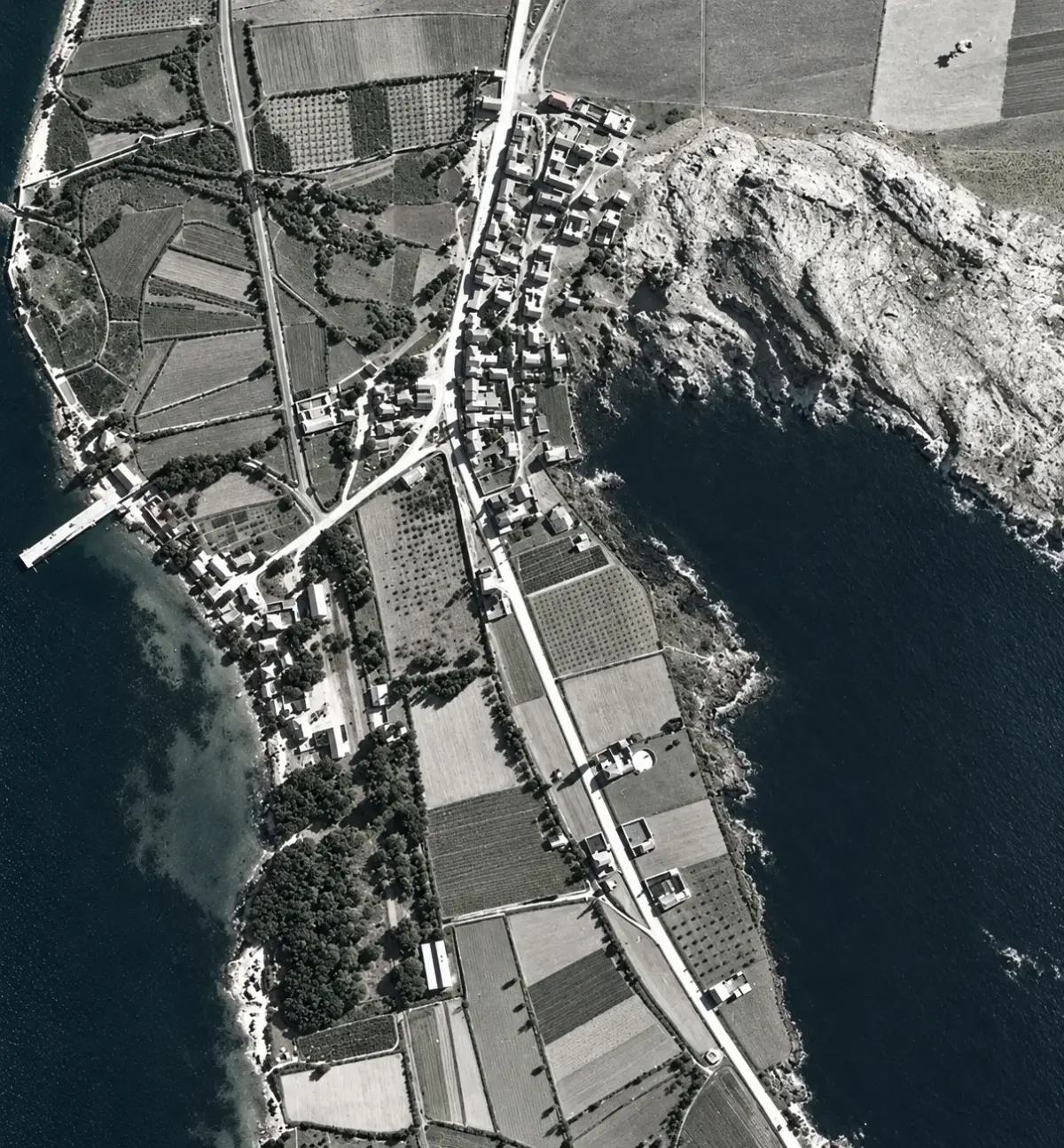
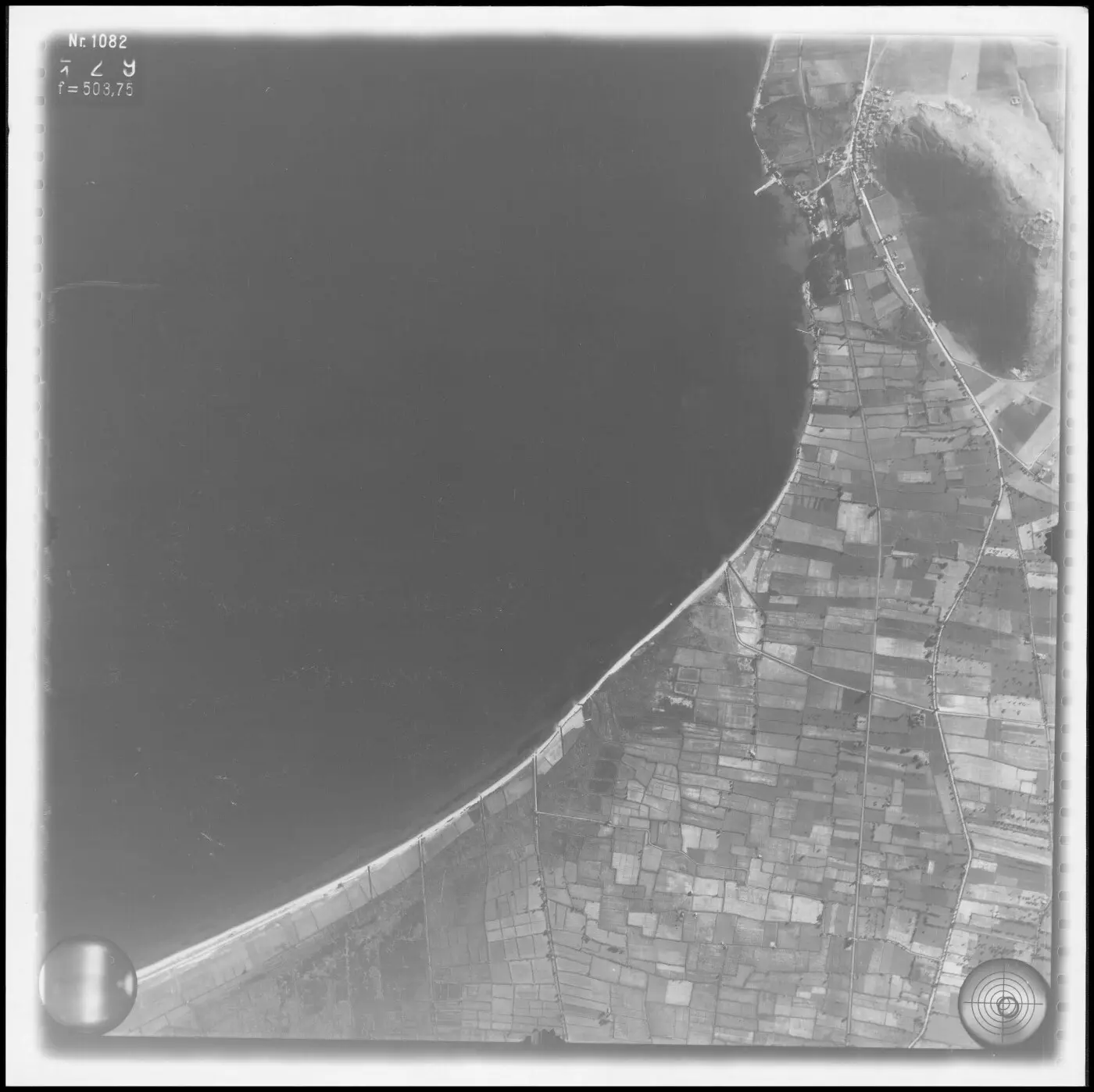
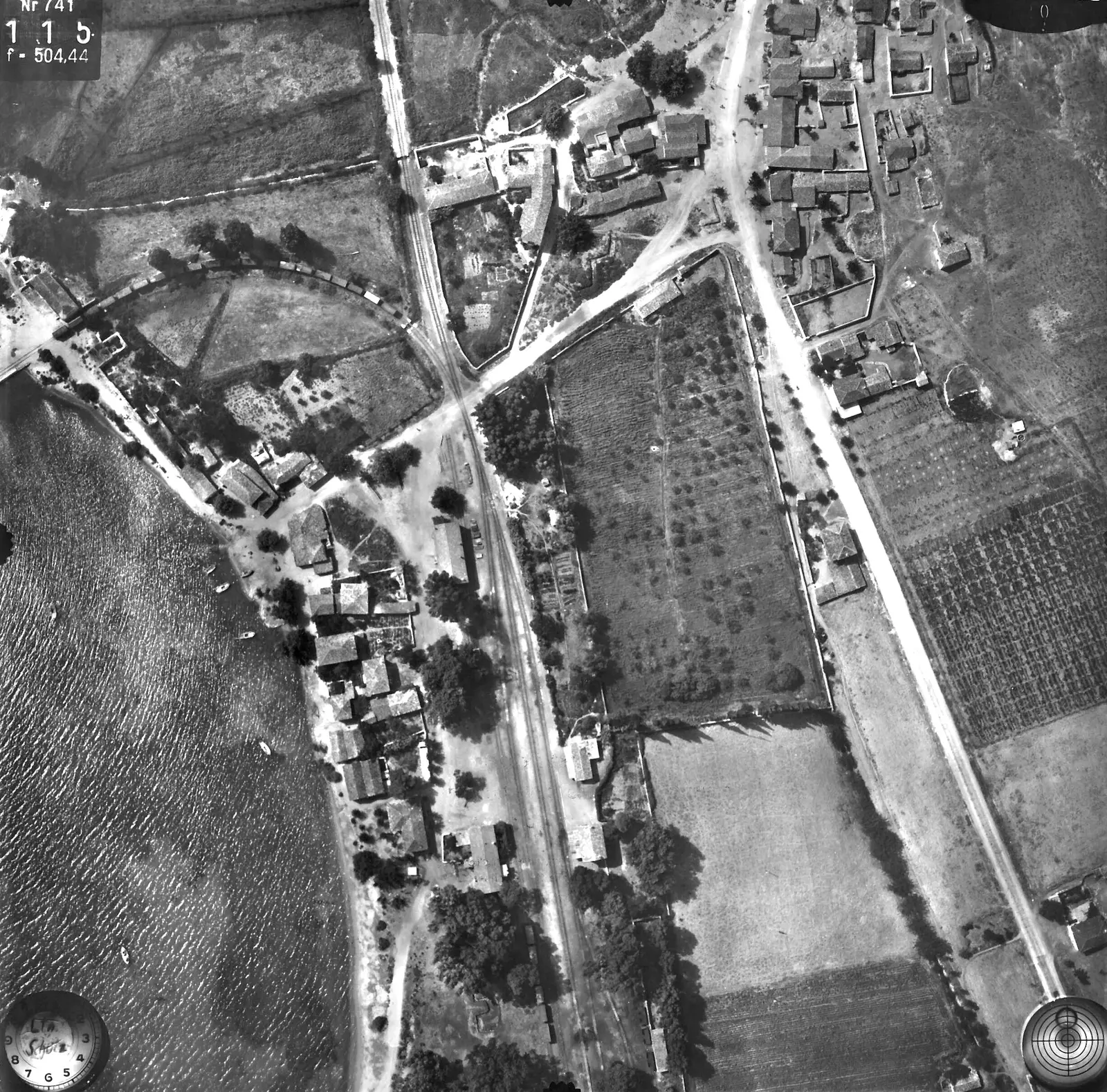
A German strip flight of 1941–1942 (film 93) photographed Myloi again: the curve of the bay, the village along the main road at the foot of Pontinos, the station and the pier.
-
13 July 1941
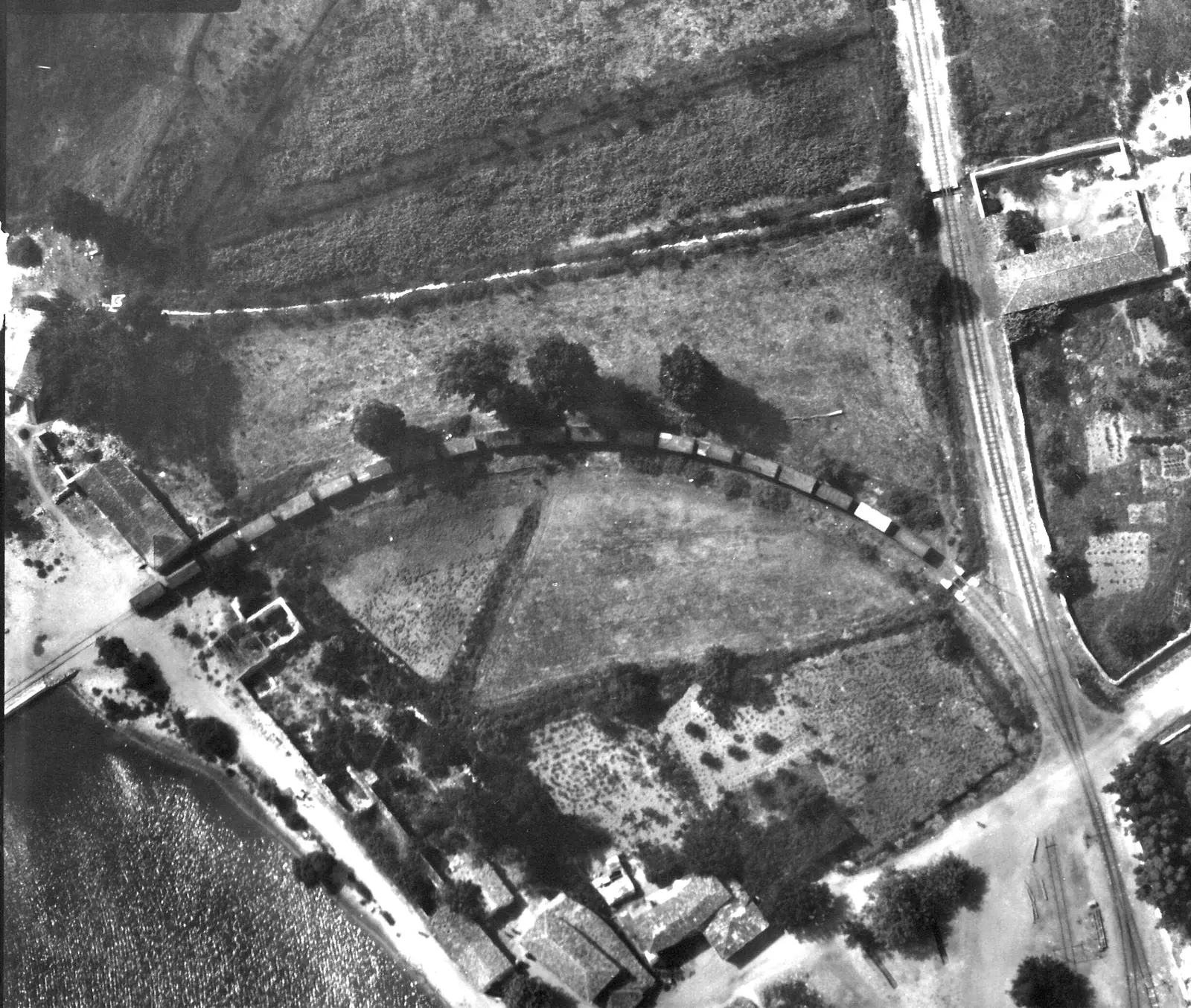
Aerial photo: a goods train of about 25 wagons on the pier siding
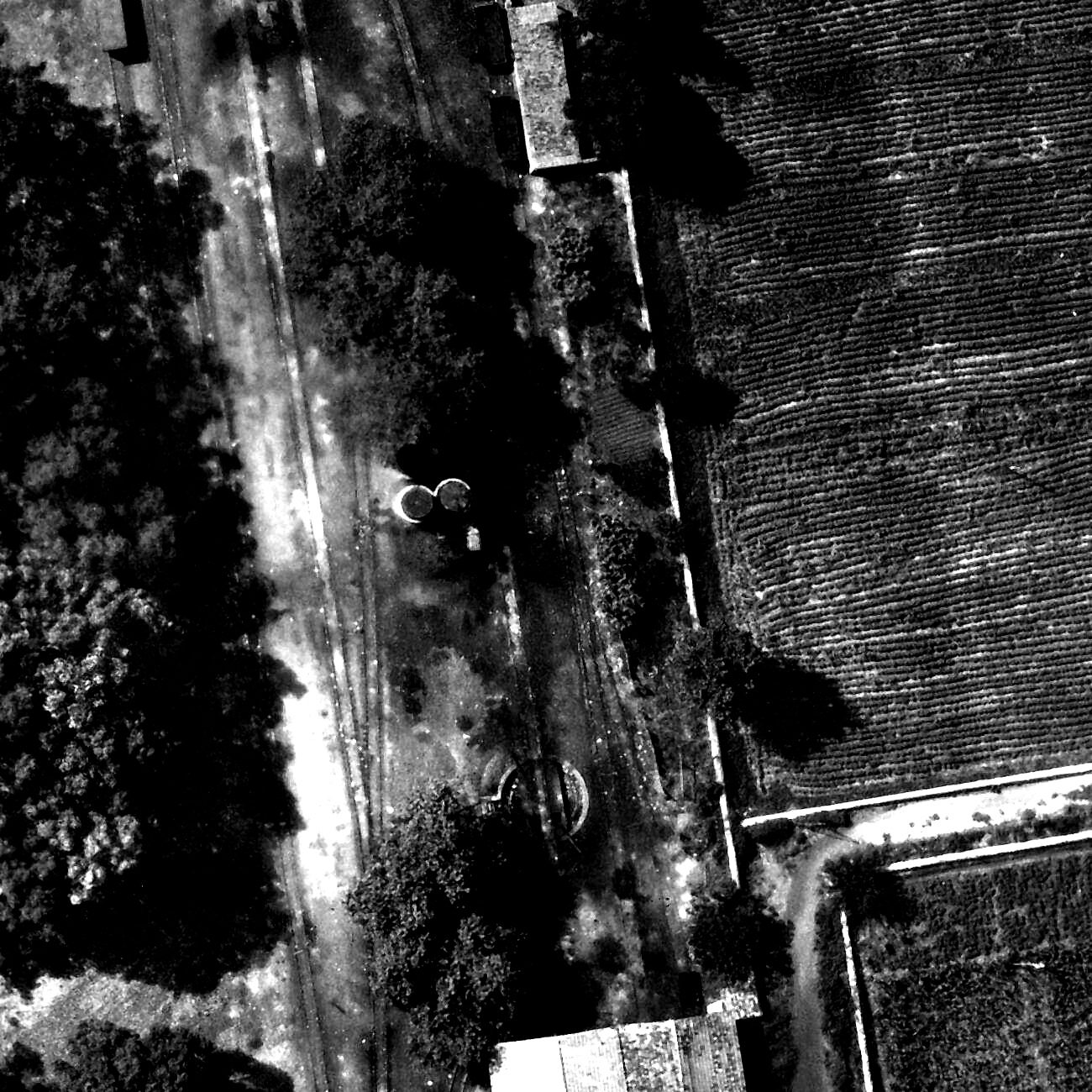
The photographs of 13 July 1941 show the station yard in use under the occupation: the two-hall locomotive shed, a turntable, two round water tanks, the station buildings and the goods shed with wagons. A goods train of…
-
13 July 1941
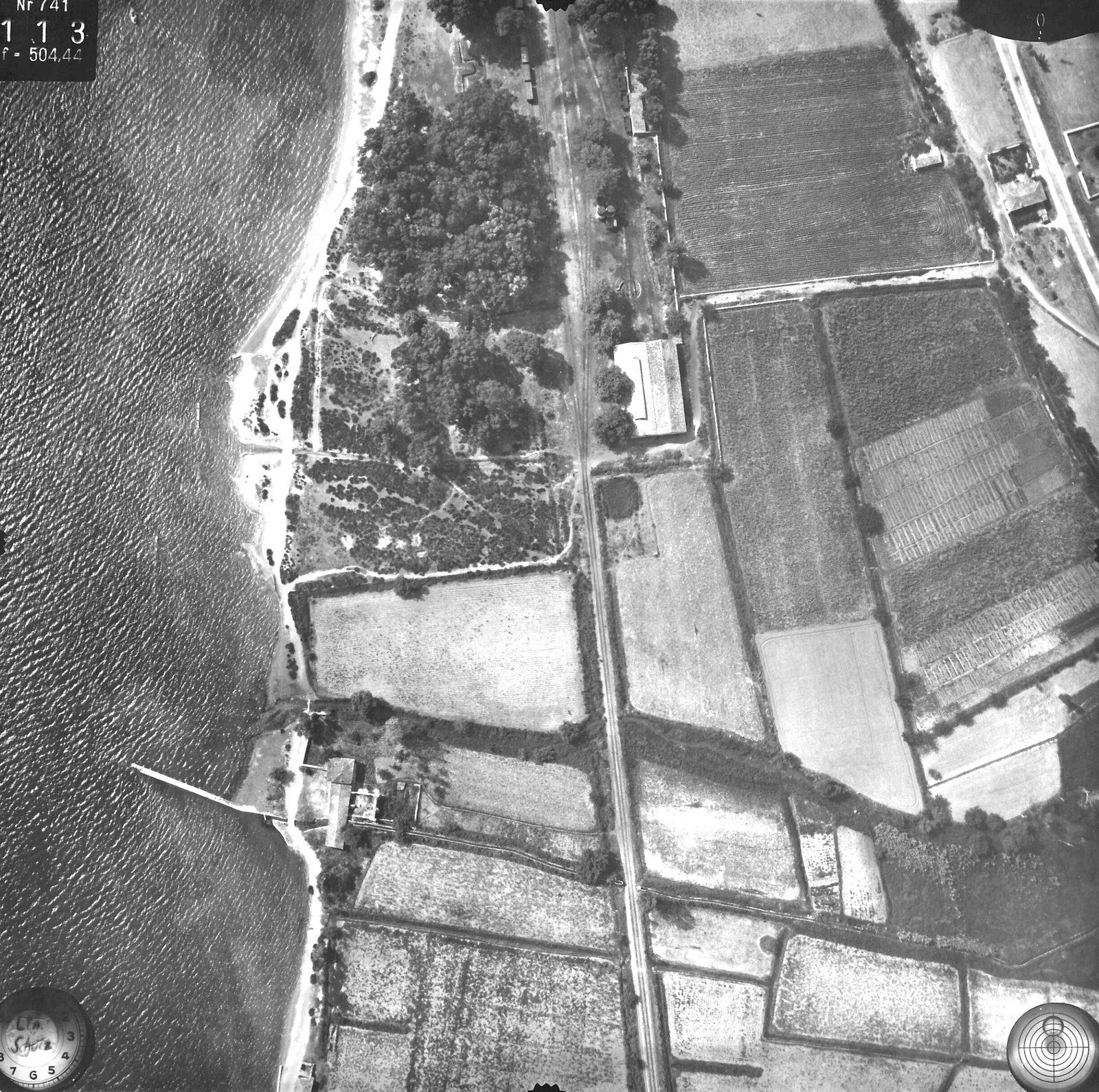
Aerial photo: a zigzag trench in the eucalyptus wood
In the eucalyptus wood by the station the photographs of 13 July 1941 show a zigzag trench. It was probably dug in April 1941, when Allied troops sheltered under these trees.
-
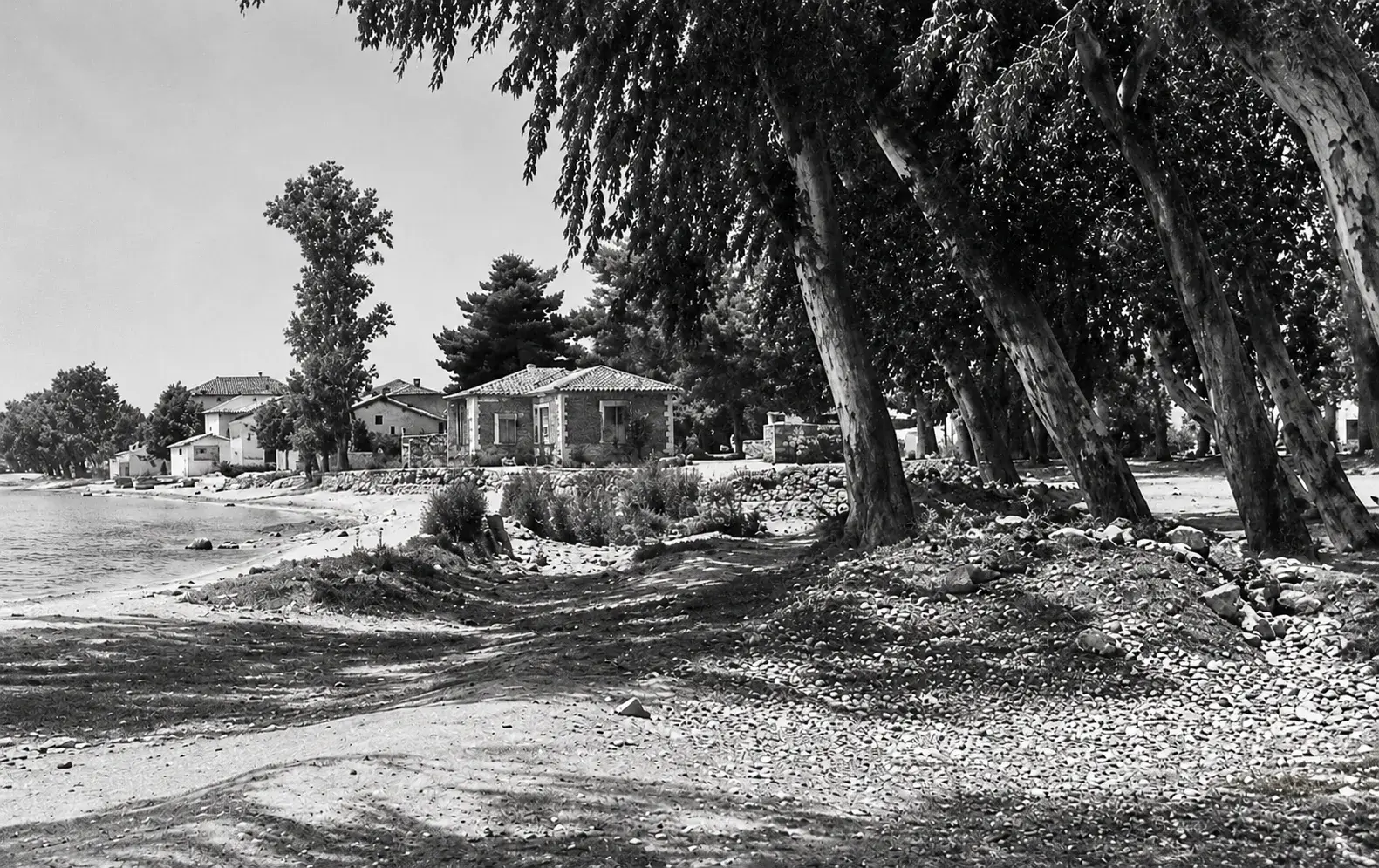
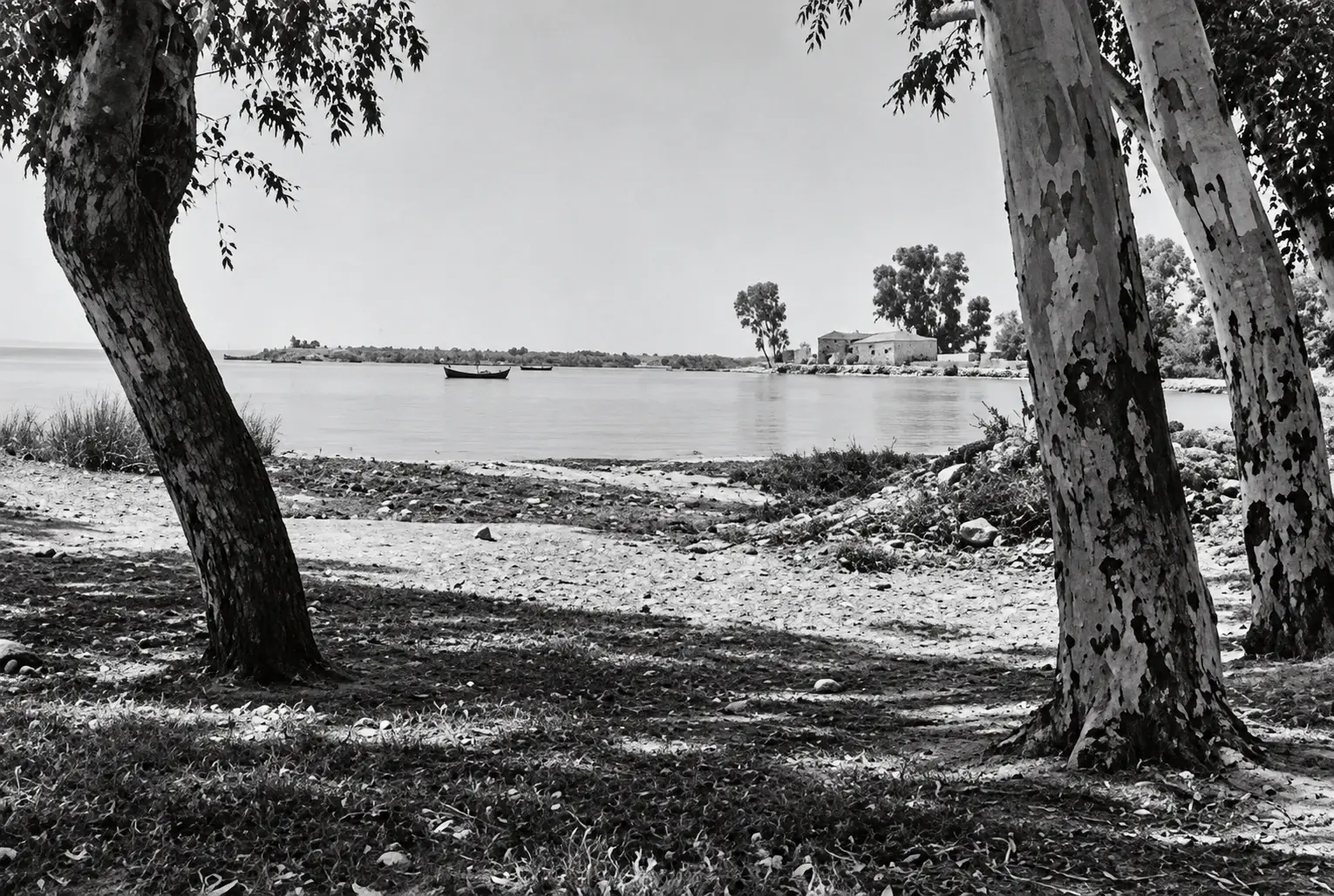
May 1945
An Australian war photographer returns to the beach of 1941
In May 1945 the Australian war photographer V. J. Krauth travelled through the Peloponnese to record the places of 1941. At Myloi a resident showed him the beach and the row of eucalyptus trees under which Australian…
-
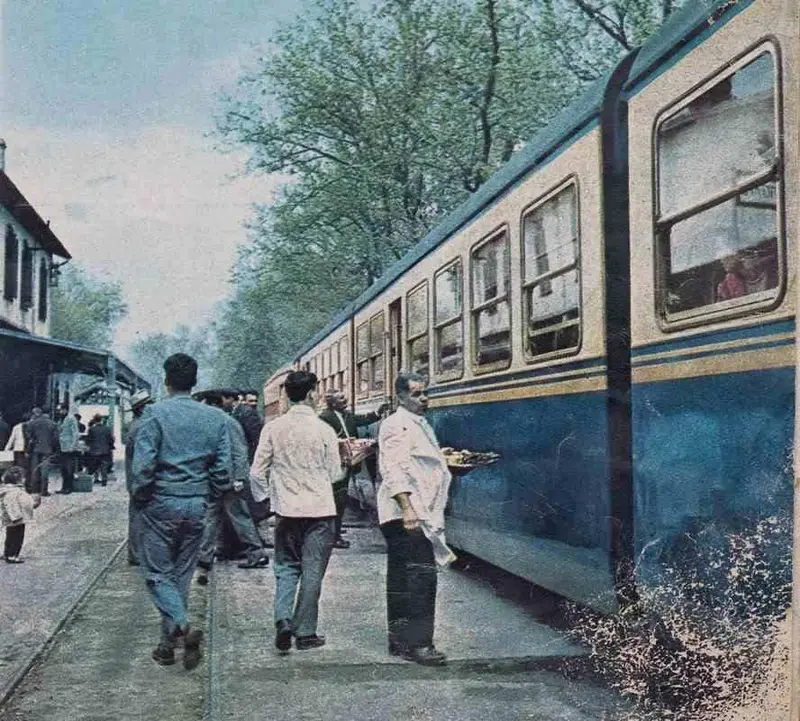
1950–1969
Souvlaki passed up to the train windows
Because so many trains stopped at the junction of Myloi, the village became known for souvlaki. Sellers walked along the carriages with trays of skewers and passed them up to passengers at the open windows; a magazine…
-
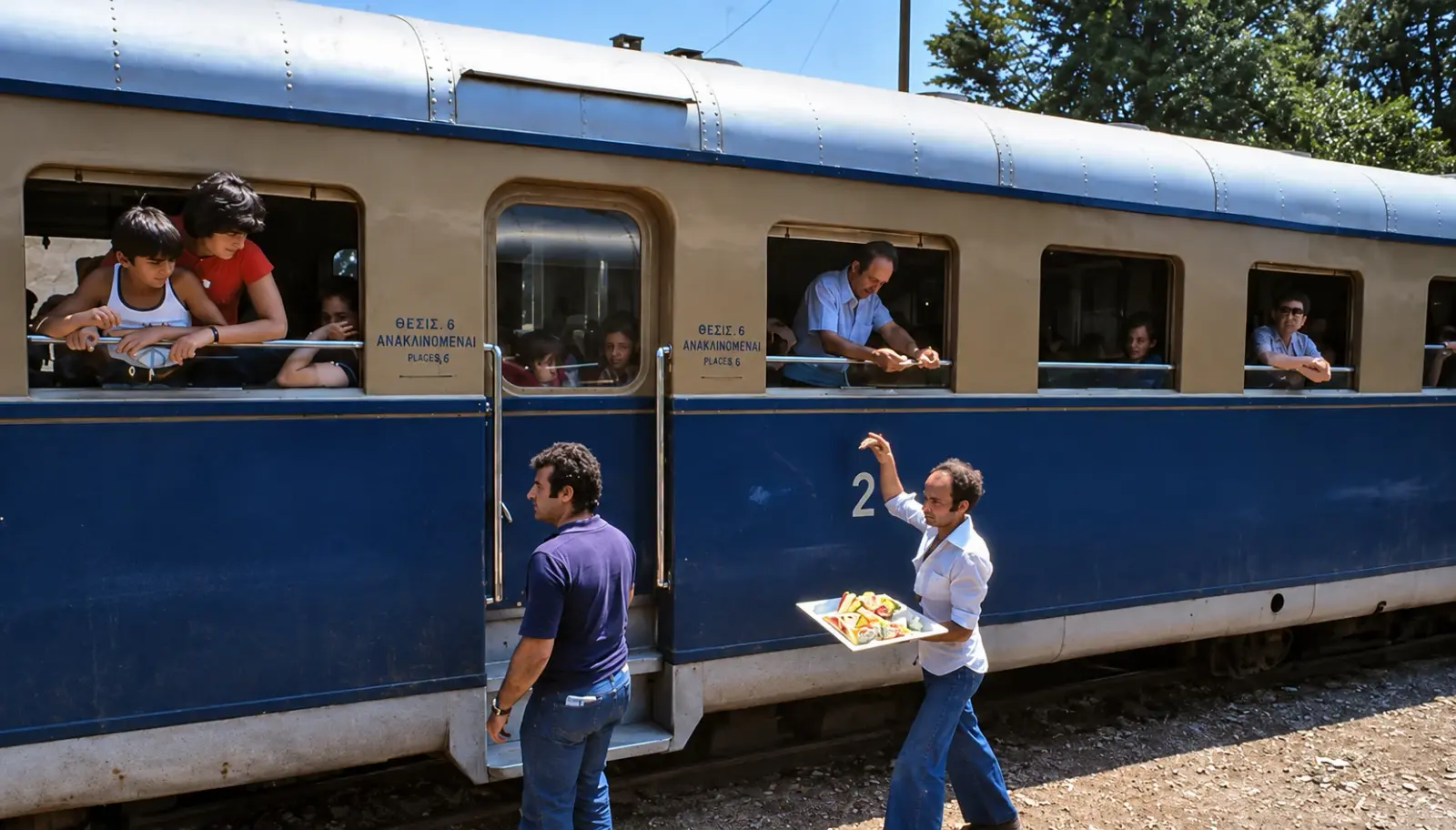
20 July 1979
Souvlaki sellers at the train, photographed
On 20 July 1979 the Danish railway photographer Ole Holbech travelled the line through Myloi and photographed a souvlaki seller holding up his tray to passengers at the windows of a railcar.
-
March 1986 – April 1986
A graveyard of steam locomotives
In the spring of 1986 a visitor photographed rows of withdrawn metre-gauge steam locomotives standing at Myloi station. The station, once a busy junction, had become a resting place for engines the railway no longer…
-
23 February 1995
"Metre gauge graveyard" at the Myloi depot
On 23 February 1995 the British photographer Adrian Nicholls captured what he called the "metre gauge graveyard" at Mili Nafpliou depot: the stone engine shed with its arched doors, two water towers and dumped…
-
2010
The last passenger trains pass Myloi
Although the line had just been renovated, regular services on the Peloponnese metre-gauge network were suspended in 2010, and no more trains stopped at Myloi. The souvlaki sellers left the platform, but the grill houses…
-
22 May 2015
A blue Triumph Herald comes out of the dust
On 22 May 2015 Konstantinos Doris, who spent his childhood summers in Myloi, found a 1962 Triumph Herald under thick dust in a warehouse in Argos; it had belonged to the air-force pilot Petros Marinos. After three years…
-
13 October 2023
"A hymn to the souvlaki of Myloi"
On 13 October 2023 the site in2life published "A hymn to the souvlaki of Myloi", a day trip around the village's grills, naming the corner shop of Kadis. In January 2026 the Argos paper Αναγνώστης recalled the "legendary…
People
- K. Koupassaris First known station master of Myloi (1886–1887)
- Charilaos Trikoupis Prime Minister of Greece
- Konstantinos Lomvardos Minister in the Trikoupis government
- Louis Rosseels Belgian consul in Athens, agent of Ernest Rolin
- Ernest Rolin Belgian contractor of the Myloi–Kalamata railway
- George I of Greece King of the Hellenes (1863–1913)
- Nikandros, Archbishop of Argolis Archbishop of Argolis (1891)
- Theodoros Deligiannis Prime Minister of Greece
- Apostolos Agathoklis Head of traction and rolling stock of the ΣΠΑΠ
Pictures
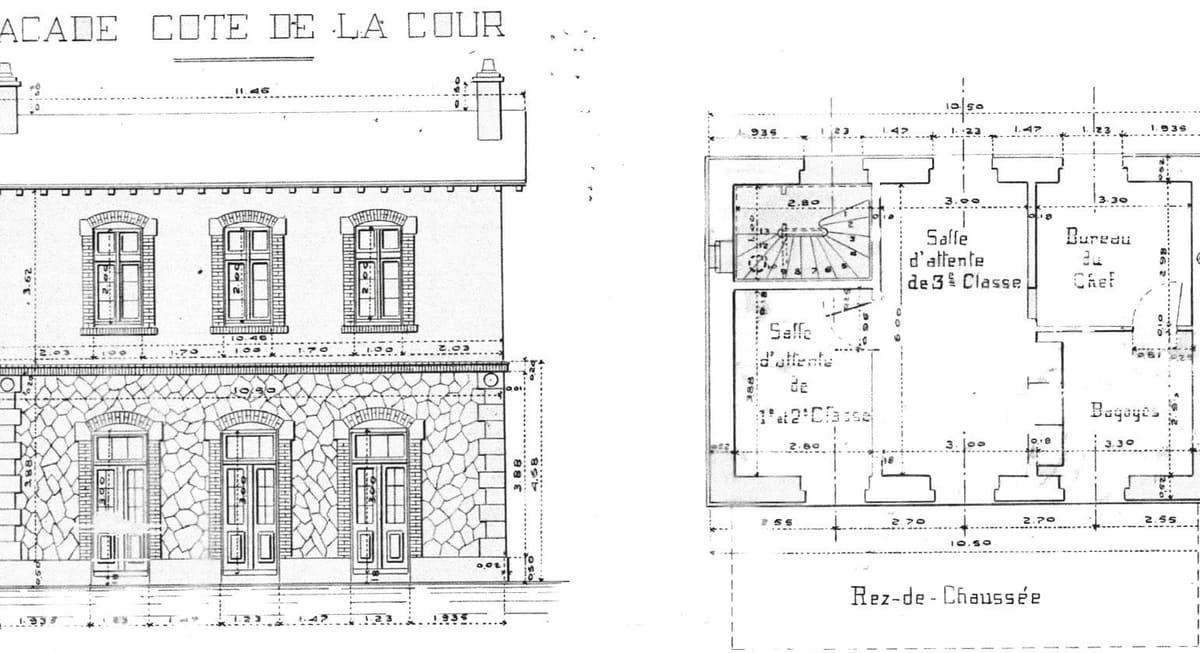
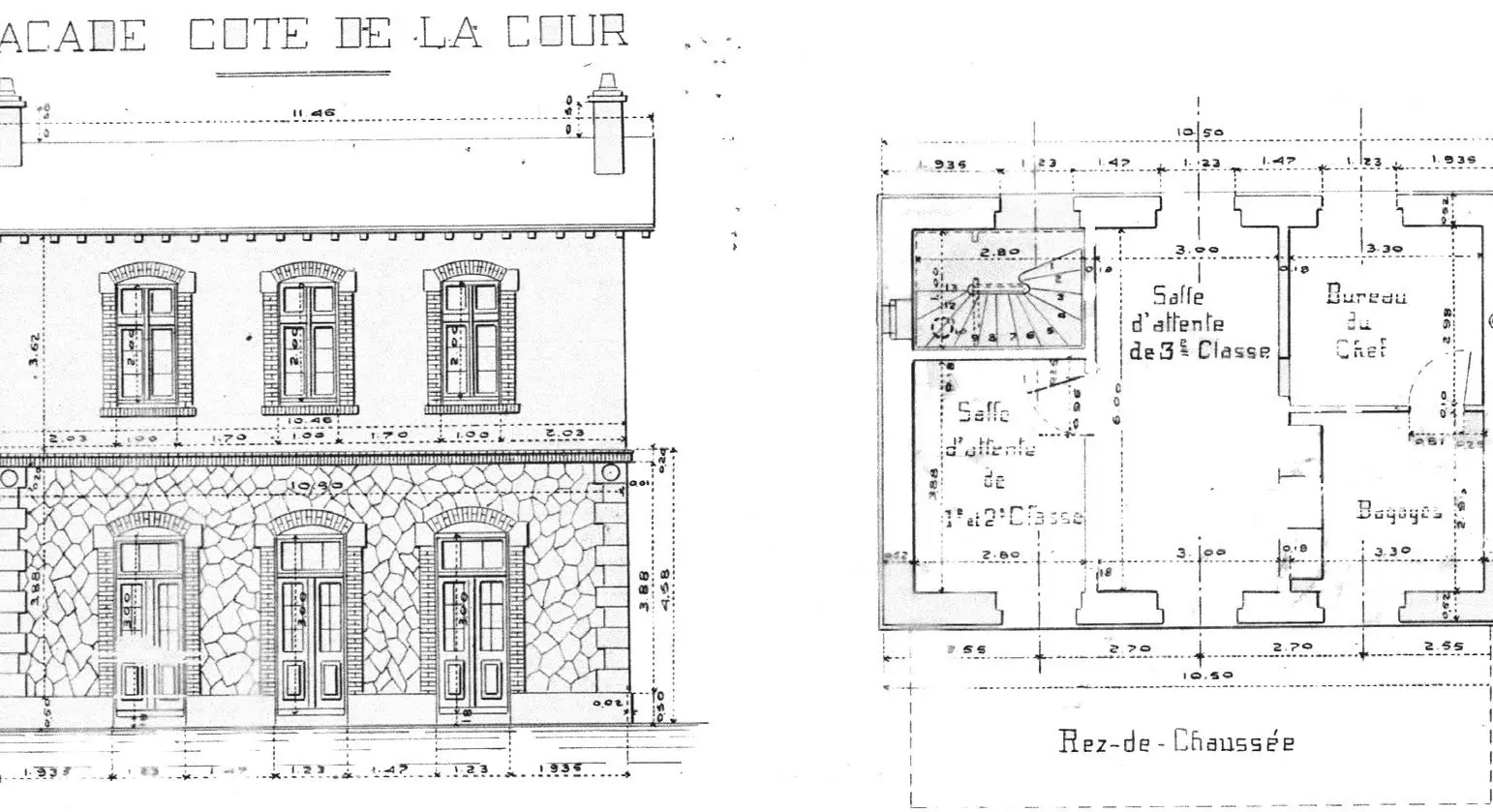
Original French drawing of the two-storey station building: courtyard façade and ground floor with waiting rooms for 1st/2nd and 3rd class, the station master's office and the luggage room. Railway archive (supplied by Visit Myloi)
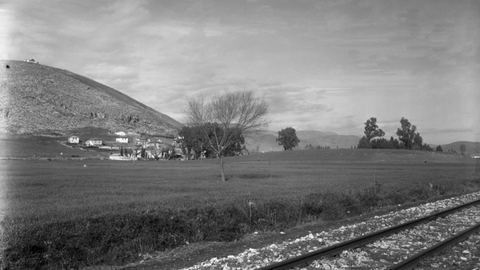
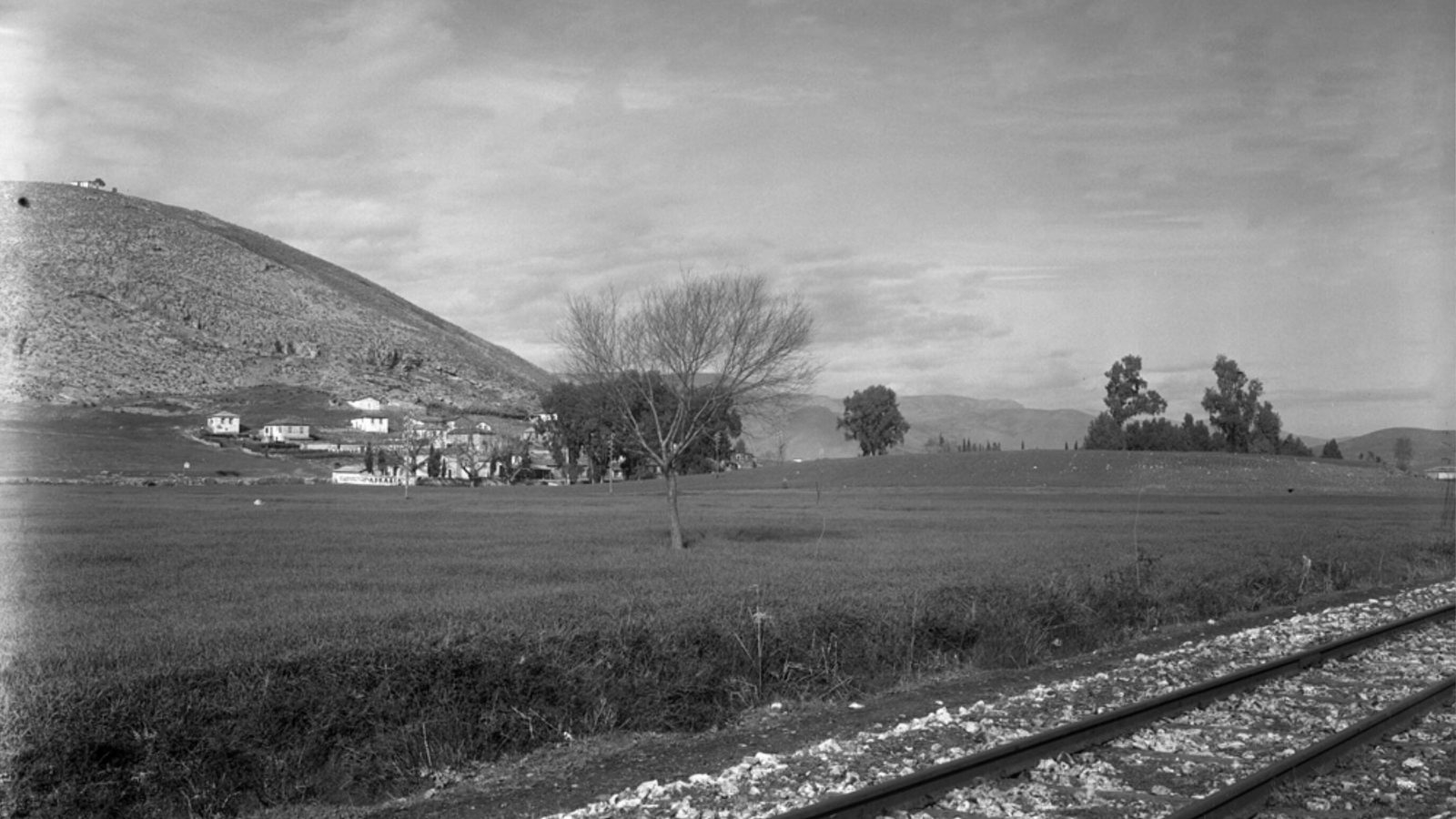
The prehistoric mound of Lerna from the south-east with metre-gauge rails in the foreground, Pontinos and the southern houses of Myloi, and eucalyptus trees. Walther Wrede; DAI Athens, D-DAI-ATH-Argolis-0450
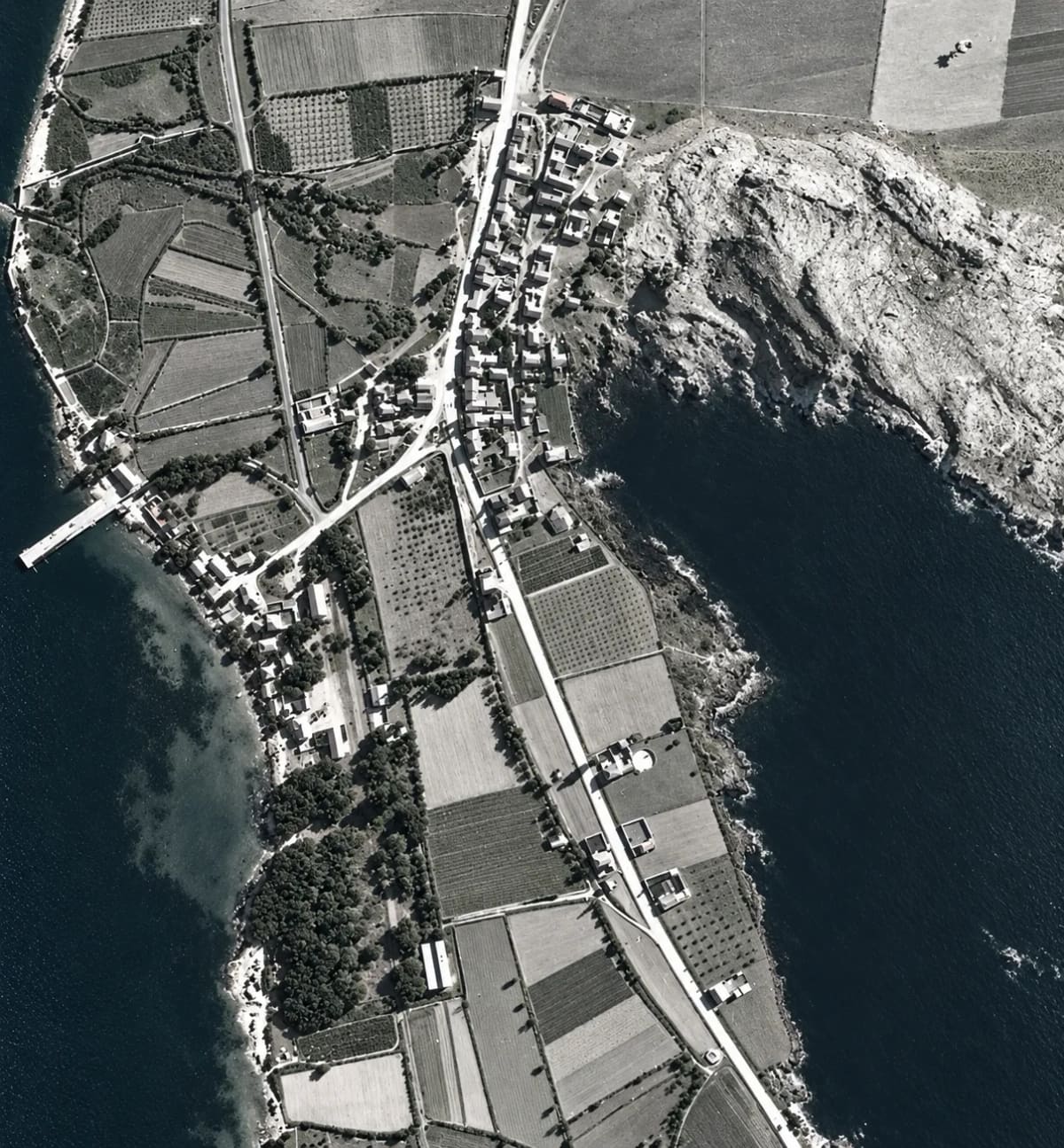
Myloi from a German reconnaissance flight, 1941–1942: the village along the main road, the pier, the station, the orchards and the rocks of Pontinos (digitally restored). Reichsluftfahrtministerium (Sonderluftbildabteilung); DAI Athens Archive
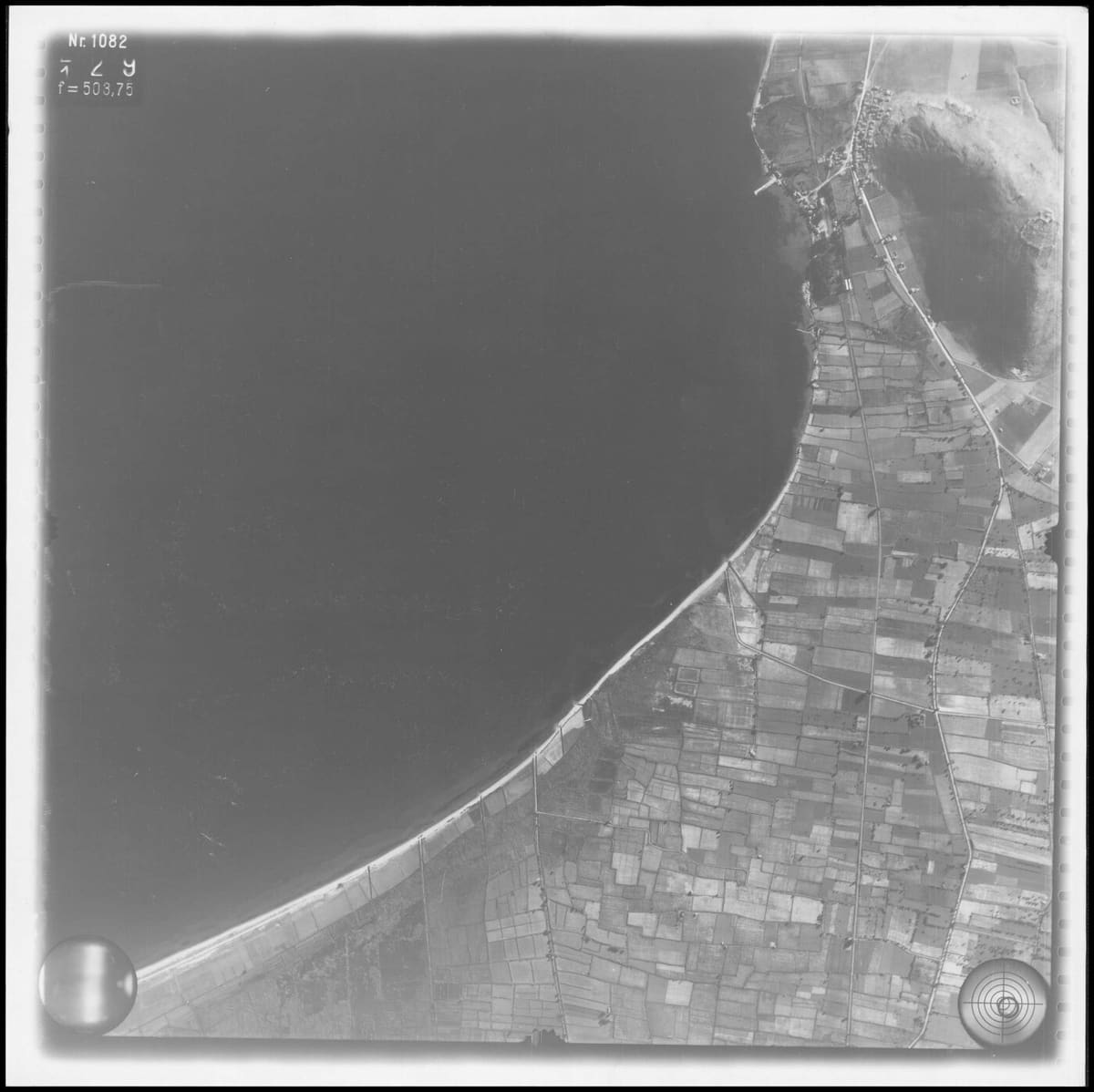
German strip flight 1941–42: the curve of the bay, the fields and the village at the foot of Pontinos. © D-DAI-ATH-Archiv, LB-RLM-SF-3-05-041, courtesy of the German Archaeological Institute, Athens
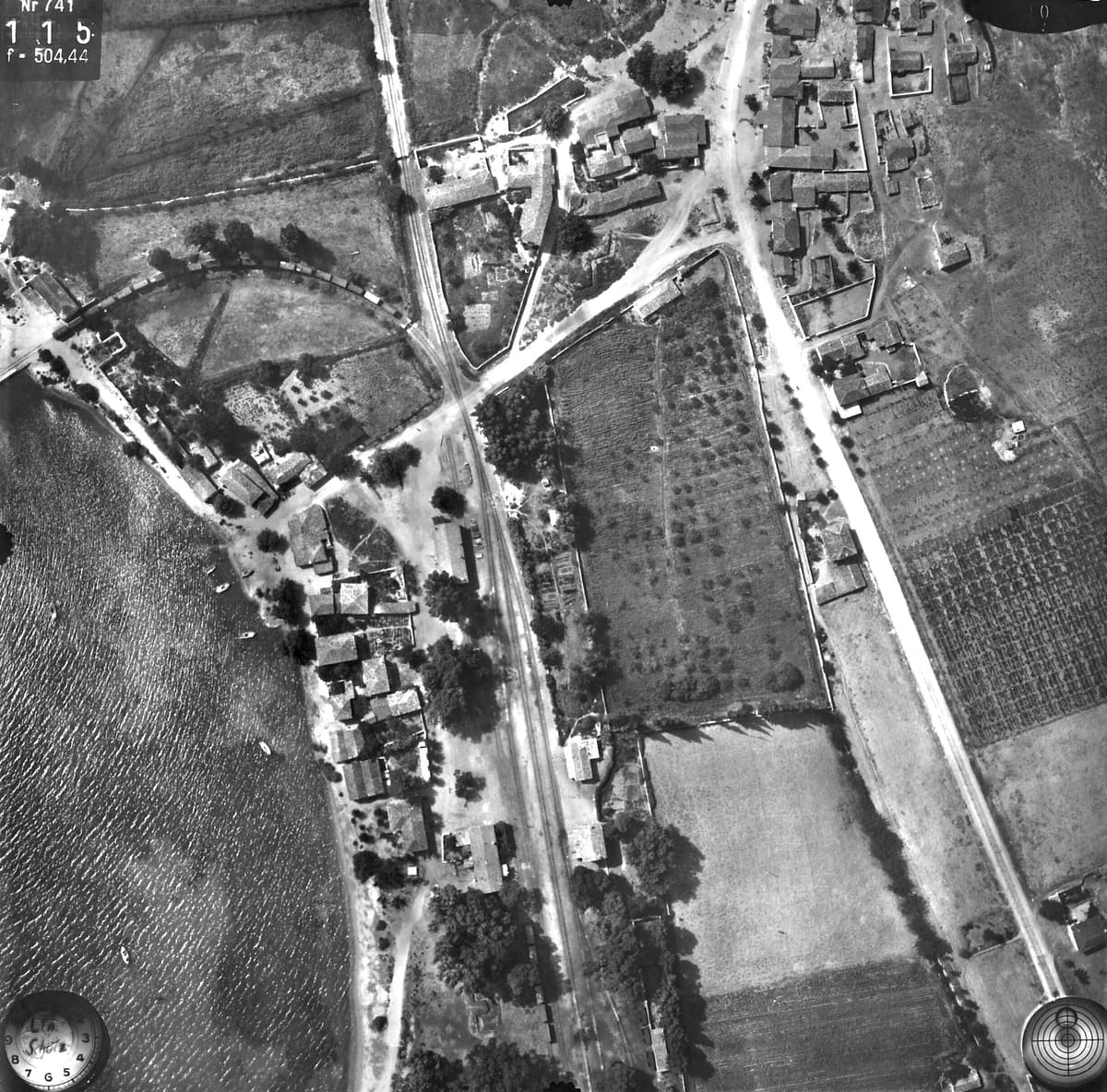
Myloi station, the village, the level crossing and the curved siding to the pier with a long goods train, 13 July 1941. Reichsluftfahrtministerium (Sonderluftbildabteilung); DAI Athens Archive
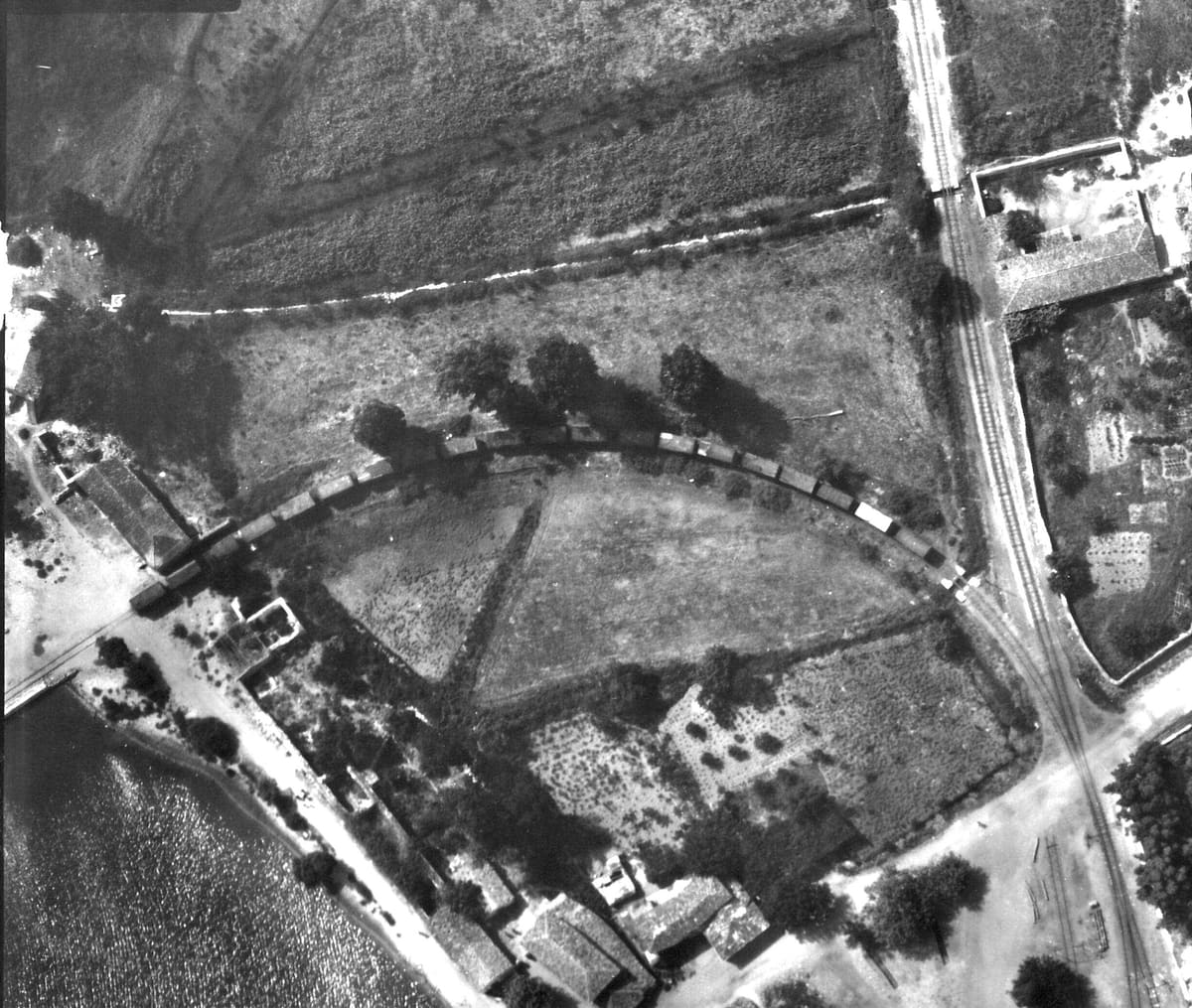
A goods train of about 25 wagons on the curved siding from the main line to the pier, 13 July 1941. Reichsluftfahrtministerium (Sonderluftbildabteilung); DAI Athens Archive
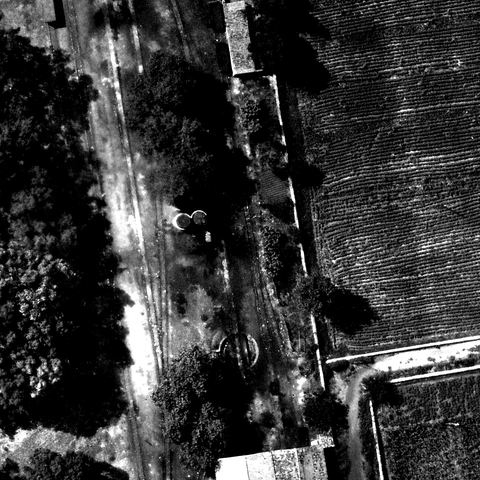
Full-resolution detail of the 1941 aerial photo: two round water reservoirs between the tracks, a turntable in front of the locomotive shed, a small building with wagons and a long boundary wall. Reichsluftfahrtministerium (Sonderluftbildabteilung); DAI Athens Archive
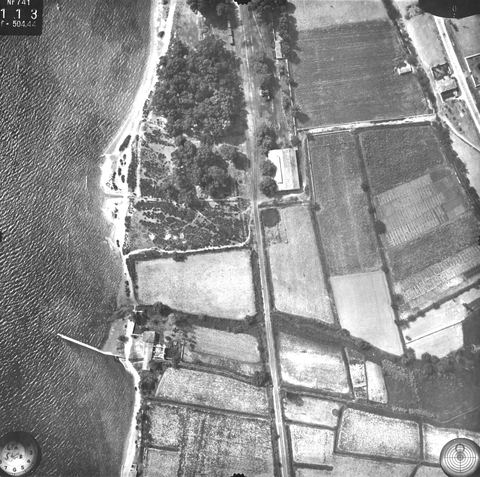
Vertical aerial photo: railway line with eucalyptus wood, a large building beside the track and the pier. Reichsluftfahrtministerium (Sonderluftbildabteilung); DAI Athens Archive
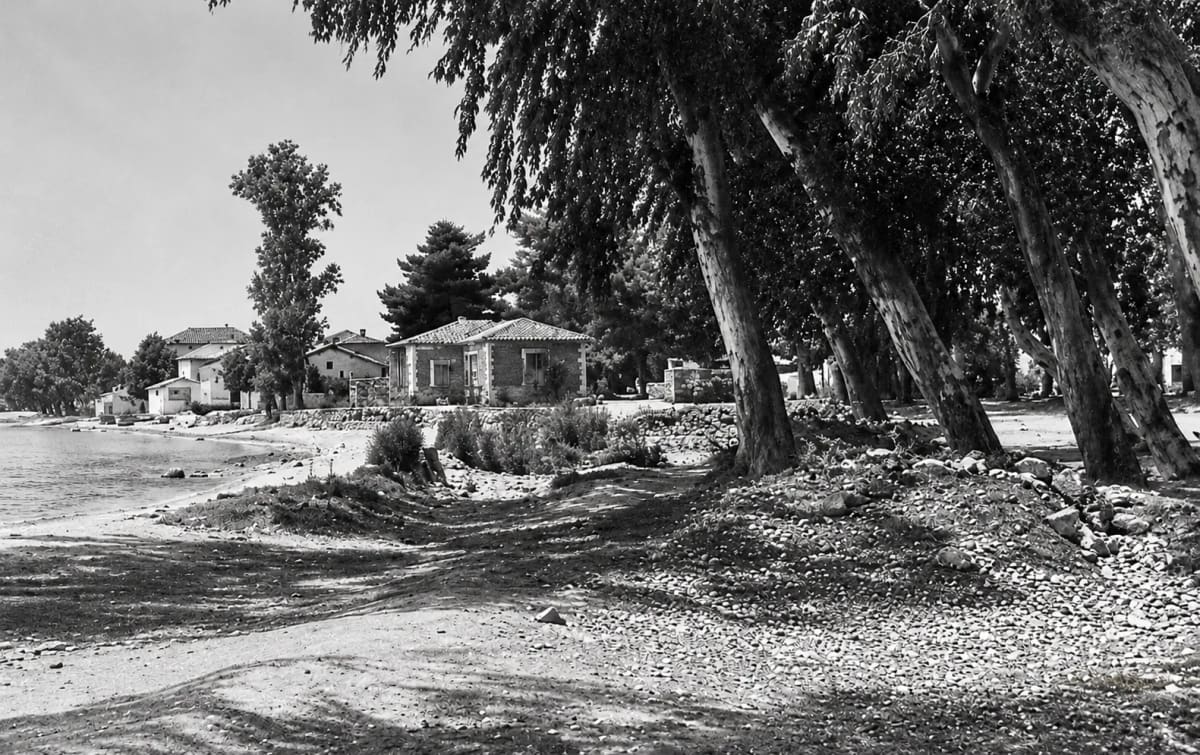
May 1945: the eucalyptus trees at Myloi under which Australian troops sheltered while waiting for evacuation in 1941 (digitally restored). Australian War Memorial 130831, photo V. J. Krauth · public domain
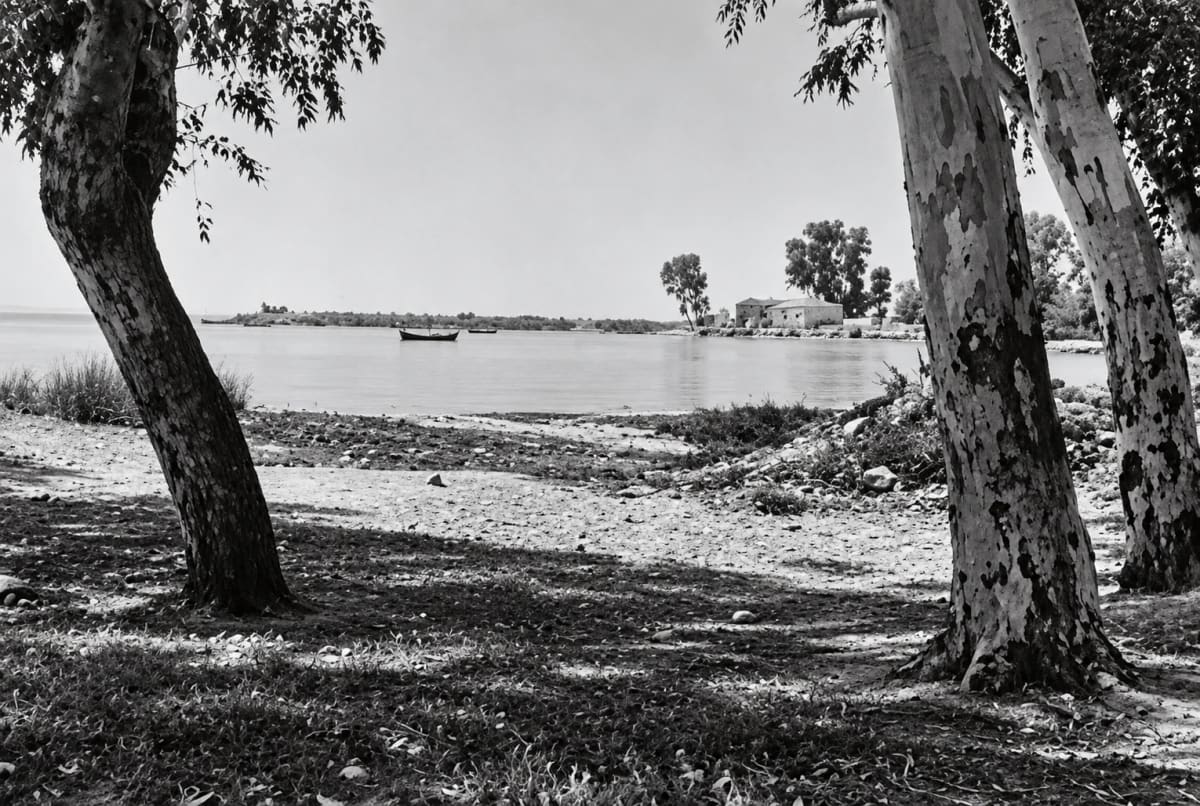
May 1945: the beach at Myloi from which, according to a local resident, Australians were evacuated in 1941 (digitally restored). Australian War Memorial 130887, photo V. J. Krauth · public domain
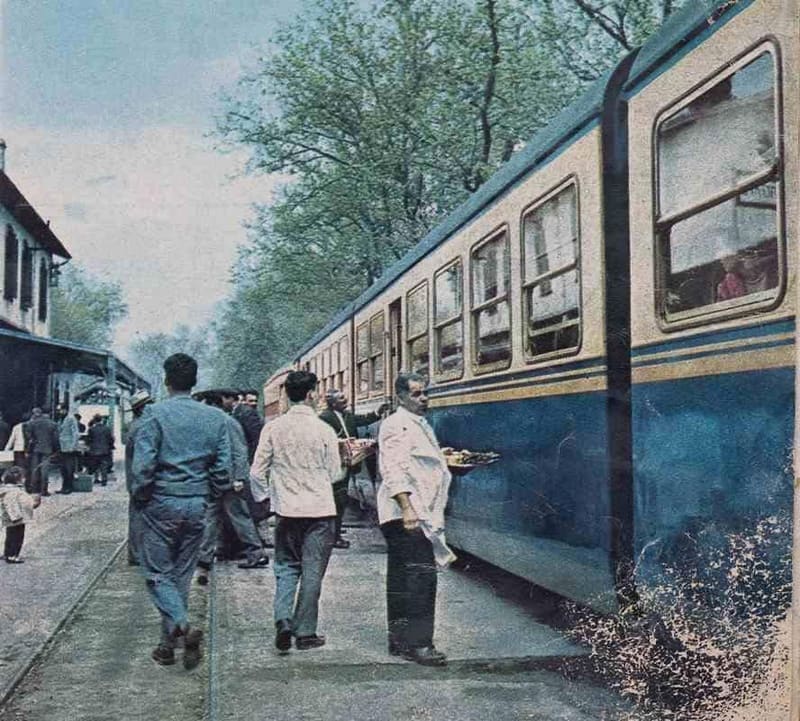
Magazine photograph, 1950s: waiters with trays of souvlaki walk along the train at Myloi station. Magazine scan, 1960s (Visit Myloi collection)
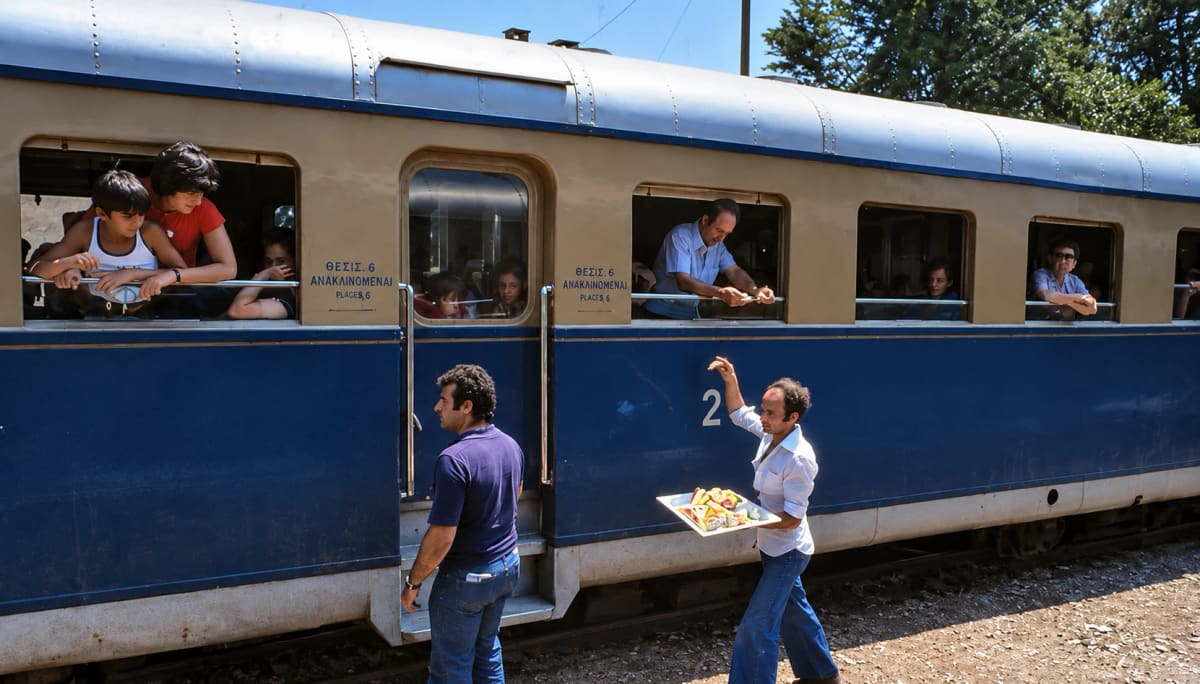
Souvlaki seller holding up a tray to passengers at the windows of a railcar at Myloi, 1970s (digitally restored). © Ole Holbech