
The postwar village · Village life · Railway
"Metre gauge graveyard" at the Myloi depot
23 February 1995 Proven
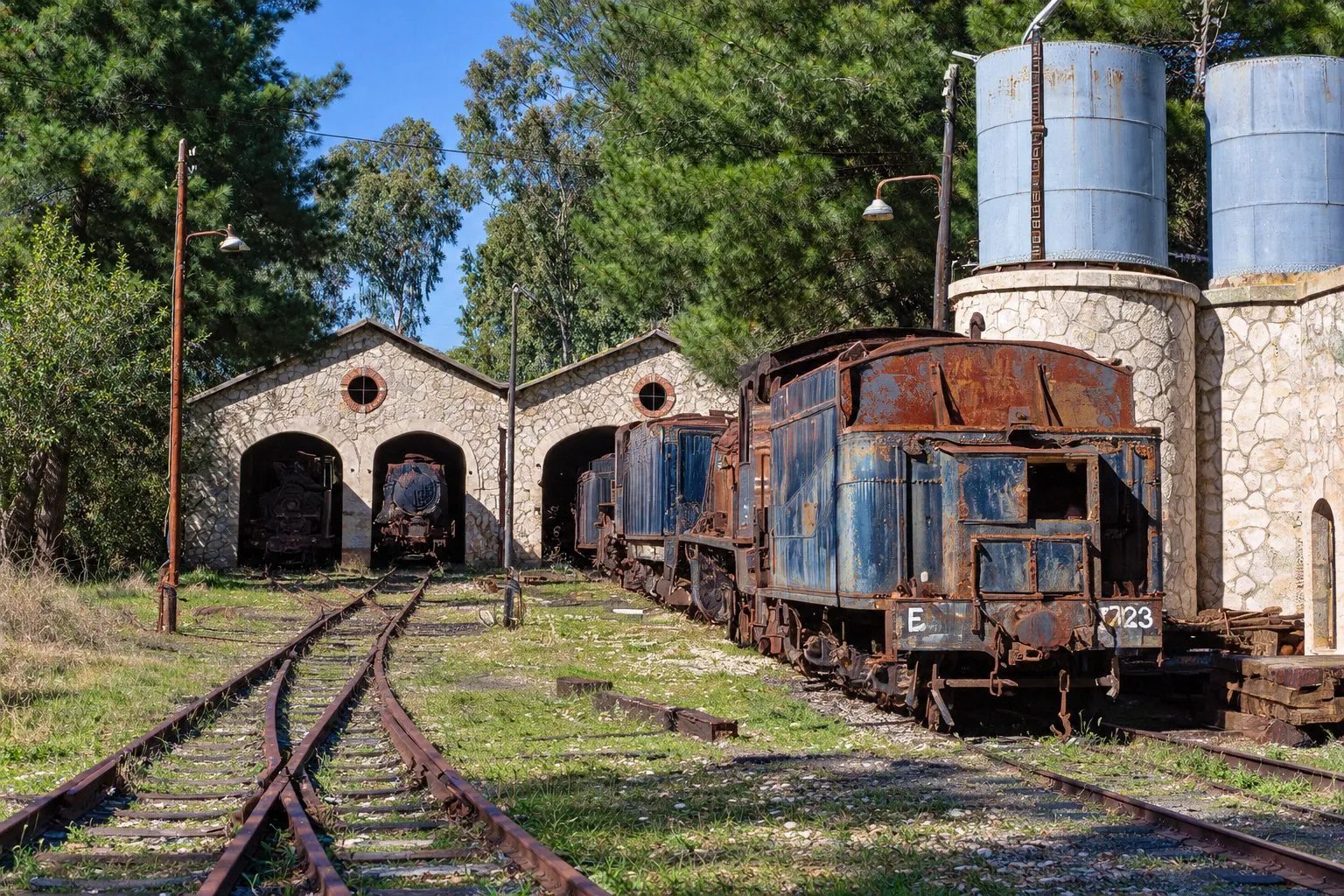
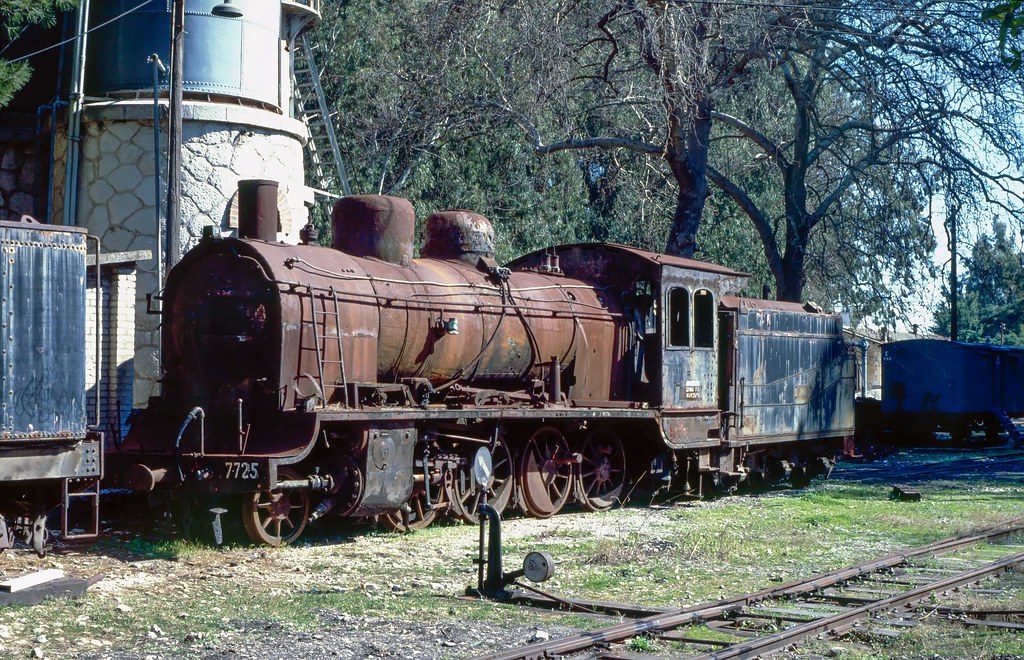
On 23 February 1995 the British photographer Adrian Nicholls captured what he called the "metre gauge graveyard" at Mili Nafpliou depot: the stone engine shed with its arched doors, two water towers and dumped locomotives such as class Es no. 7725.
- Threads
- Village life, Railway
- Certainty
- Proven confirmed by primary sources
Pictures
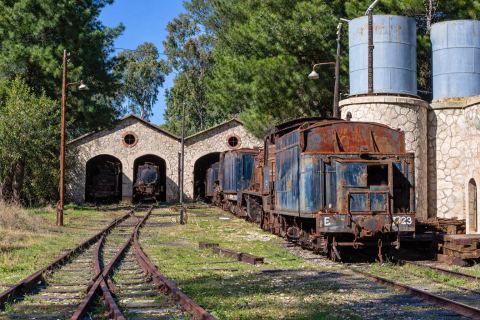
'Metre gauge graveyard. Mili Nafpliou Depot': the engine shed with arched doors at left, two water towers (stone base, blue tank) at right and tender locomotive 7723 in front. Adrian Nicholls (Flickr 'Marra Man')
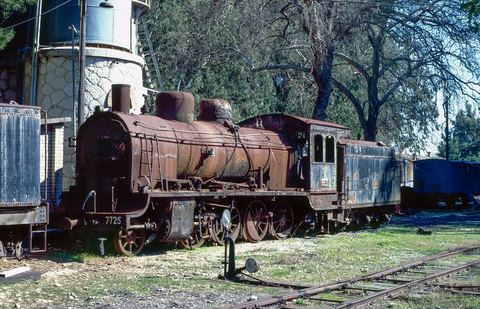
'Class Es no.7725 dumped at Mili Nafpliou depot': locomotive 7725 with a water tower behind and part of a stone building at left. Adrian Nicholls (Flickr 'Marra Man')
Sources
- Adrian Nicholls (Flickr "Marra Man"), photographs of 23 February 1995
Also in this period
-
1950–1969
Souvlaki passed up to the train windows
Because so many trains stopped at the junction of Myloi, the village became known for souvlaki. Sellers walked along the carriages with trays of skewers and passed them up to passengers at the open windows; a magazine…
-
1950s
A rural doctor for three years
Evangelos Koligliatis, born in Ira near Argos in 1922, served three years as rural doctor in Myloi in the 1950s, after two years in Filiates (Thesprotia). He later became a physician at the hospital of Argos.
-
1950s
A birth among the sheepfolds above Kalamaki
In an interview recorded in 1988, the old midwife of Kiveri remembered a birth "above Kalamaki, up at the sheepfolds". Afterwards the husband had to walk to the road and on to Myloi to call the doctor: there were…
-
7 April 1951
Census 1951: Kalamaki suddenly has 206 people
After the war and the civil war the community of Myloi has 639 inhabitants: 433 in Myloi and 206 in Kalamaki, four times as many as in 1940. The cause is not known; possibly families settled there temporarily, or the…