Places
Lake and marsh of Lerna
22 events
-
c. 700 BC
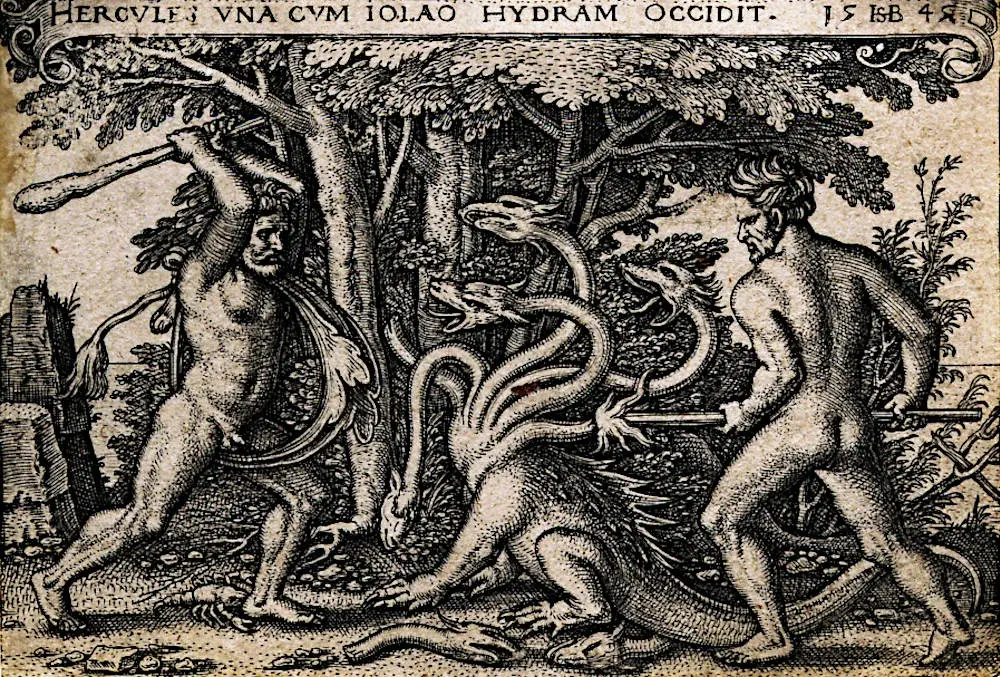
Hesiod tells of the Hydra of Lerna
Around 700 BC the poet Hesiod is the first to write about the Hydra, the many-headed water serpent of the marshes of Lerna, killed by Heracles. In the later version of the story two heads grew back for every one he…
-
c. 67
Emperor Nero tries to find the bottom of the lake
Beside the springs lay the Alcyonian lake, said to have no bottom; through it, the Argives believed, Dionysus went down to the underworld to fetch his mother Semele. Pausanias tells that the emperor Nero had ropes many…
-
c. 160
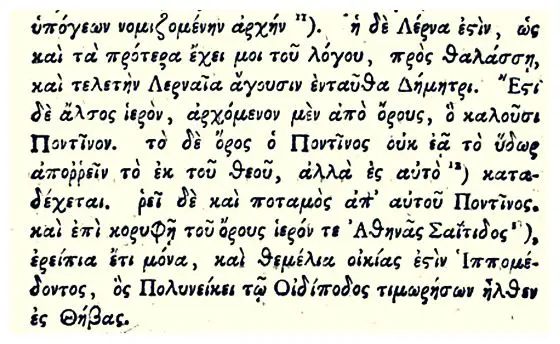
Pausanias visits Lerna and Mount Pontinos
The Greek travel writer Pausanias describes the sacred grove of plane trees that began at Mount Pontinos, the mysteries held there for Lernaean Demeter, the spring of Amymone and the bottomless Alcyonian lake. On the…
-
1729
Fourmont sketches the 'fountain of Lerna'
The French scholar Michel Fourmont, sent to Greece by King Louis XV to search for inscriptions and manuscripts, drew a sketch of the Argive plain in 1729. On it he marked the 'fontaine de Lerna', a 'temple of Diana' and…
-
1804–1806
Gell: the lake has become a mill dam
The English topographer William Gell, who travelled the Morea in 1804–1806, wrote that the ancient Alcyonian lake 'is now become a species of mill dam', turning mills 'which give the name of Myli to the spot'. 'There are…
-
1806
A ship from Smyrna unloads iron at the wharf
Leake found the southern mills close to the shore and to 'a small wharf where vessels load or disembark their cargoes'. A ship from Smyrna lay at anchor, unloading iron, and a row of storehouses stretched from the mills…
-
19 August 1806
Chateaubriand spends a feverish night in the marsh
The French writer Chateaubriand, travelling from Argos in August 1806, got lost in the marshes at night. He found 'a farm in the middle of the marsh, near the village of Lerne', where the harvest had just been brought in…
-
c. 1815
Pouqueville: about thirty houses at the foot of Pontinos
The French consul and traveller François Pouqueville arrived after sunset and, once someone had fetched the key, spent the night in the khan on bare planks, plagued by mosquitoes. 'Lerna or Milos', he wrote, consisted of…
-
25 June 1825
A French eyewitness describes the battle lines
According to Jourdain, the French general Roche met Ypsilantis and Mavromichalis in the mills that morning. He counted 227 Greeks: 100 to the right of the mills, 100 on the slope to the left and the rest behind the…
-
3 October 1827
Medicine against fever requested at Myloi
Captain Konstantis Veris, who held Myloi with his soldiers, asked Ioannis Kolettis to send medicine against 'the fever'. The marshes of Lerna made malaria a constant danger for anyone stationed at the mills.
-
30 May 1831
American sailors find 'a little collection of huts'
Officers of the American frigate USS Constellation visited Lerna. Enoch Wines wrote that the water from the spring was led away in a canal and turned a few mills, which gave the name Mylos to a little group of huts built…
-
4 June 1831
A boat of USS Boston capsizes on the way back from Lerna
A few days after the visit of the Constellation's officers, a boat from the American sloop USS Boston capsized in the gulf on its way back from Lerna.
-
1839?
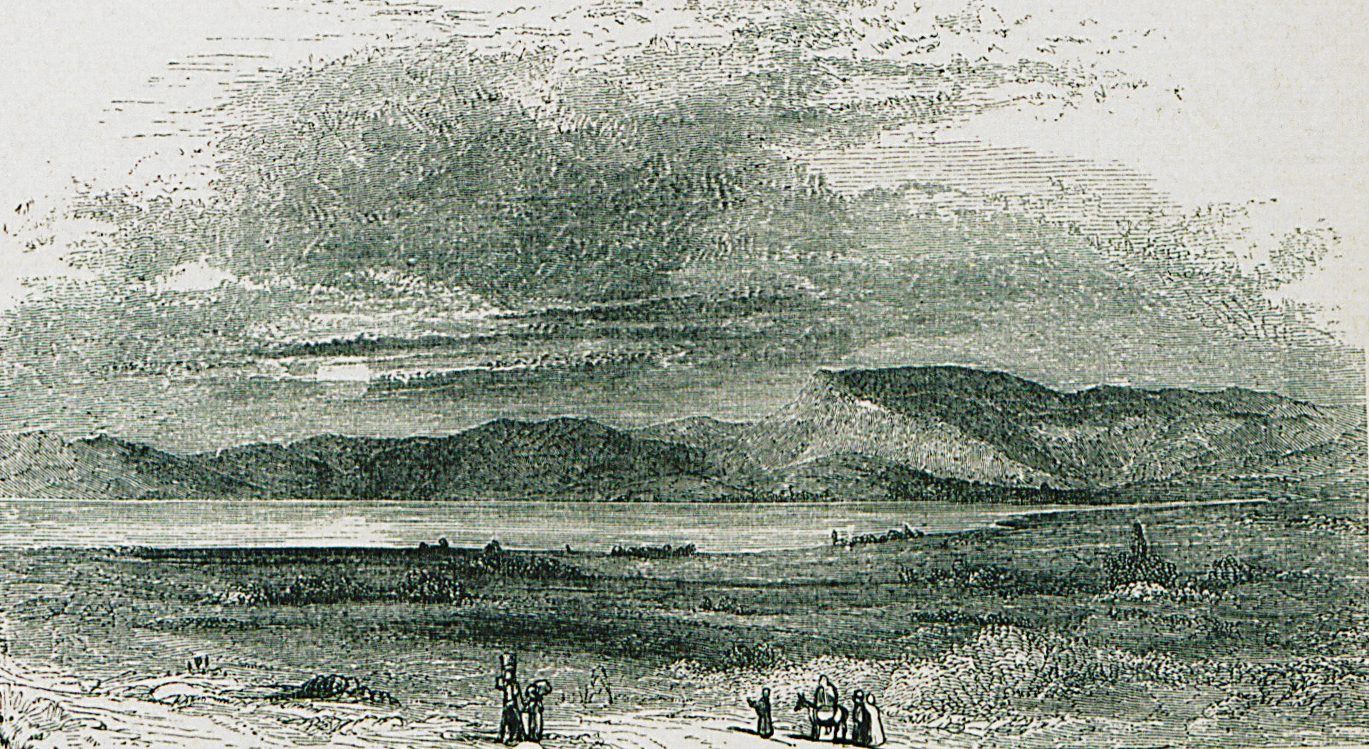
An English book shows the marsh of Lerna
Christopher Wordsworth's illustrated book on Greece, first published around 1839, includes a wood engraving of the 'Lernæan Marsh': water, plain and mountains, with travellers and a mule in the foreground. It is one of…
-
1858
'A landing-place, with a few poor houses'
The English scholar W. G. Clark went by boat from Nafplio to Myloi in one hour and twenty minutes, partly rowing and partly sailing. He found 'a landing-place, with a few poor houses about it', a pebble beach, quaking…
-
1869
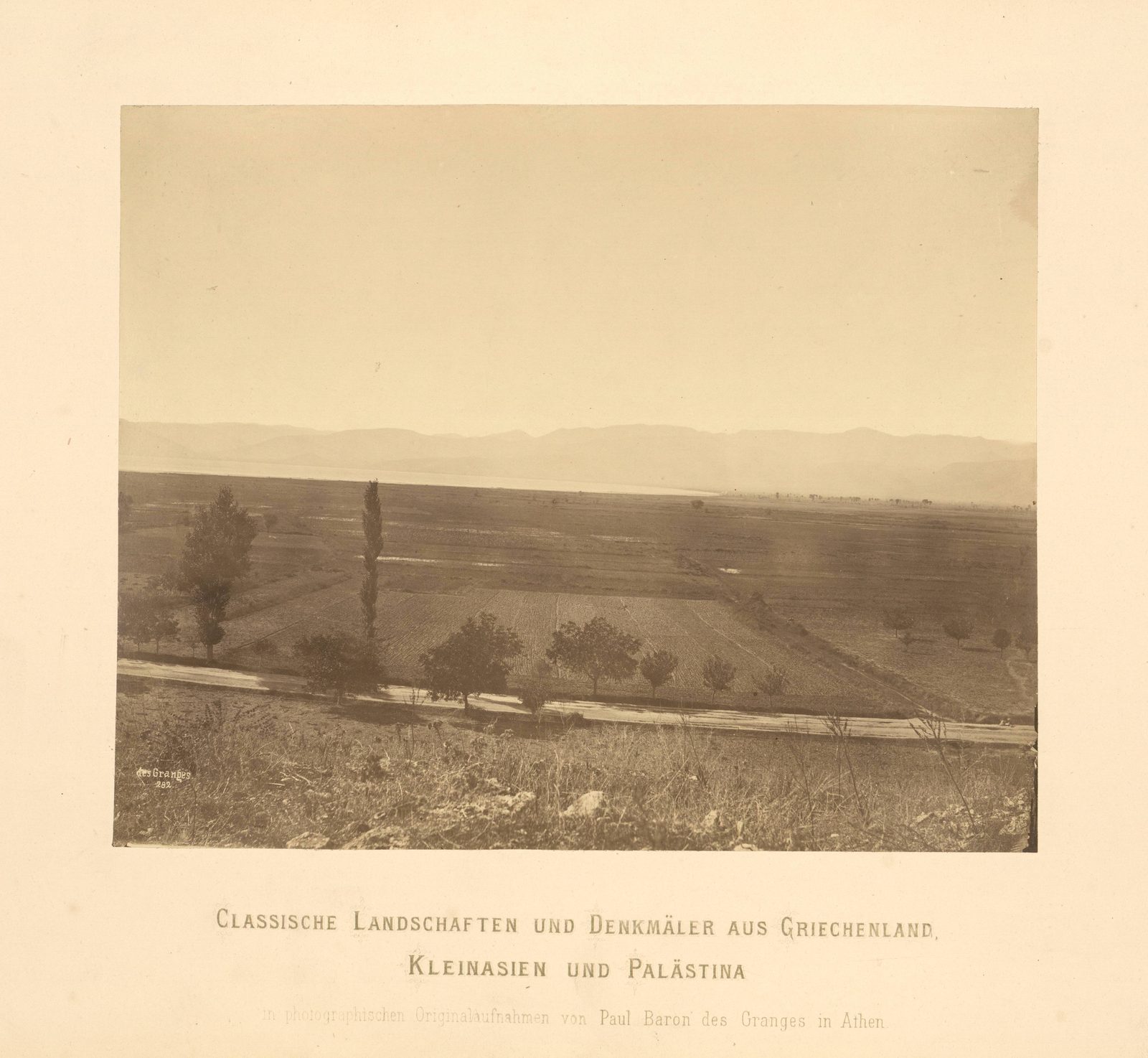
An early photograph across the plain to Lerna
Baron Paul des Granges photographed the gulf of Argos from Tiryns 'in the area of the Lernaean marsh'. On the horizon the west coast of the gulf with Lerna and Myloi can be made out below the mountains. It is one of the…
-
13 February 1874
The state leases the fishery up to the 'Mill of Barberaga'
A state tender for the fisheries of the Argolid described the fishery of the river of Argos and the Almyros as running from Litharakia to the Almyros 'at the place of the Mill of Barberaga'. Eels were caught in these…
-
24 February 1889
A slow start: first a big bridge over the Lerna marsh
The paper Kairoi found that the works starting from Myloi were 'not going very briskly'. Right at the start, where the line left the end of the Peloponnese railway, it needed major structures, above all a big bridge over…
-
December 1889
Armenian specialists for the Lerna bridge foundations
According to a 2015 thesis on the station, specialised Armenian workers were brought in during December 1889 to lay the foundations of the railway bridge over the Lerna marsh.
-
22 February 1890
Bridge piers 14 metres deep, and a wooden stopgap bridge
Two piers of the iron bridge over the lake of Lerna now stood on foundations 14 m deep; the other two were being set at 8 m. Meanwhile a temporary wooden bridge was built across the lake so that goods trains could pass.
-
7 April 1890
A locomotive already runs from Myloi to kilometre 12
The correspondent in Myloi reported that a locomotive was already running from Myloi to kilometre 12.2. The great bridge of Lerna was still not finished because of the difficult ground; the opening as far as…
-
8 July 1891
An illustrated report: portraits of the builders, and Myloi as km 0
The Athens daily To Asty printed engraved portraits of Ernest Rolin and Louis Rosseels, 'the founders of the Myloi–Kalamata company', and a large engraving of a bridge near Achladokampos. Its description of the line…
-
1952–1953
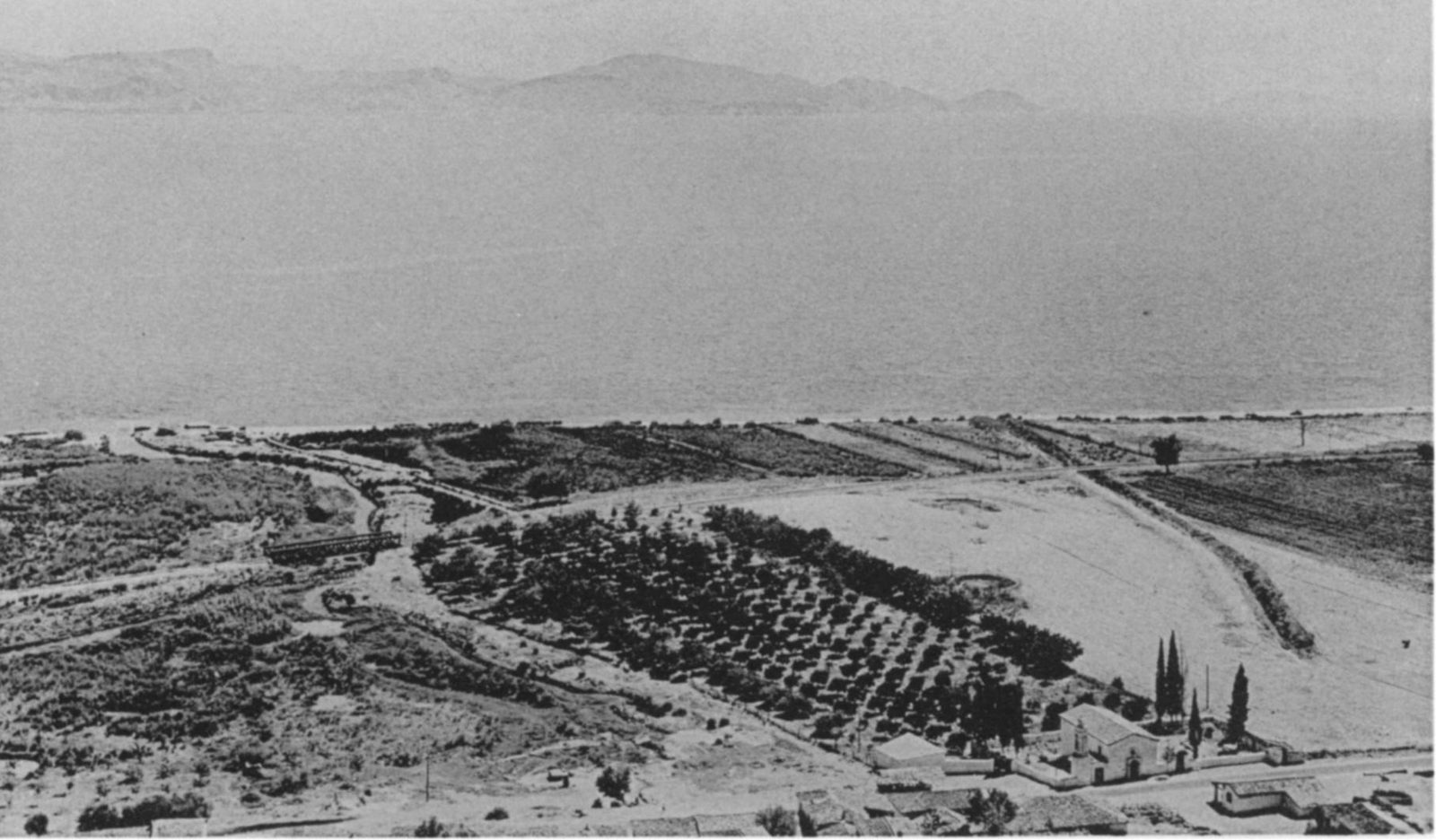
Caskey photographs the marshes of Lerna
Caskey's first report shows the site from Mount Pontinos: marshes, the stream Amymone running from the spring to the gulf, orchards and the railway. It is one of the best pictures of the water landscape just before the…
People
- Nero Roman emperor (54–68)
- Pausanias Greek travel writer
- Michel Fourmont French orientalist and collector of inscriptions
- William Gell English classical topographer and traveller
- William Martin Leake British officer, topographer and traveller
- François-René de Chateaubriand French writer and statesman
- G. D. Avramiotti Physician in Argos and critic of Chateaubriand
- François Pouqueville French consul, traveller and historian
- J.-P.-P. Jourdain French officer in Greek service and author
- Dimitrios Ypsilantis Commander in the Greek Revolution
- Konstantinos Mavromichalis Maniot commander in the Greek Revolution
- Konstantis Veris Captain from Roumeli in the Revolution
- Ioannis Kolettis Politician, member of the Executive and later prime minister
- Enoch Cobb Wines American navy teacher and travel writer
- Christopher Wordsworth English scholar, later bishop, author of a book on Greece
- William George Clark English scholar and travel writer
- Ernest Rolin Belgian contractor of the Myloi–Kalamata railway
- Louis Rosseels Belgian consul in Athens, agent of Ernest Rolin
- John Langdon Caskey Archaeologist, excavator of Lerna
Pictures
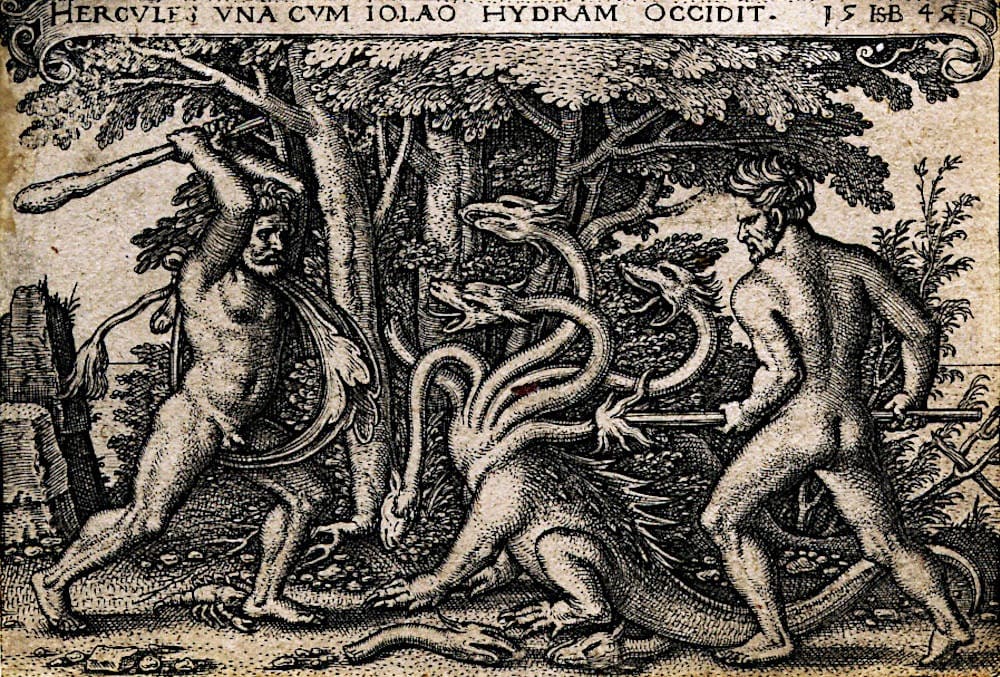
Engraving dated 1545, 'Hercules una cum Iolao Hydram occidit': Heracles and Iolaos slaying the Hydra (Labours of Hercules series, attributed to Hans Sebald Beham). Public domain
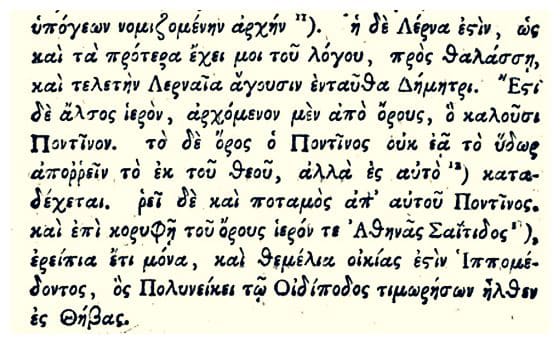
Pausanias’ own words about Lerna and Mount Pontinos (Description of Greece 2.36–37), in Greek, from an old printed edition. Visit Myloi collection
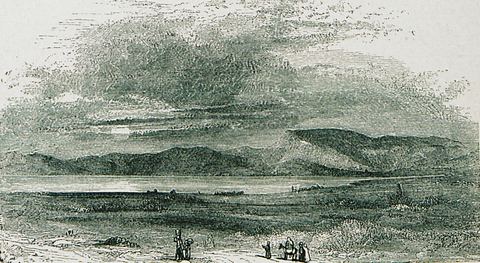
Wood engraving 'Lernæan Marsh': the marsh of Lerna with water, plain and mountains, and travellers with a mule in the foreground. Christopher Wordsworth, 'Greece: Pictorial, Descriptive, and Historical' (John Murray, London)
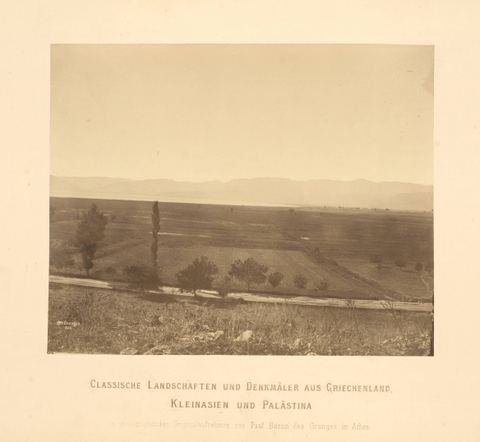
'Der Golf von Argos in der Gegend des lernaischen Sumpfes von Tirynth aus': the plain of Argos with roads and poplars, and on the horizon the west coast of the gulf with Lerna/Myloi and the mountains. Paul baron des Granges; Fonds des Granges, Institut d'Archéologie classique, Université de Strasbourg (no. 282, ARM VI, 15)
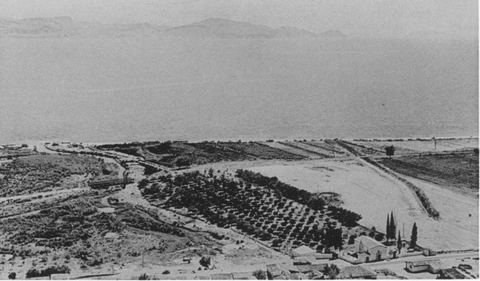
The Lernaean marshes, the Amymone stream and the excavation site seen from Mt Pontinos, with houses of Myloi, the railway and orchards. J. L. Caskey / ASCSA Lerna excavation