
The postwar village · Ancient Lerna · Water and mills
Caskey photographs the marshes of Lerna
1952–1953 Proven
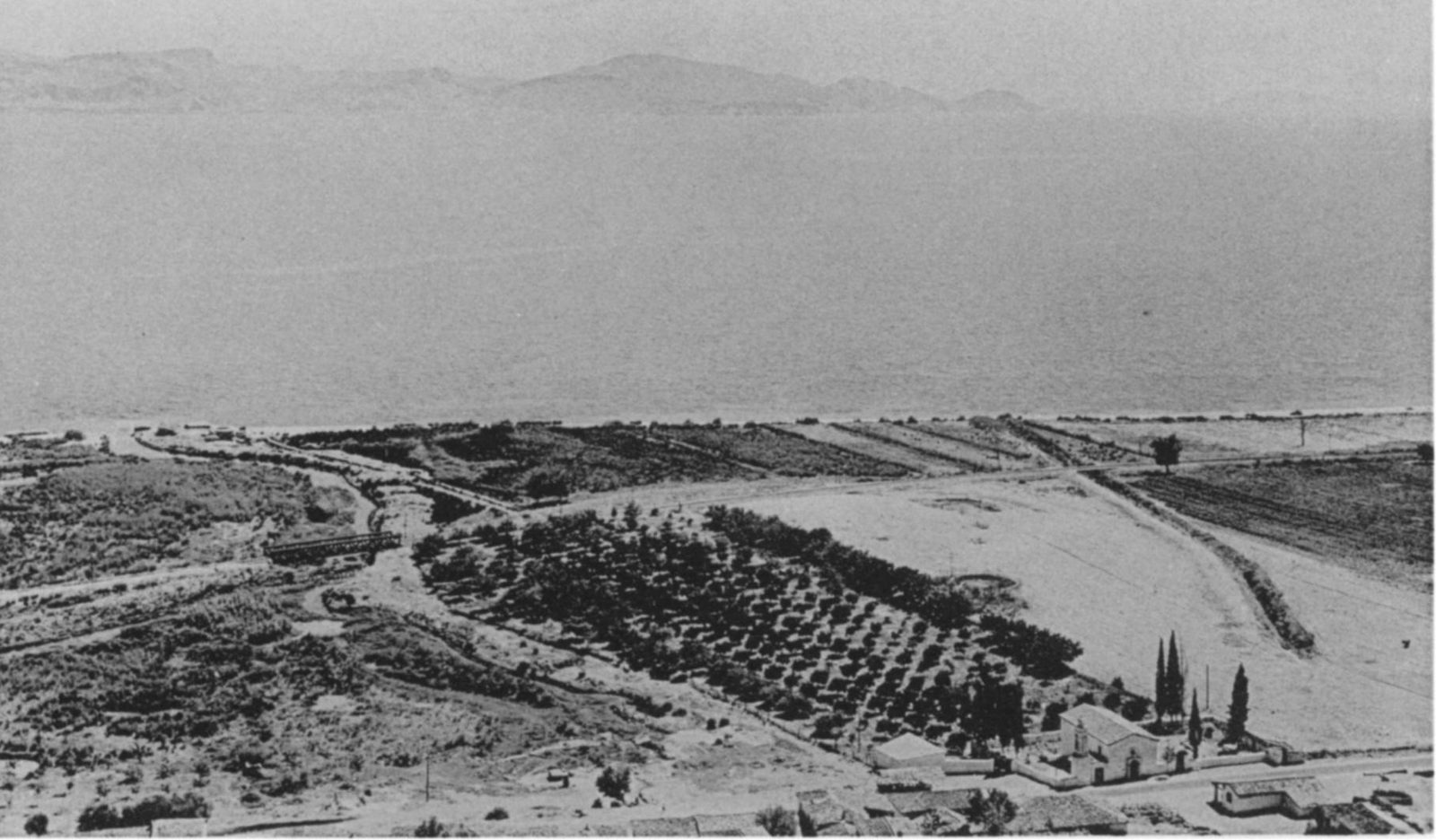
Caskey's first report shows the site from Mount Pontinos: marshes, the stream Amymone running from the spring to the gulf, orchards and the railway. It is one of the best pictures of the water landscape just before the pumps of 1960.
Read the full story: From spring to pump: how the water of Lerna made Myloi
- Threads
- Ancient Lerna, Water and mills
- Certainty
- Proven confirmed by primary sources
Pictures
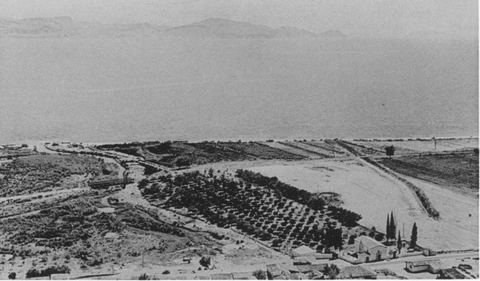
The Lernaean marshes, the Amymone stream and the excavation site seen from Mt Pontinos, with houses of Myloi, the railway and orchards. J. L. Caskey / ASCSA Lerna excavation
Sources
- J. L. Caskey, Hesperia 23 (1954), pp. 3–4 and pl. 1a
Also in this period
-
7 October 1950
First stone of the ice factory «Η Λέρνη»
Early in 1950 Anastasios Vasileiou bought the ruins of the old state warehouses on the beach of Myloi and levelled the ground. On 7 October 1950, after a blessing, he laid the first stone of the ice and cold-storage…
-
1952
John Caskey starts digging at Lerna
In 1952 the American School of Classical Studies at Athens, led by its director John L. Caskey, opened the first trenches in the low mound by the springs, at the edge of Myloi. The work went on every year until 1958.
-
1953
A trench right beside the railway
In 1953 the diggers opened Area D right next to the Argos–Myloi railway, so trains passed only a few metres from the trench. The plates in Hesperia show both the ancient walls and the tracks.
-
1954
The House of the Tiles comes to light
By the summer of 1954 a large part of the House of the Tiles was exposed: a big Early Bronze Age building (around 2500–2200 BC) whose roof had been covered with baked clay tiles. Caskey published the first photographs in…