Places
Springs of Lerna
29 events
Show on a map (opens in a new tab)
-
6000 BC – 3200 BC
First farmers settle by the springs of Lerna
In the Neolithic, more than 6,000 years ago, farmers settled on a low rise beside the springs, just south of today's village. Each generation built on the ruins of the last, so the settlement mound of Lerna slowly grew.…
-
c. 700 BC
Hesiod tells of the Hydra of Lerna
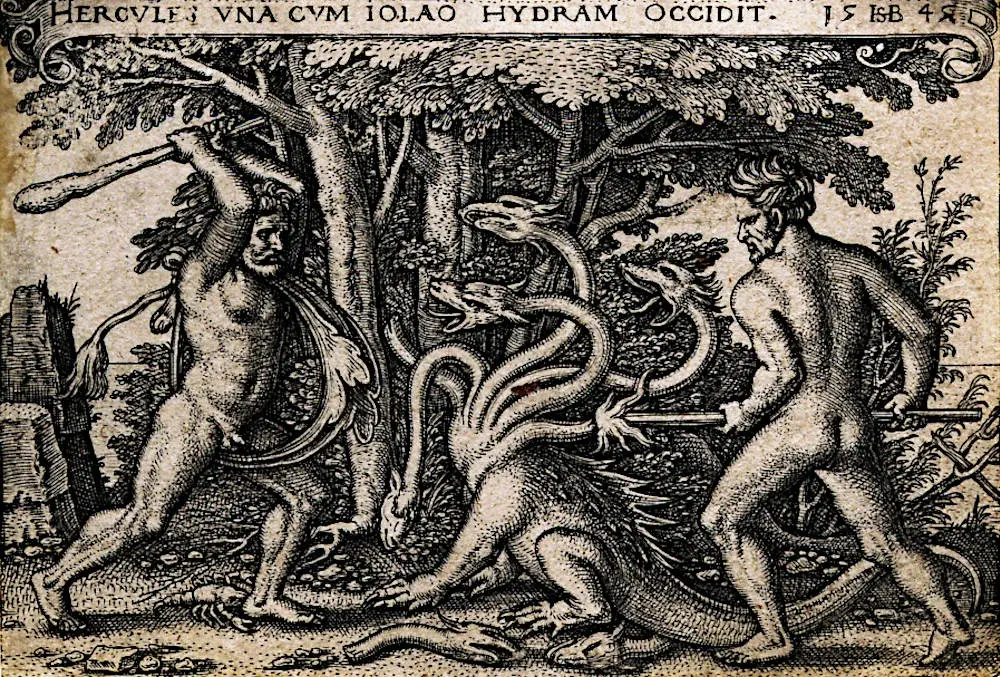
Around 700 BC the poet Hesiod is the first to write about the Hydra, the many-headed water serpent of the marshes of Lerna, killed by Heracles. In the later version of the story two heads grew back for every one he…
-
c. 160
Pausanias visits Lerna and Mount Pontinos
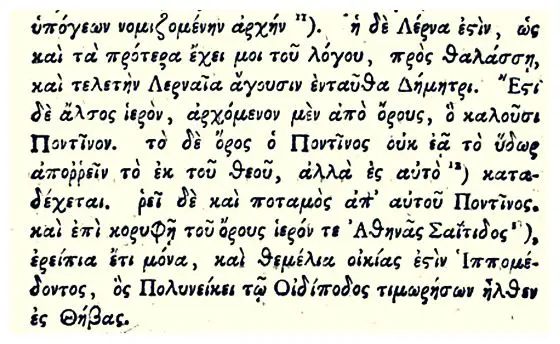
The Greek travel writer Pausanias describes the sacred grove of plane trees that began at Mount Pontinos, the mysteries held there for Lernaean Demeter, the spring of Amymone and the bottomless Alcyonian lake. On the…
-
1212–1388
The Franks build the first watermills
In 1212 the Franks took Argos and Nafplio. In the period that followed, according to the Ephorate of Antiquities, the first watermills were built at Lerna, driven by the water of the springs. These mills would eventually…
-
1687–1714
The Venetians expand the mills
After the Peloponnese came under Venice in 1687, the Venetians greatly expanded the mills of Lerna. They built connected vaulted granaries, fitted new grinding machinery and surrounded the complex with a stone dam with…
-
c. 1704
The whole Venetian fleet takes water at the Mills
A Venetian description of the Kingdom of the Morea from around 1704, attributed to G. E. Alberghetti, notes that in the southernmost part of the plain of Argos lie 'the Mills, where the whole navy takes on water'. The…
-
21 July 1715 – 4 August 1715
The Ottoman army camps at the mills of Tziveri
On 21 July 1715, the day after Nafplio fell to the Ottomans, Grand Vizier Damat Ali Pasha moved his army away from the stench of the dead to the western end of the gulf, below a hill with the remains of an ancient city.…
-
1729
Fourmont sketches the 'fountain of Lerna'
The French scholar Michel Fourmont, sent to Greece by King Louis XV to search for inscriptions and manuscripts, drew a sketch of the Argive plain in 1729. On it he marked the 'fontaine de Lerna', a 'temple of Diana' and…
-
1806
Leake: the 'Afendiki Myli' are government mills of Nafplio
The British officer and topographer William Martin Leake visited the mills in 1806. He called them the Afendiki Myli, 'mills of Anapli [Nafplio], to which town they belong', and explained the Greek term as 'government…
-
c. 1815
Ottoman frigates anchor off 'the Mills'
Pouqueville noted that the frigates of the Kapudan Pasha, the Ottoman admiral, had to anchor off the beach of Lerna, 'commonly called the Mills', and that ships calling there took on fresh water. A century after the…
-
29 March 1873
The arsenal's water-driven forge at Myloi
A newspaper listed 'the hammer forge at Myloi' among the branches of the army arsenal of Nafplio, together with works for saltpetre and percussion caps. The forge stood at the 'stomalimni', the outlet of the spring lake,…
-
1 April 1882
A Danish professor sees the spring by the chapel of Saint John
Travelling by carriage, Johan Louis Ussing wrote that the largest spring came out 'through seven openings by a small chapel of Saint John'. He also noted that at Myli the new carriage road turned west towards the…
-
1883
Baedeker: the 'Skala' with the most important mill
The German Baedeker guide of 1883 described Myli as a village stretching along the road at the foot of Pontinos. Below the road, near the chapel of Agios Ioannis, a mighty spring broke out. Part of the village, the…
-
1952–1953
Caskey photographs the marshes of Lerna
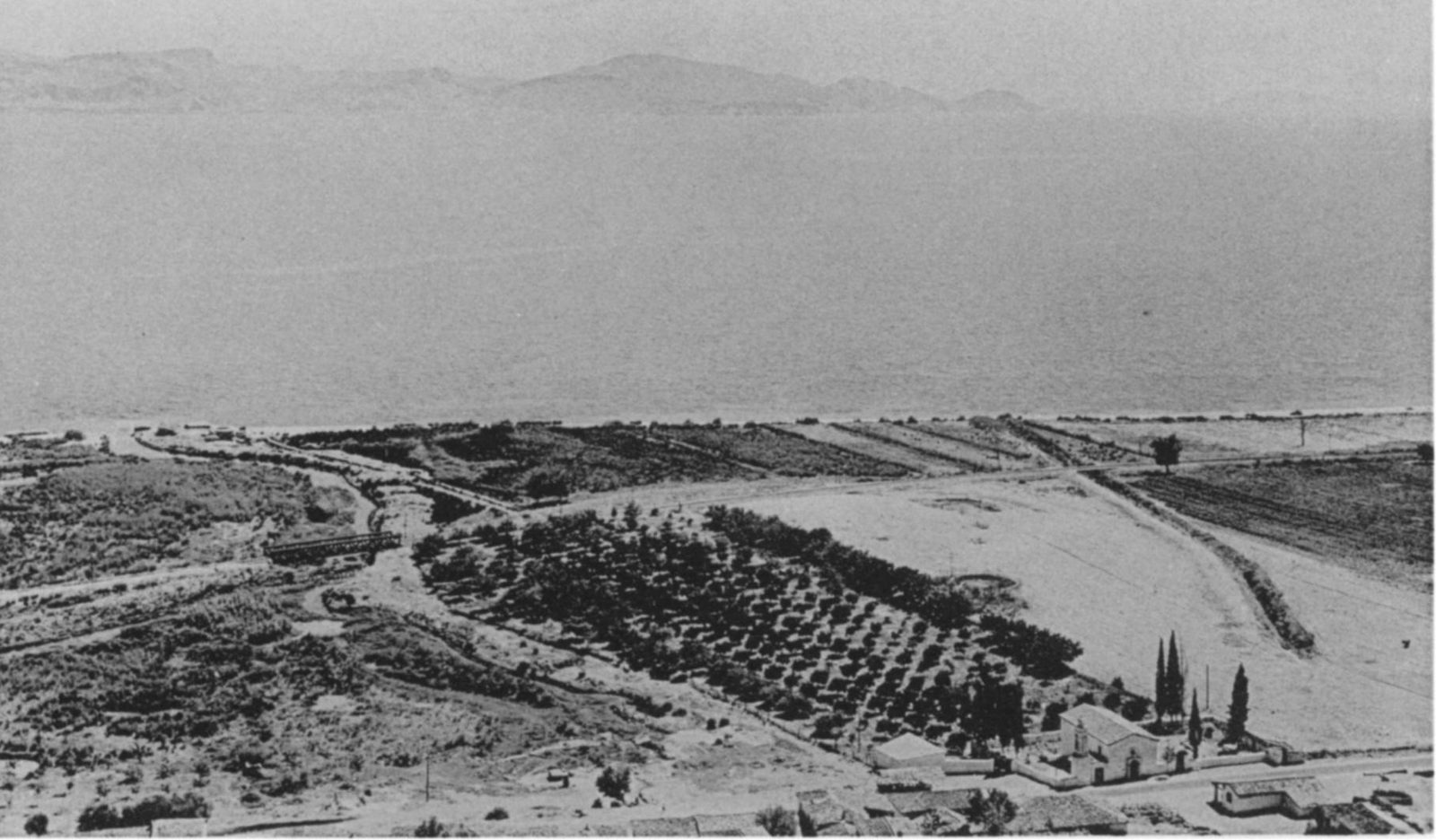
Caskey's first report shows the site from Mount Pontinos: marshes, the stream Amymone running from the spring to the gulf, orchards and the railway. It is one of the best pictures of the water landscape just before the…
-
c. 1960
Ministries and the FAO look for water
Around 1960 the ministries of Coordination, Agriculture and Public Works set up a committee with the UN Food and Agriculture Organization. The FAO made three million dollars available for test drilling, which yielded…
-
1960
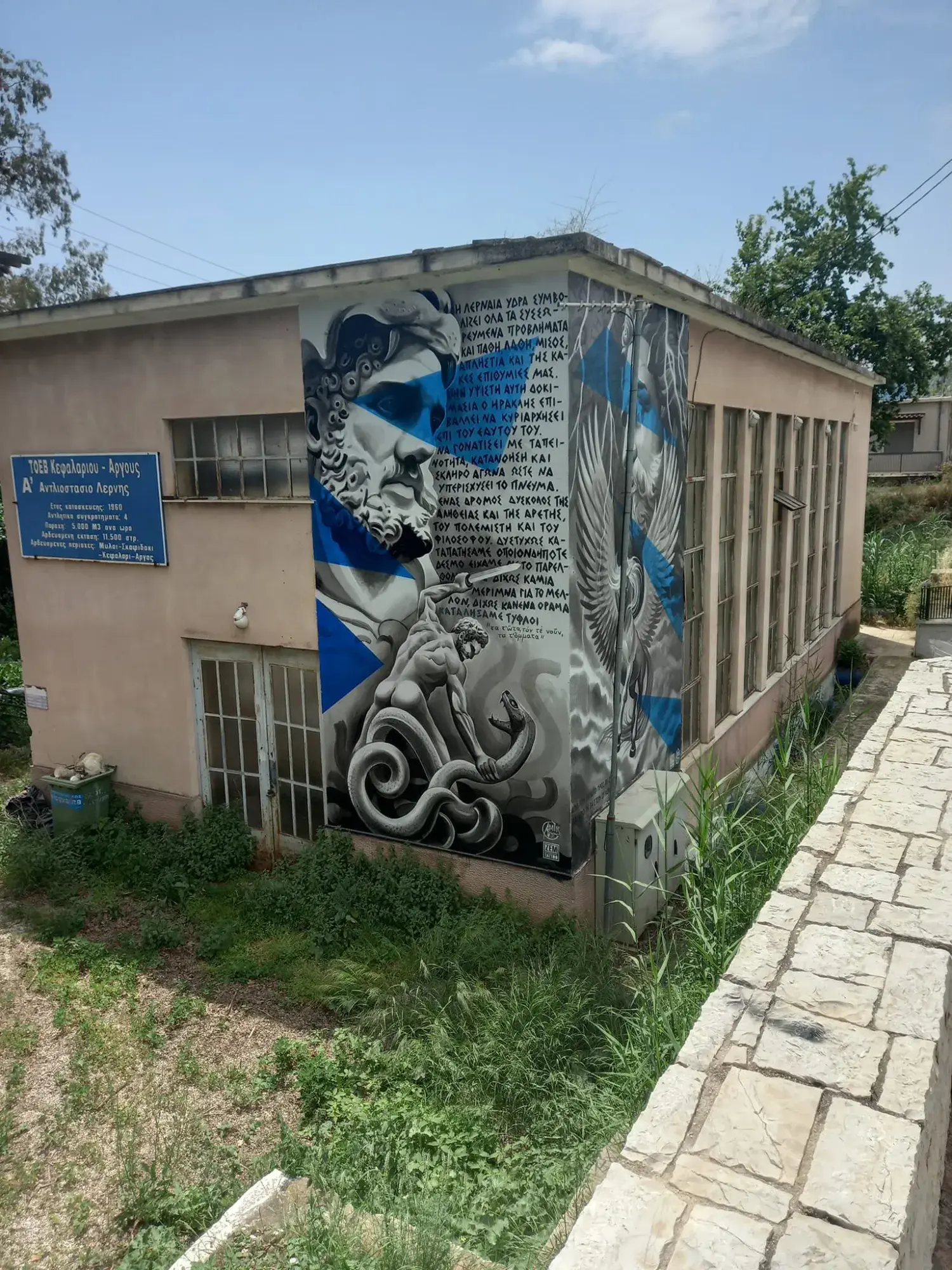
The first pumping station of Lerna is built
In 1960 the "Α' Αντλιοστάσιο Λέρνης" was built beside the main spring, on the Argos–Tripoli road. Its four pumps lift 5,000 m³ an hour, about as much as the spring gives, to irrigate 11,500 stremmata in Myloi, Skafidaki,…
-
1960s
Nafplio drinks water from Myloi
In the early 1960s Nafplio began to take its drinking water from the Amymone spring at Myloi, through an underground pipeline about 13 km long. Two pumping stations together deliver some 600 m³ an hour.
-
1963–1966
Spring water pumped back into the ground
From 1963 to 1966 the land-improvement service of the Ministry of Agriculture used the winter water of the Kefalari and Lerna springs to refill the groundwater through some 60 wells. The experiment was stopped in…
-
3 February 1967
Spyros Meletzis photographs the spring of Amymone
The magazine ΑΛΦΑ of 3 February 1967 carried a long report on the Argolid, "Η αρχόντισσα του Αργολικού", with text by Nikos Karantinos and photographs by Spyros Meletzis. Among them is the spring of Amymone at Myloi; the…
-
16 December 1979
The president speaks about selling Lerna's water
The Argos paper Feidon interviews the president of the community, G. Koromichis, about the sale of water from the springs of Lerna. In 1981 he publicly answered two opposition councillors in the same paper; the water of…
-
1988
Nafplio also draws on the Lerna spring
From 1988 the water company of Nafplio took drinking water not only from the Amymone spring but also from the main spring of Lerna at Myloi.
-
2003
Argos gets drinking water from Lerna
Around 2003 Argos also began to take drinking water from the springs at Myloi, about 500 m³ an hour through a pipeline of 10 km. One source gives 2005 instead.
-
2008
The spring weakens in summer
In the summer of 2008 the spring of Lerna gave less than 400 m³ an hour, a fraction of its old flow of around a thousand litres a second.
-
24 April 2013
A water plan to protect the spring
The river basin management plan for the Eastern Peloponnese (ΦΕΚ 1004/Β/24-4-2013) proposed housing the scattered pumps at the Lerna spring inside the 1960 pumping station and moving the cemetery that lies above the…
-
11 March 2020
The pumps are still outside the building
At the Peloponnese Regional Council on 11 March 2020 two councillors pointed out that the plan to move the pumps into the building of the irrigation board had not been carried out: "the pumping stations remain outside…
-
14 May 2023
The irrigation boards sound the alarm
On 14 May 2023 the local irrigation boards of the Argolid, among them the Kefalari–Argos board that owns the 1960 pumping station, complained jointly about outdated pumps, high electricity costs and thefts at the pumping…
-
June 2025
Heracles and the Hydra on the pumping station
By June 2025 at the latest, artists including ZEM tattoo from Nafplio had painted a large mural on the 1960 pumping station: Heracles fighting the Hydra, a Pegasus, and a warning text ending with a line from Sophocles.…
-
August 2025
The spring that never ran dry runs dry
In August 2025 the local press reported that the spring of Lerna "gives not a drop of water". The pumps that supply Nafplio and Argos with drinking water stopped.
-
June 2026
After a wet winter the springs recover
In June 2026, after a wet winter, the springs of Lerna were reported to be back at about 65 per cent of their normal flow.
People
- John Langdon Caskey Archaeologist, excavator of Lerna
- Pausanias Greek travel writer
- Benjamin Brue Interpreter of the King of France at the Ottoman court, eyewitness of 1715
- Silahdar Damat Ali Pasha Ottoman grand vizier (1713–1716), conqueror of the Morea in 1715
- Michel Fourmont French orientalist and collector of inscriptions
- William Martin Leake British officer, topographer and traveller
- François Pouqueville French consul, traveller and historian
- Johan Louis Ussing Danish classical scholar
- Spyros Meletzis Photographer
- Georgios Koromichis President of the community of Myloi
Pictures
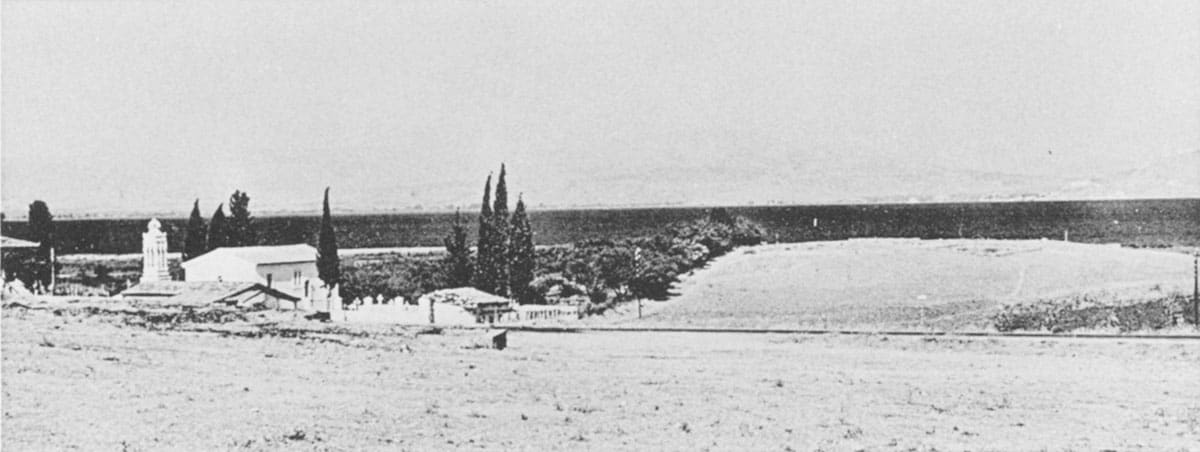
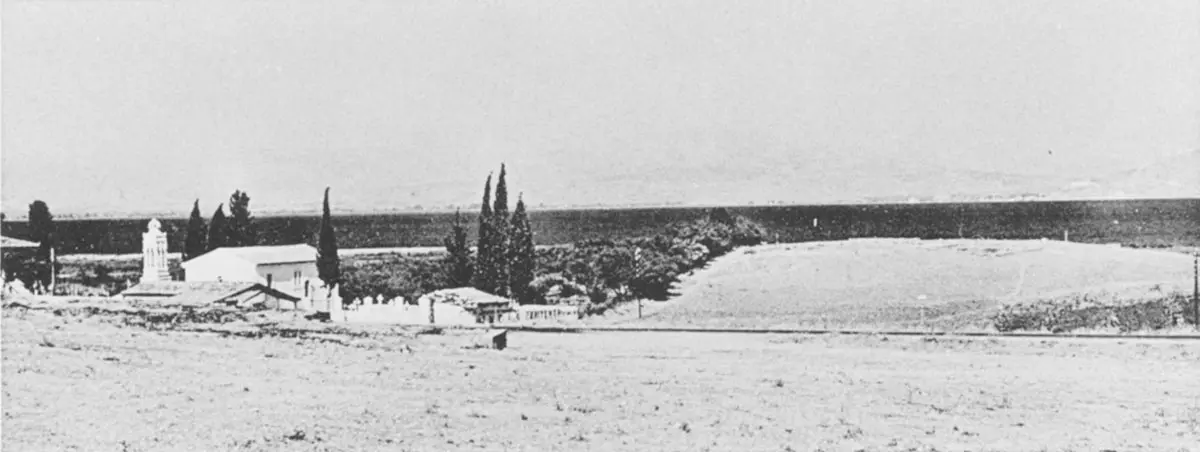
The mound of Lerna from the west, with the church and cypresses, early 1950s. J. L. Caskey, Excavations at Lerna, 1952–1953
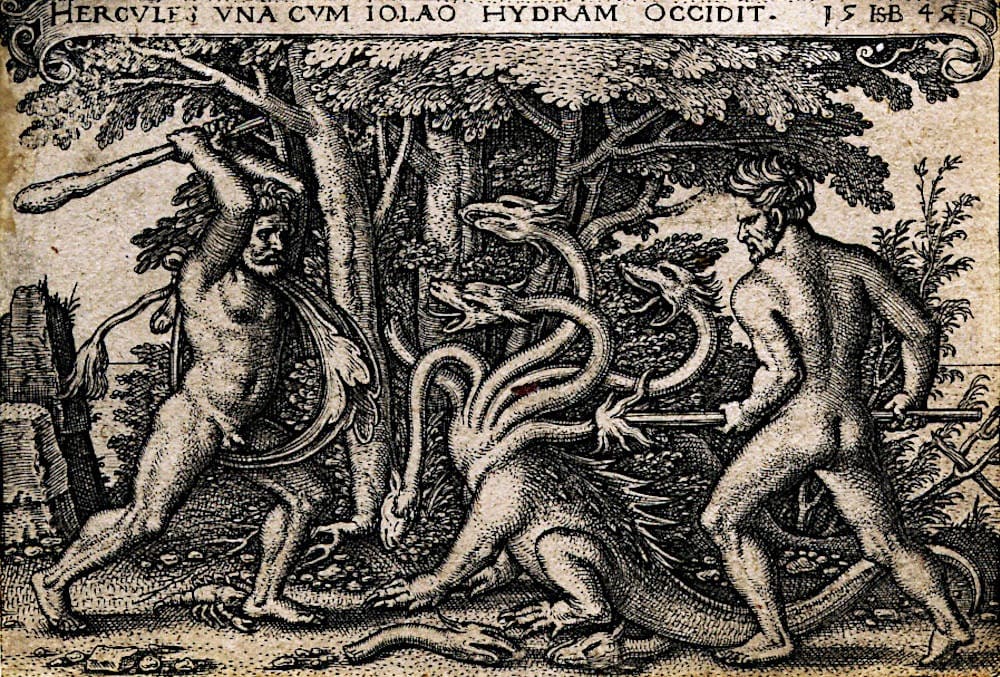
Engraving dated 1545, 'Hercules una cum Iolao Hydram occidit': Heracles and Iolaos slaying the Hydra (Labours of Hercules series, attributed to Hans Sebald Beham). Public domain
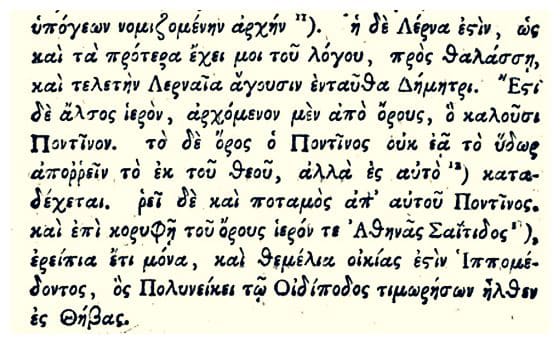
Pausanias’ own words about Lerna and Mount Pontinos (Description of Greece 2.36–37), in Greek, from an old printed edition. Visit Myloi collection
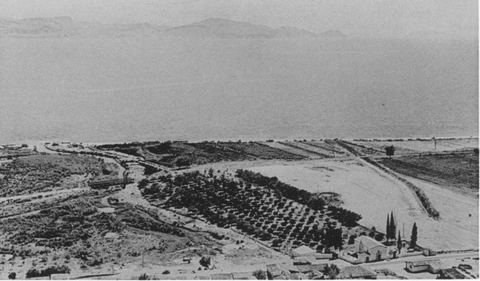
The Lernaean marshes, the Amymone stream and the excavation site seen from Mt Pontinos, with houses of Myloi, the railway and orchards. J. L. Caskey / ASCSA Lerna excavation
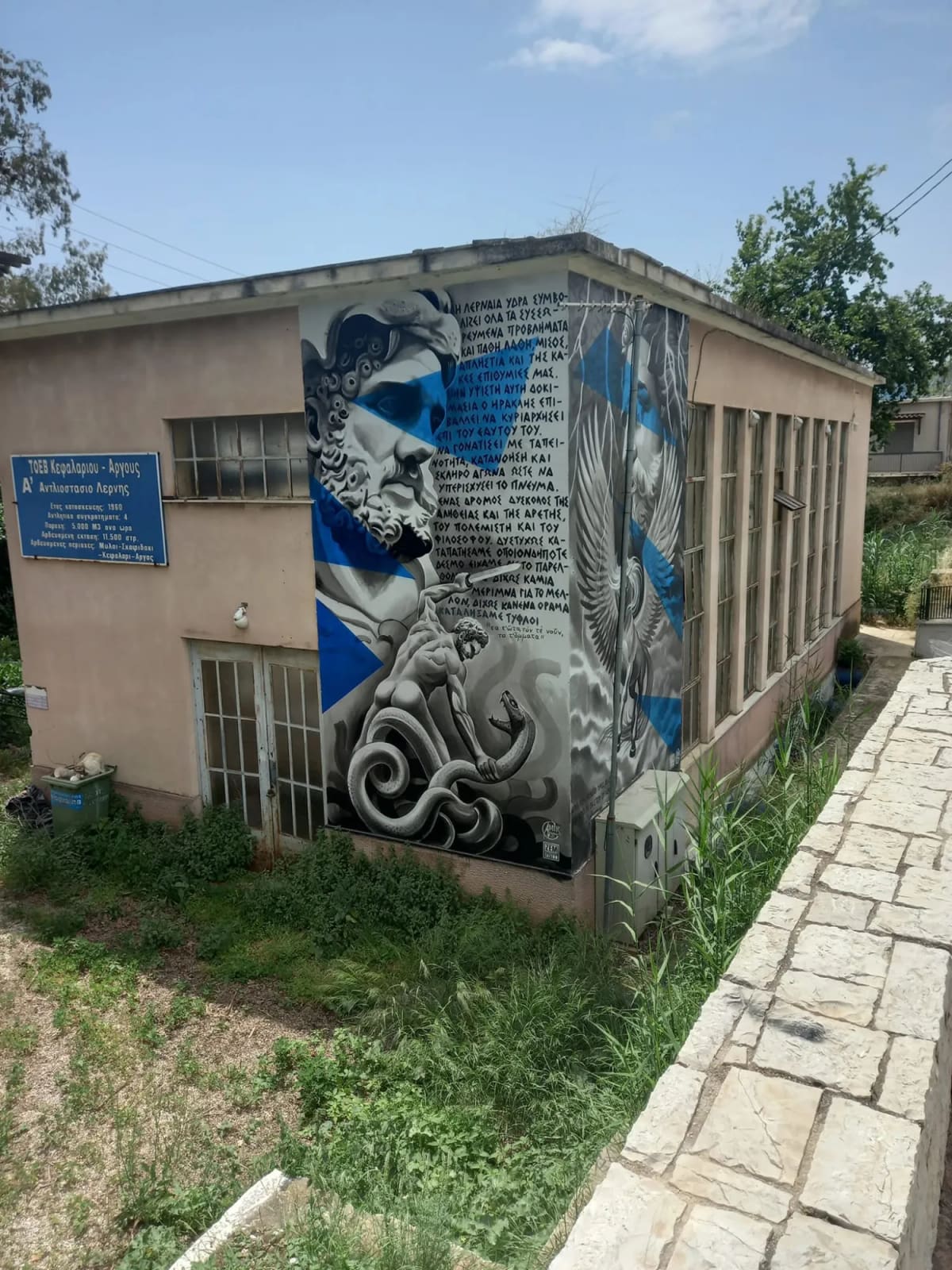
The 1960 pumping station of Lerna on the Argos–Tripoli road in Myloi, with its sign of the Kefalari–Argos irrigation board and the mural of Heracles and the Hydra. Visit Myloi