Places
Locomotive shed
10 events
Show on a map (opens in a new tab)
-
12 May 1888
Contract signed: a railway from Myloi, with a pier and a workshop
Trikoupis and Lomvardos signed the contract with the Belgian consul Louis Rosseels, acting for Ernest Rolin of the Société Internationale de Constructions et d'Entreprises de Travaux Publics. The line was to start at…
-
10 July 1888
The pier is planned as a pier on piles
The company's budget set aside 290,000 francs for 'a pier (estacade) and workshops at Myloi and Kalamata'. An estacade is a pier standing on piles, not a solid stone harbour wall. The whole line was budgeted at 21.6…
-
1889–1890
Ten Belgian locomotives for the line from Myloi
Ten tank engines with large 1.20 m driving wheels were built in Belgium in 1889 for the Myloi–Kalamata railway: three arrived in 1889, seven in 1890. A catalogue plate calls them 'Locomotive-Tender pour le chemin de fer…
-
31 July 1889
A French engineer checks the rolling stock built in Belgium
The government appointed the French engineer Macaigne, from Cambrai, to supervise the locomotives and wagons being built in Belgium for the Myloi–Kalamata line.
-
1892
Nineteen locomotives change hands; seven go far from Myloi
The ΣΠΑΠ 'inherited' 19 locomotives bought for the line Myloi–Kalamata, 18 of them from Belgian factories. The ten Belgian tank engines became series Ι, numbers Ι651–Ι660, without names. According to the 1892 annual…
-
1895
'Not suitable for the Myloi–Kalamata line'
In the 1895 annual report Apostolos Agathoklis, head of traction and rolling stock of the ΣΠΑΠ, judged the Belgian series Ι engines fit for fast passenger trains but not for the steep climbs of the Myloi–Kalamata line,…
-
1900s
Myloi, one of the eleven locomotive depots
Once their network was complete, the ΣΠΑΠ had eleven locomotive depots, among them Tripoli and Myloi. Engines of several types were based at Myloi, ready for the climb into Arcadia.
-
13 July 1941
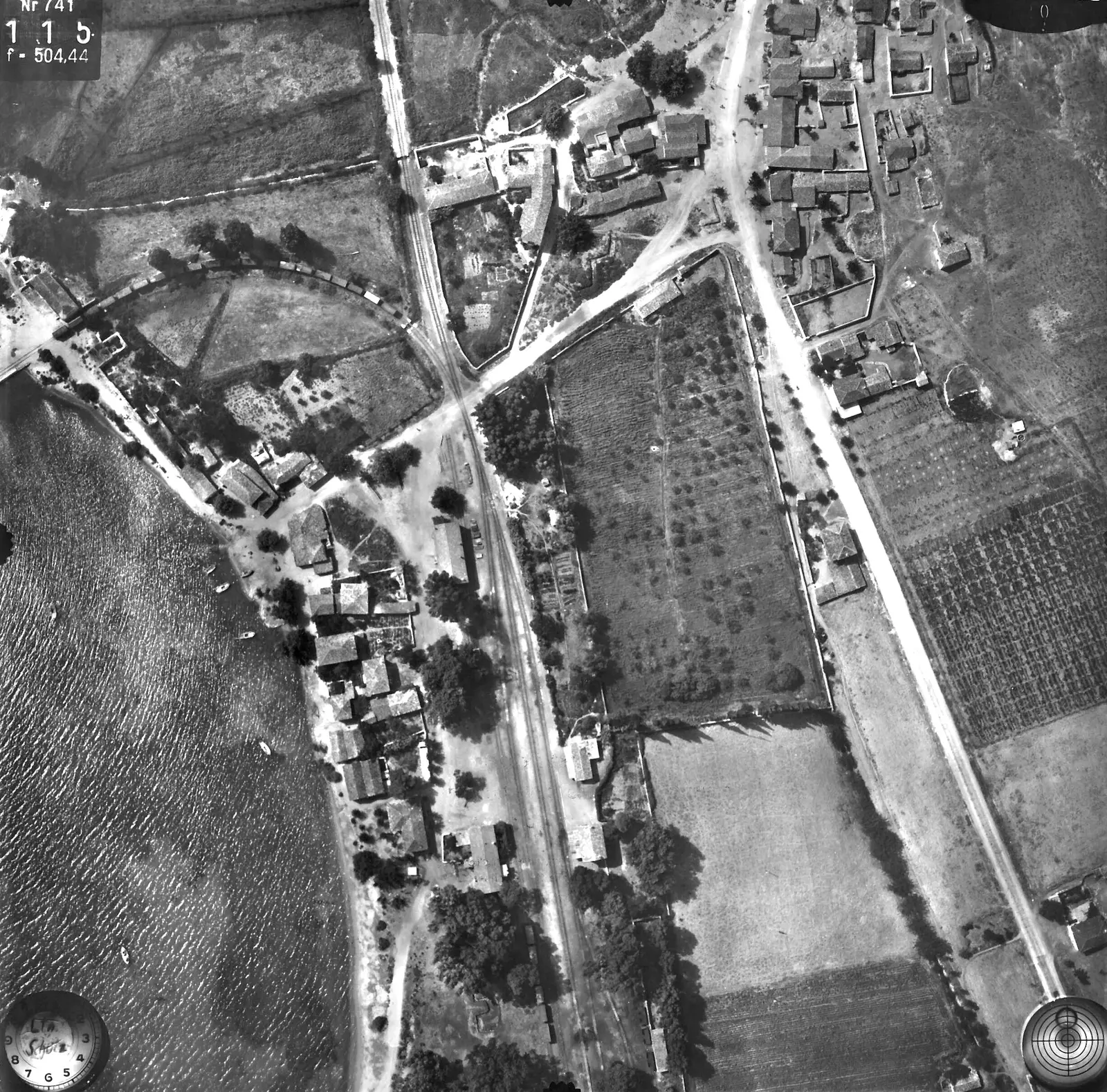
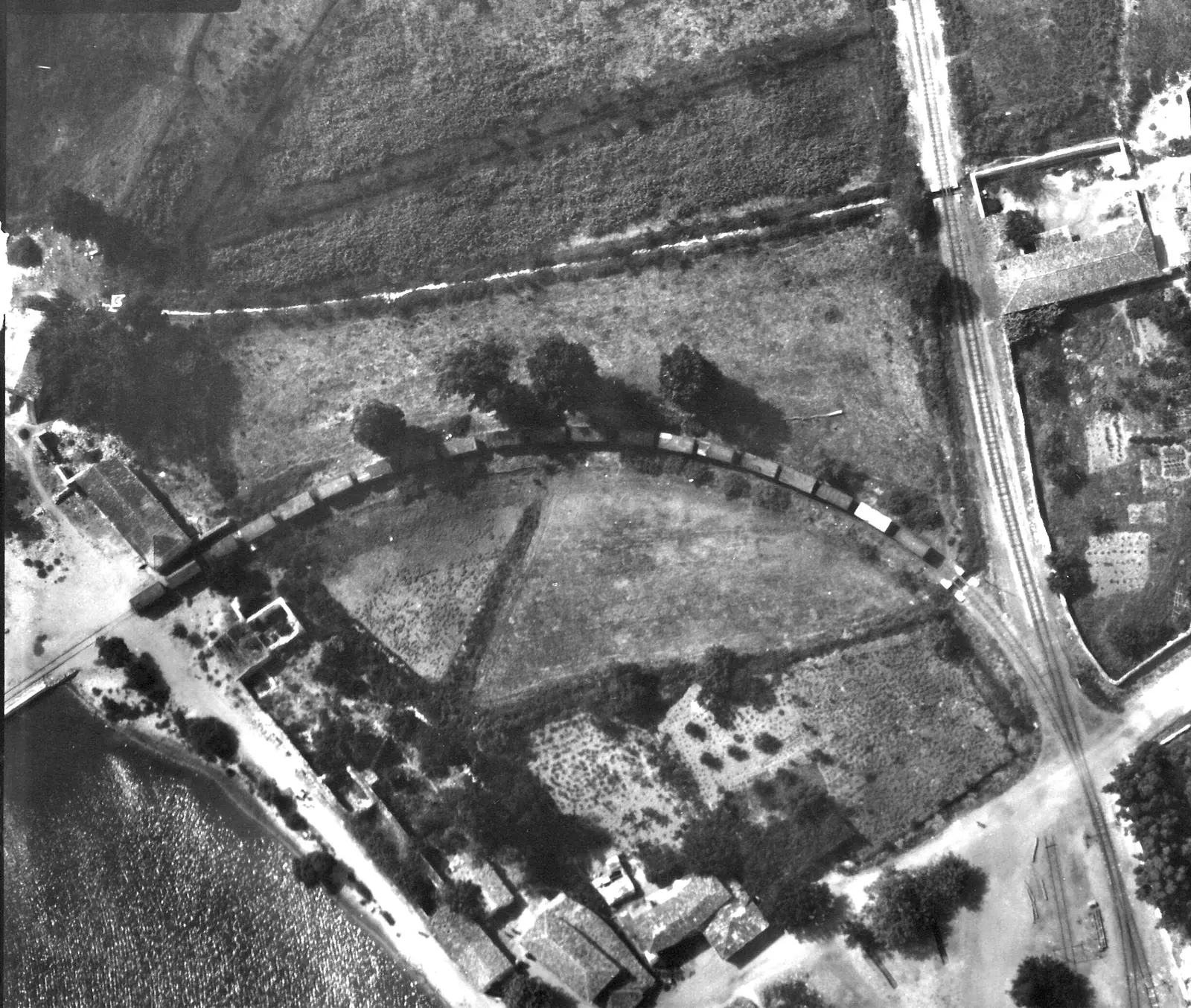
Aerial photo: a goods train of about 25 wagons on the pier siding
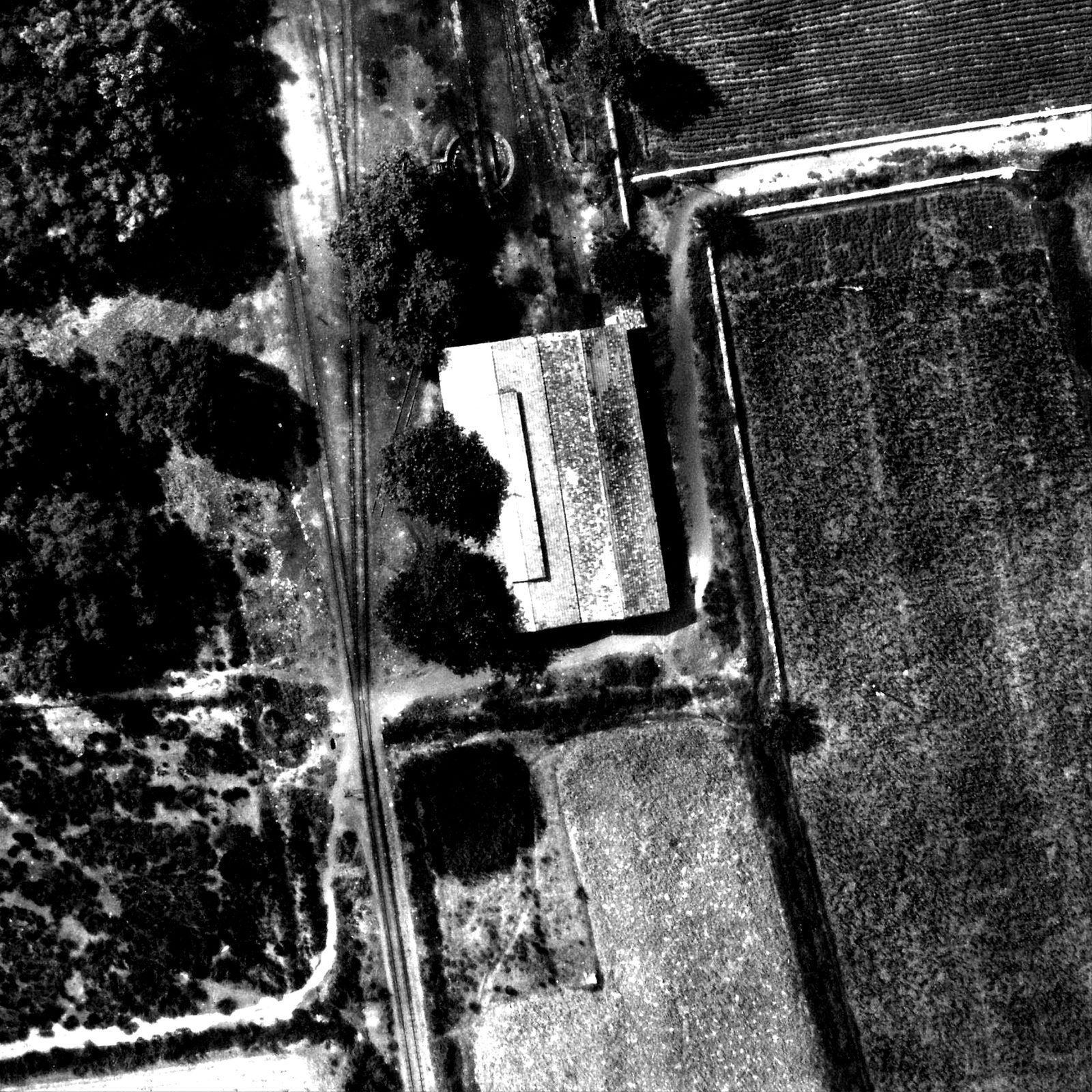
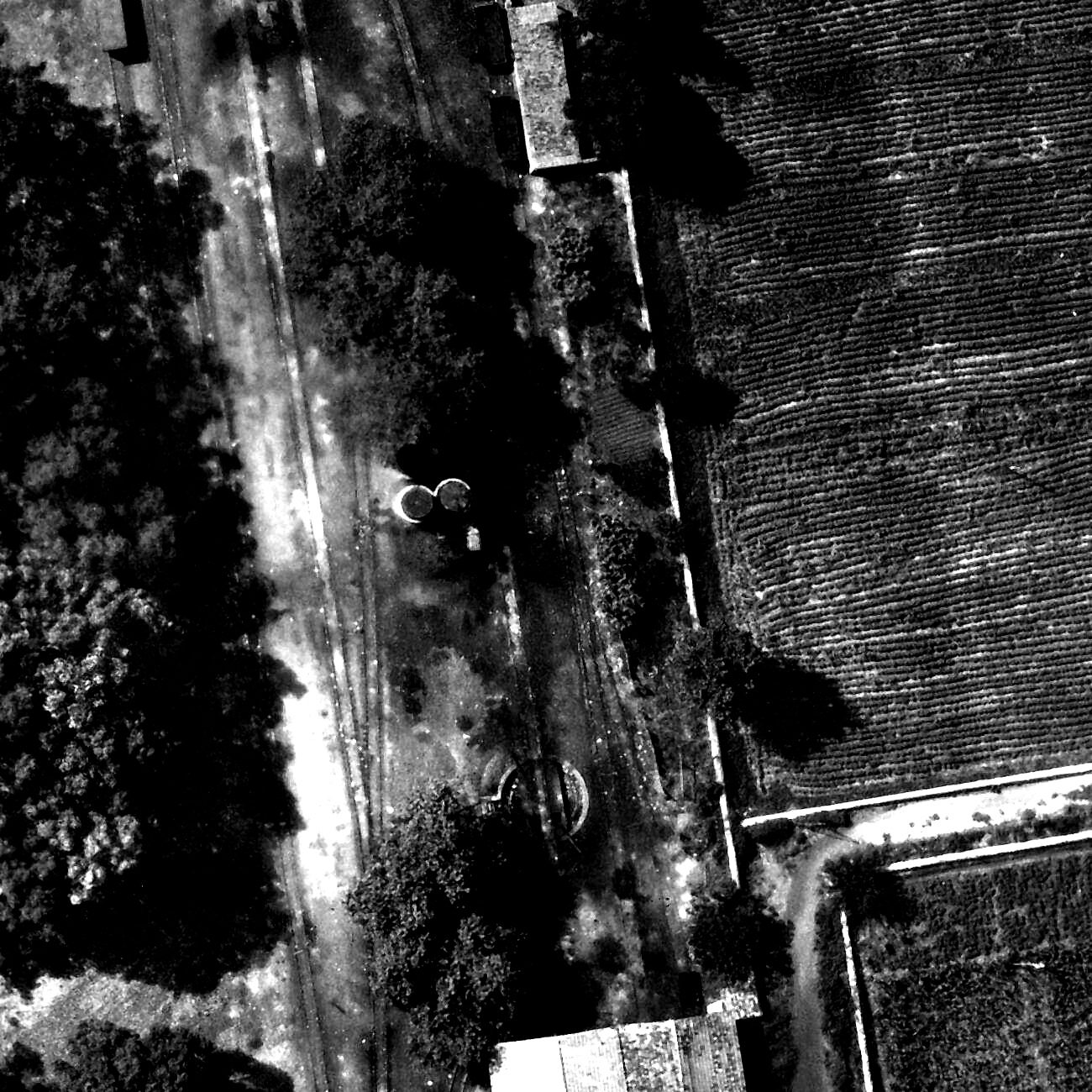
The photographs of 13 July 1941 show the station yard in use under the occupation: the two-hall locomotive shed, a turntable, two round water tanks, the station buildings and the goods shed with wagons. A goods train of…
-
March 1986 – April 1986
A graveyard of steam locomotives
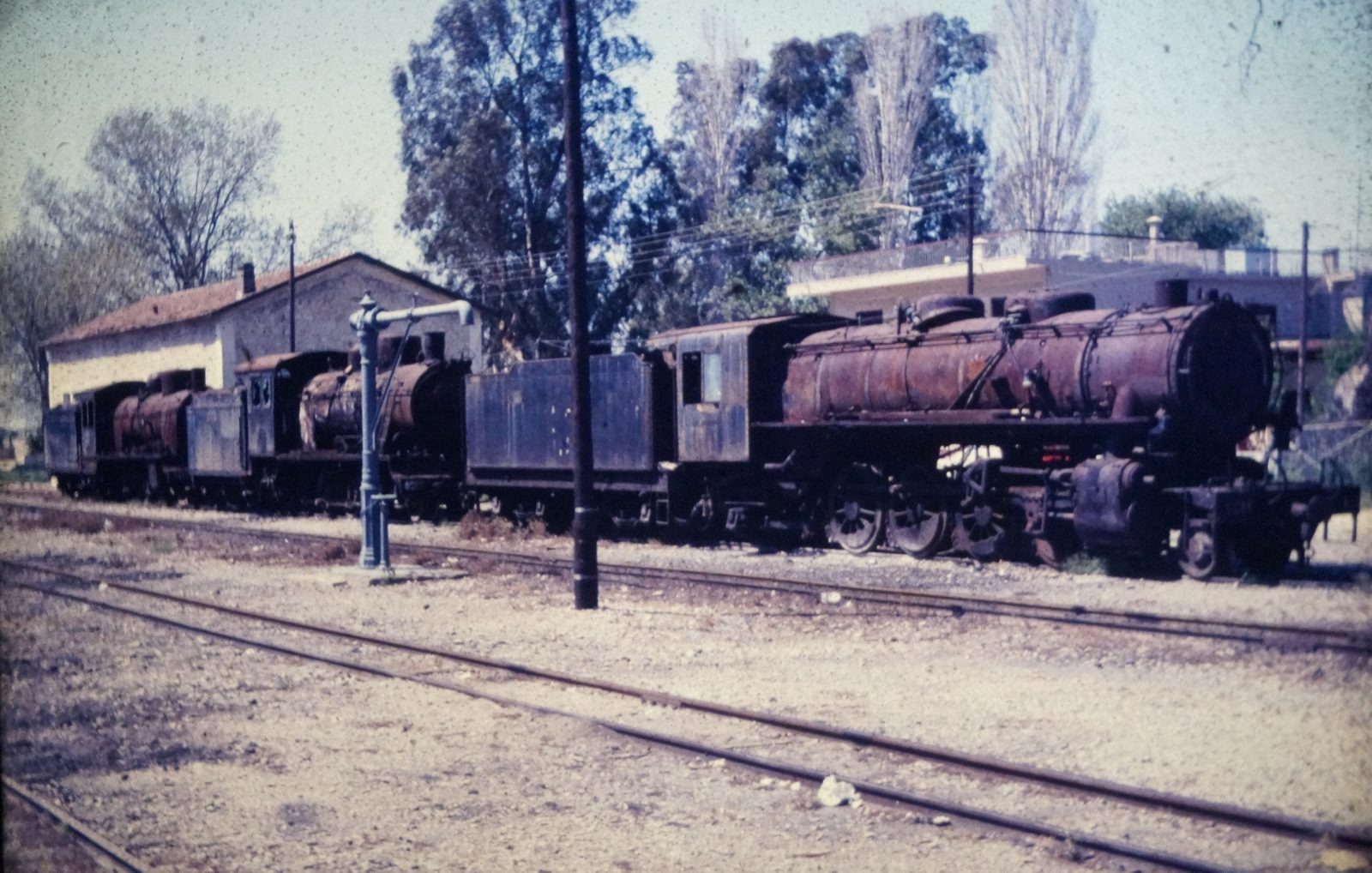
In the spring of 1986 a visitor photographed rows of withdrawn metre-gauge steam locomotives standing at Myloi station. The station, once a busy junction, had become a resting place for engines the railway no longer…
-
23 February 1995
"Metre gauge graveyard" at the Myloi depot
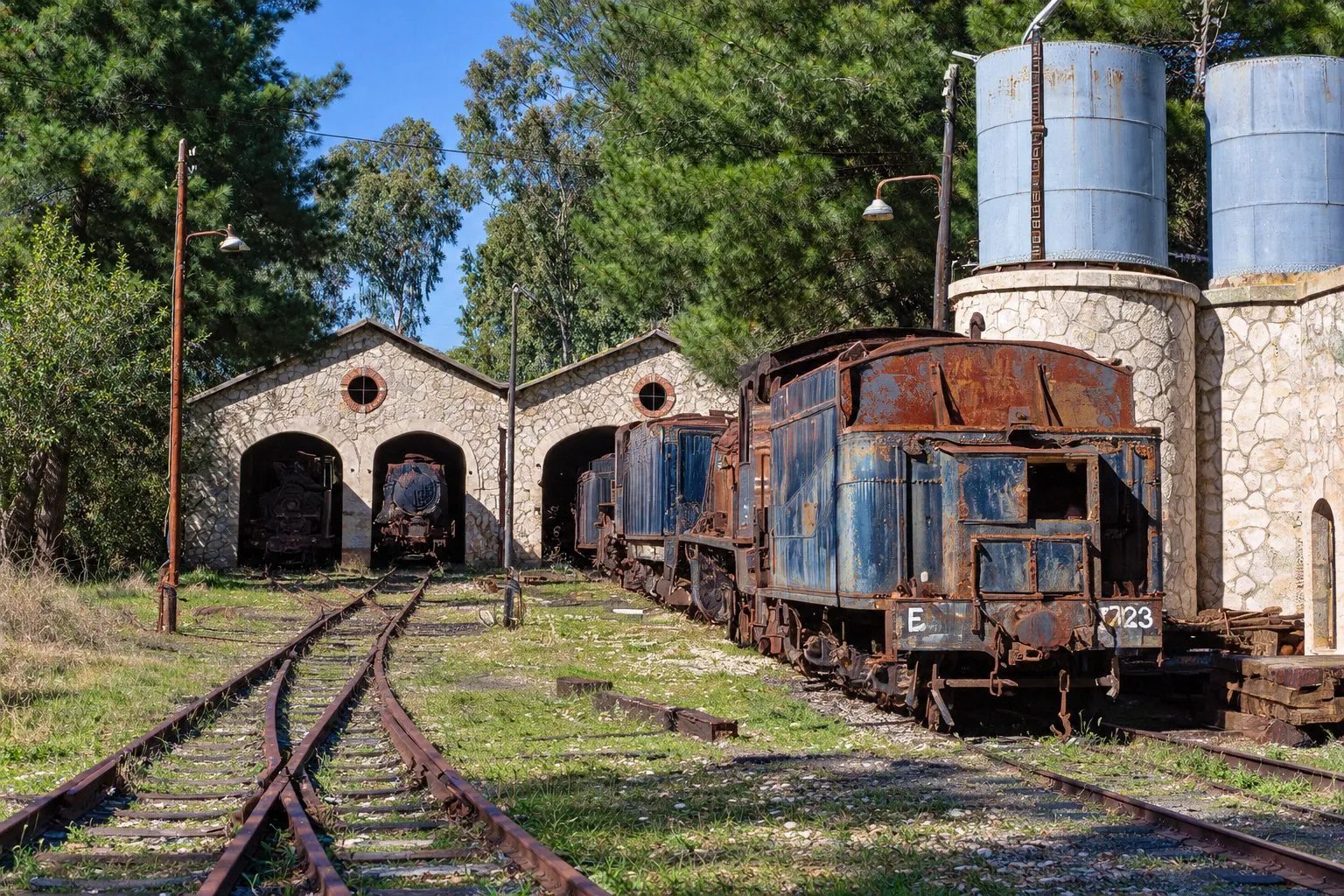
On 23 February 1995 the British photographer Adrian Nicholls captured what he called the "metre gauge graveyard" at Mili Nafpliou depot: the stone engine shed with its arched doors, two water towers and dumped…
People
- Charilaos Trikoupis Prime Minister of Greece
- Konstantinos Lomvardos Minister in the Trikoupis government
- Louis Rosseels Belgian consul in Athens, agent of Ernest Rolin
- Ernest Rolin Belgian contractor of the Myloi–Kalamata railway
- Macaigne French engineer from Cambrai
- Apostolos Agathoklis Head of traction and rolling stock of the ΣΠΑΠ
Pictures
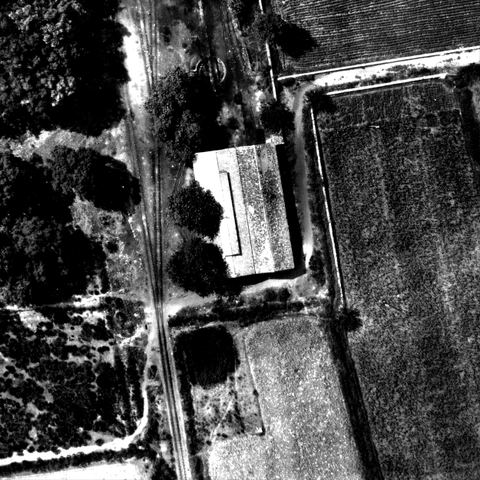
Full-resolution crop of the 1941 aerial photo showing the double locomotive shed: two parallel tiled gabled roofs, one with a long roof lantern, tracks entering from the turntable side. Reichsluftfahrtministerium (Sonderluftbildabteilung); DAI Athens Archive
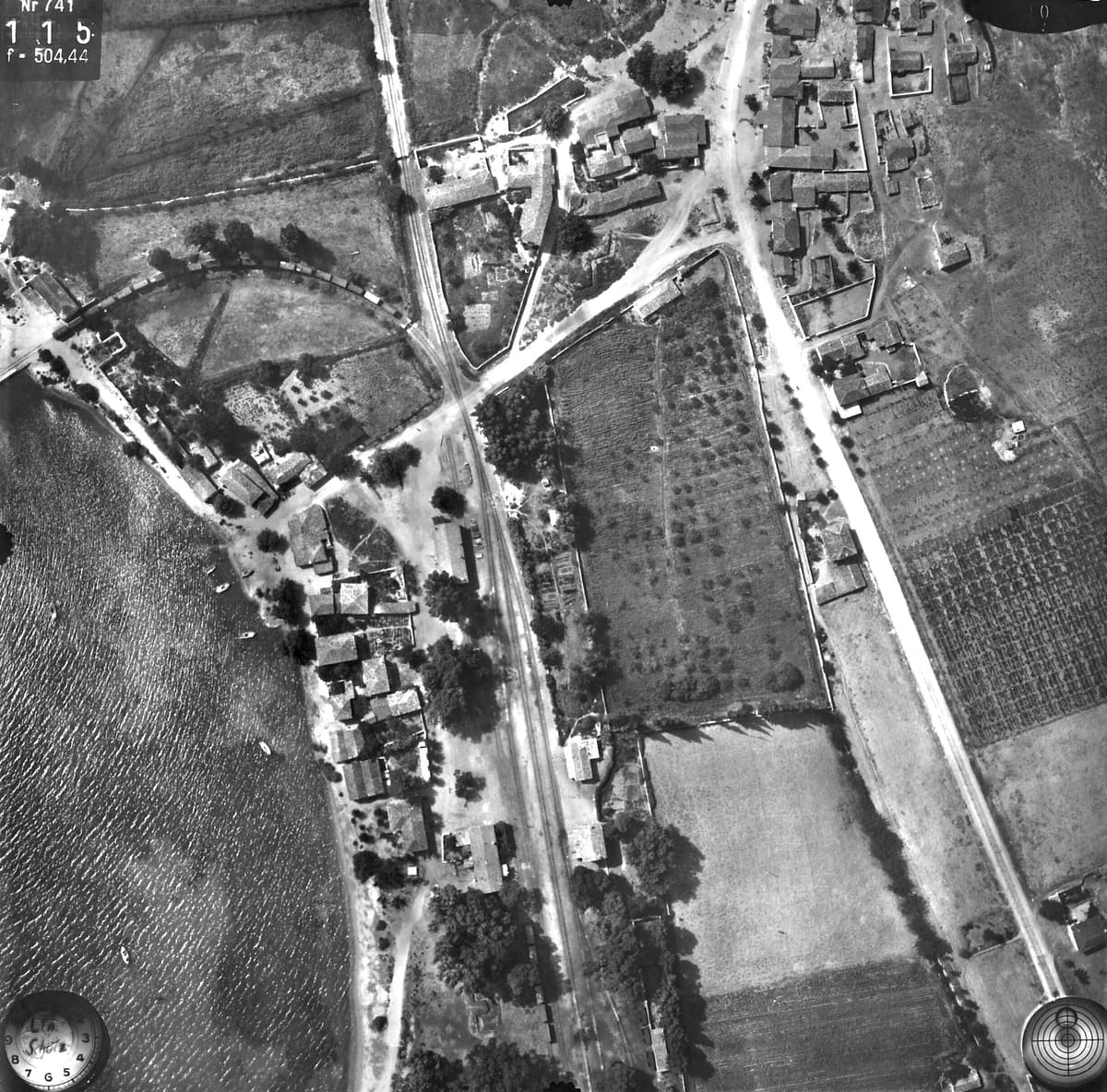
Myloi station, the village, the level crossing and the curved siding to the pier with a long goods train, 13 July 1941. Reichsluftfahrtministerium (Sonderluftbildabteilung); DAI Athens Archive
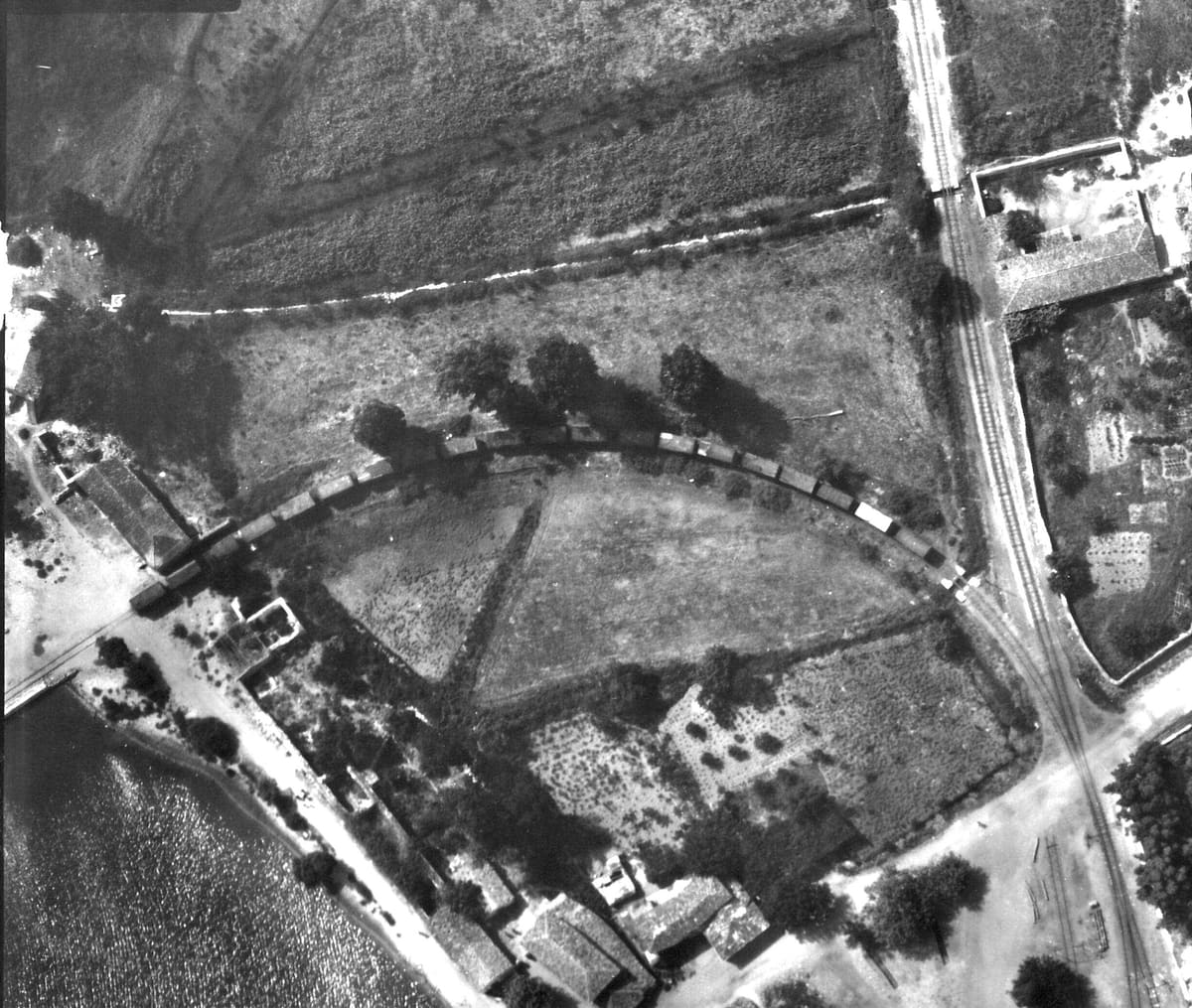
A goods train of about 25 wagons on the curved siding from the main line to the pier, 13 July 1941. Reichsluftfahrtministerium (Sonderluftbildabteilung); DAI Athens Archive
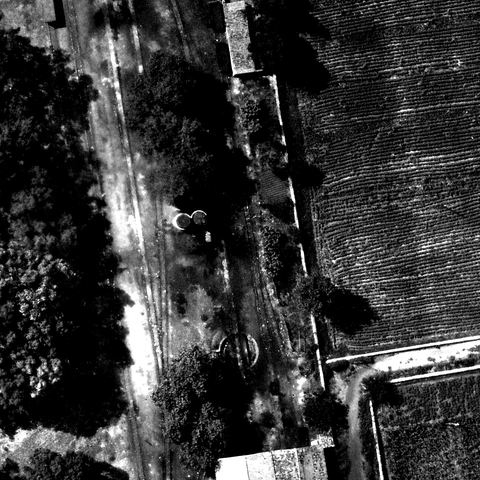
Full-resolution detail of the 1941 aerial photo: two round water reservoirs between the tracks, a turntable in front of the locomotive shed, a small building with wagons and a long boundary wall. Reichsluftfahrtministerium (Sonderluftbildabteilung); DAI Athens Archive
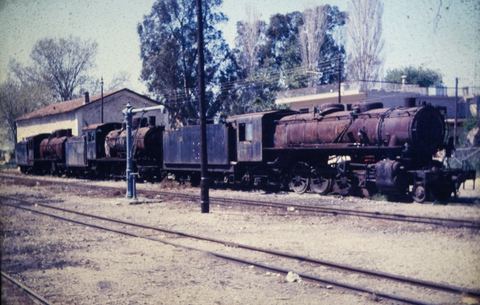
Graveyard of withdrawn metre-gauge steam locomotives at Myloi station. NearEMPTiness (Wikimedia Commons)
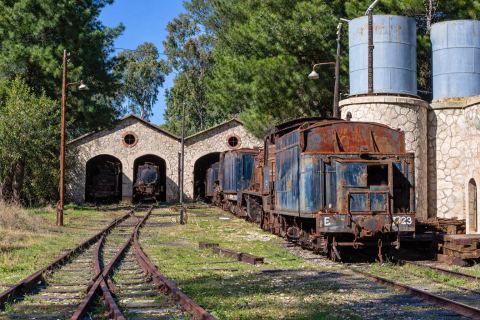
'Metre gauge graveyard. Mili Nafpliou Depot': the engine shed with arched doors at left, two water towers (stone base, blue tank) at right and tender locomotive 7723 in front. Adrian Nicholls (Flickr 'Marra Man')
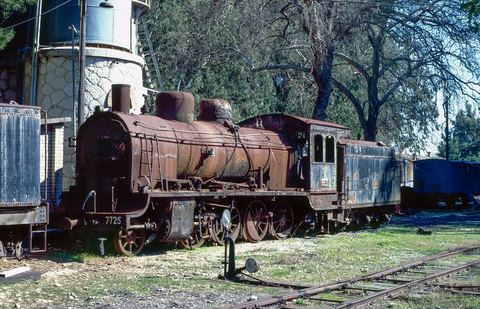
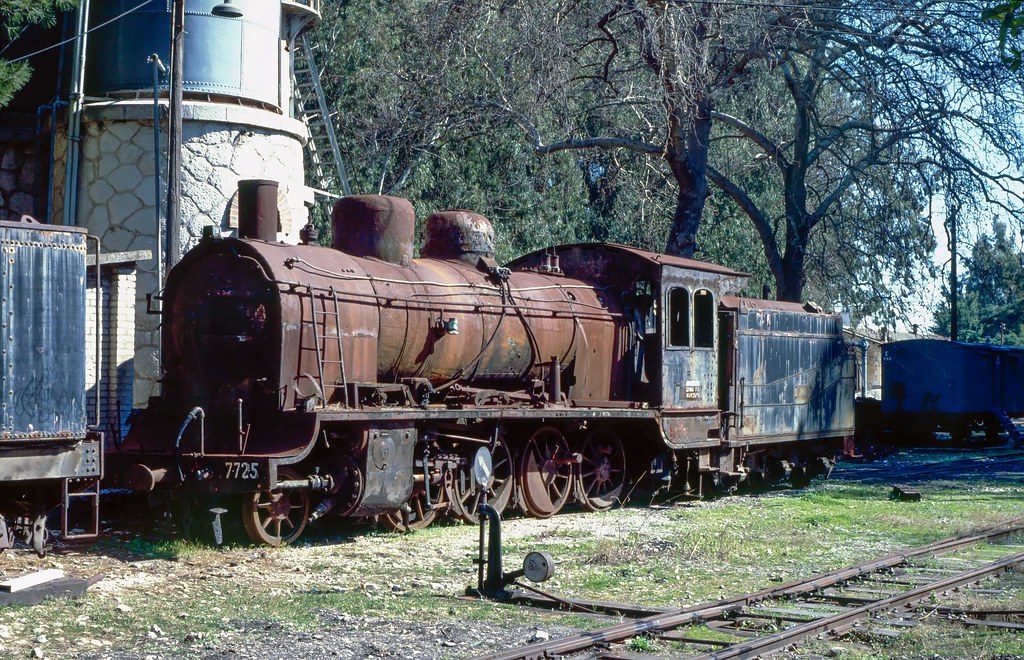
'Class Es no.7725 dumped at Mili Nafpliou depot': locomotive 7725 with a water tower behind and part of a stone building at left. Adrian Nicholls (Flickr 'Marra Man')