Places
Argos
31 events
-
1347
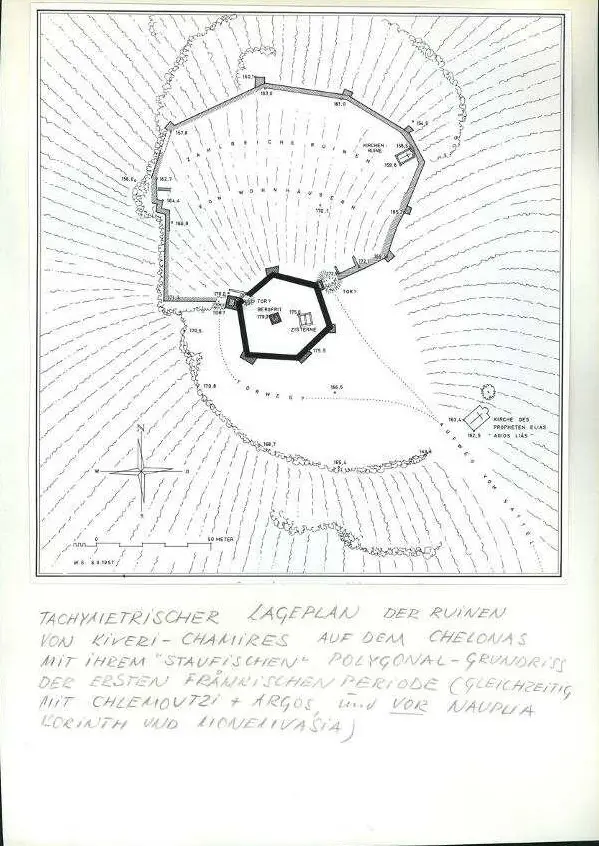
A priest for the castle: the will of Gautier de Brienne
In his will of 1347, Gautier VI de Brienne, Lord of Argos and Nauplia and titular Duke of Athens, names his castle of Chamires. He left sixty hyperpyra a year, from the rent of a cloth shop in Argos, for a priest who had…
-
1388
Argos and Nauplia are sold to Venice
Marie d'Enghien, heiress of the Brienne family's lands in the Argolid, sold her lordship of Argos and Nauplia, including the castle of Kiveri, to the Republic of Venice.
-
1394
Venice finally takes over the castles
The handover after the sale of 1388 was anything but smooth. The Despot of Mystras seized the castles of the Argolid first, and only in 1394 did Venice actually gain control of the area, the castle on Pontinos included.
-
10 July 1694
A Venetian field camp 'at the Mills of Argos'
On 10 July 1694 the Venetian commander-in-chief in the Morea, Marino Michiel, dated a dispatch to the Senate 'from the camp at the Mills of Argos'. Venetian and French writers used that name both for Kefalari near Argos…
-
1775–1799
'Les Moulins', a junction on the road to Tripolitsa
In the late 18th century 'les Moulins' was a junction of roads in the northeastern Peloponnese. From Tripolitsa a road came down via Achladokampos to the Mills and went on to Argos and Nafplio, while another road ran…
-
19 July 1809
Tithe wheat goes from Myloi to Tripolitsa
A tax account dated 7 July 1809 (old style) records 'the wheat that was taken from Myloi to Tripolitsa' in the name of Nikolos Meletis, at 30 para a measure. It was the tithe wheat of the district of Argos, from 52…
-
1816
'The mills of Nauplia', two hours from Nafplio and from Argos
In his critical notes on Chateaubriand's travels, printed in Padua in 1816, the Argos physician Avramiotti wrote that 'everyone knows' Lerna is the marsh a hundred paces from 'the mills of Nauplia', at the foot of Mount…
-
17 May 1824
Mourning salutes for Byron off Myloi
A report sent 'from Myloi of Nafplio' tells that the memorial service for Lord Byron, who had died at Missolonghi, was held that day in Argos. The flagship lying off Myloi fired mourning salutes.
-
30 December 1840
The municipality of Temenion disappears
According to the official register of administrative changes, Temenion was merged into the municipality of Argos in December 1840. Yet newspapers still speak of "the municipality of Temenion" in 1841 and 1845. By 1864 at…
-
April 1864 – May 1864
Robbers carry off the village councillor
At nightfall a band of more than twelve robbers raided "the village of Myloi of the municipality of Argos". They robbed the councillor (πάρεδρος) Loukas Giannakopoulos and led him bound as far as the bridge of the…
-
14 October 1869
A carriage road and a pier for Myloi
A newspaper reported that a carriage road was being built from Argos to Myloi and that a landing pier (apovathra) was being built in the harbour of Myloi. So the village had a small pier well before the railway came.
-
1882
A branch line to Myloi in the first railway contract
In 1882 the government of Charilaos Trikoupis signed the contract for the Peloponnese railway. Besides the main line it included two branches: Corinth–Argos–Nafplio and Argos–Myloi.
-
7 August 1886
State commission accepts the line Argos–Myloi
On Saturday 7 August 1886 a state commission inspected and accepted the new 10 km section from Myloi to Argos. The line ran dead straight through currant vineyards and tobacco fields, with an iron bridge of 15 m over the…
-
11 August 1886
The first timetable: local trains Nafplio–Argos–Myloi
The new timetable linked Myloi to the Corinth–Argos trains by a special train, plus four local trains between Nafplio, Argos and Myloi. Return tickets from Piraeus or Athens to Myloi were valid for four days, and freight…
-
16 August 1886
The train reaches Myloi
On Monday 16 August 1886 (4 August by the old calendar) the new line from Argos to Myloi was opened to the public, together with the line from Kiato. Myloi now had a station on the metre-gauge Peloponnese railway.
-
1887
Myloi of Nafplio or Myloi of Argos?
In 1887 the Argos newspaper discovered that the railway company called the station 'Μύλος Ναυπλίου' in its books, Myloi of Nafplio. Argos protested: the village was 'Μύλοι Άργους'. The old rivalry between Argos and…
-
1893
A bathing train from Argos to the sea at Myloi
In the summer of 1893 the people of Argos asked for a special bathing train. They wanted to swim at 'Almyro', 'only five minutes from Myloi station'. The train to Myloi was also becoming a train to the sea.
-
31 July 1938
Train collision between Argos and Myloi
At km 274.6 between Argos and Myloi, train E from Corinth to Myloi collided with a light engine that was running back from Myloi to Argos. The railway journal blamed the assistant station master on duty at Argos, who had…
-
1941–1943
Men rounded up in Argos work on the Myloi fortifications
The occupation authorities set up roadblocks in Argos, seized the men they found and took them away in a lorry that the people of Argos nicknamed 'Bogia', the dog-catcher. Most of this forced labour went to the airfield,…
-
1941–1943
Myloi in the Italian zone of occupation
From the summer of 1941 until September 1943 Myloi lay in the Italian zone of occupation, which covered most of the Peloponnese; Italian troops of the 'Siena' division held Argos and Nafplio from May to September 1941.…
-
20 May 1941
The telephone cable from Myloi to the Argos airfield is cut
In May 1941 a German telephone line ran from Myloi along the railway, under the Xerias bridge and past the Aspida to the airfield of Argos; it served the airfield's anti-aircraft defence. A small group of young men from…
-
21 May 1941
After the sabotage, the men of Argos must guard the cable at night
On 21 May 1941 the Germans found that the cut cable had disrupted the anti-aircraft defence of the airfield. They gathered the people of Argos in the square of Agios Petros and threatened to execute 30 leading citizens…
-
11 January 1945
Truce terms: ELAS must withdraw 'beyond Myloi'
The truce of 11 January 1945 between EAM, the British forces and the government required the ELAS fighters to leave Argos and withdraw 'beyond Myloi'. British troops entered Argos on 19 January 1945. Witnesses remembered…
-
1958
The plain starts to use more water than the rain brings
Until about 1958 less groundwater was pumped in the Argive plain than the rain put back. After that the number of wells for citrus and fruit grew fast, the water table fell, seawater pushed inland and fields turned…
-
c. 1960
Ministries and the FAO look for water
Around 1960 the ministries of Coordination, Agriculture and Public Works set up a committee with the UN Food and Agriculture Organization. The FAO made three million dollars available for test drilling, which yielded…
-
1963–1966
Spring water pumped back into the ground
From 1963 to 1966 the land-improvement service of the Ministry of Agriculture used the winter water of the Kefalari and Lerna springs to refill the groundwater through some 60 wells. The experiment was stopped in…
-
20 June 1965
A lawyer from Myloi in Argos politics
In a series on "our new politicians", the paper Argolika Nea writes that Dionysios Styl. Balaskas "was born in Myloi of Argos". He studied law in Athens, fought as a gunner on the Albanian front, practised as a lawyer in…
-
26 December 1991
Corinth, the theatre of Argos and dinner in Malantreni
On 26 December Mitterrand visited Ancient Corinth and Acrocorinth, then the rock-cut theatre of Argos, which he called a masterpiece and regretted to see so neglected. Back in Myloi he received local officials, and the…
-
27 December 1991
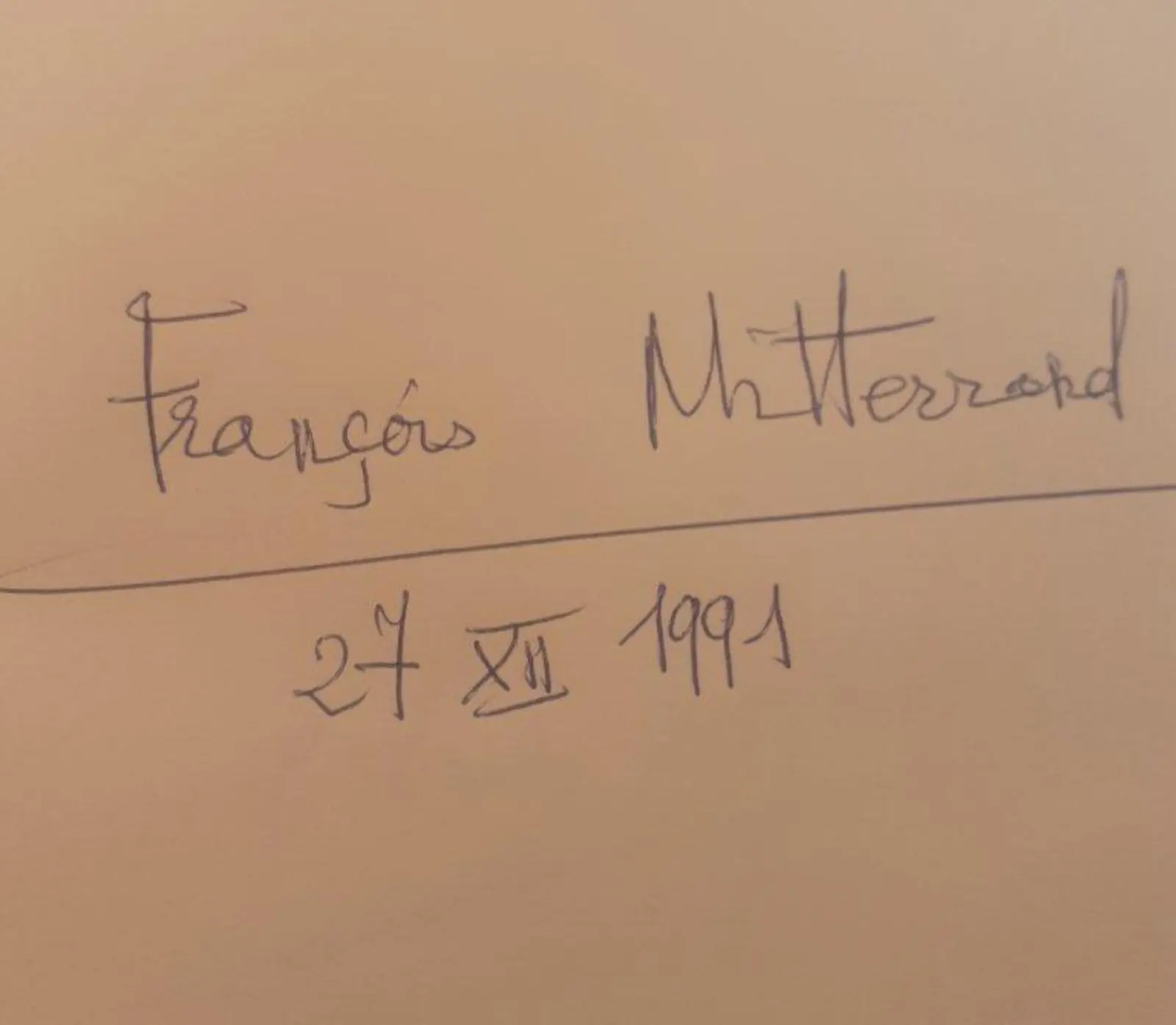
Mitterrand leaves, with a gift for Argos
On 27 December 1991 at 16:29 Mitterrand flew from Kalamata back to Paris. He left his host a signature and 10,000 francs for a good cause, which Kotsonaros gave to the old people's home in Argos.
-
2003
Argos gets drinking water from Lerna
Around 2003 Argos also began to take drinking water from the springs at Myloi, about 500 m³ an hour through a pipeline of 10 km. One source gives 2005 instead.
-
7 June 2010
Lerna is merged into Argos-Mykines
Under the Kallikratis reform the municipality of Lerna was abolished and became a municipal unit of the large municipality of Argos-Mykines. Myloi, with Kalamaki and Kougeika, became a local community (Τοπική Κοινότητα…
People
- Gautier VI de Brienne Lord of Argos and Nauplia, titular Duke of Athens
- Marie d'Enghien Lady of Argos and Nauplia
- Marino Michiel Venetian commander-in-chief (provveditore generale) of the Morea
- G. D. Avramiotti Physician in Argos and critic of Chateaubriand
- Loukas Giannakopoulos Local councillor (πάρεδρος) of Myloi
- Charilaos Trikoupis Prime Minister of Greece
- Dionysios Styl. Balaskas Lawyer and politician, born in Myloi
- François Mitterrand President of France, spent Christmas 1991 in Myloi
- Dimitrios Kotsonaros Host of François Mitterrand in 1991
Pictures
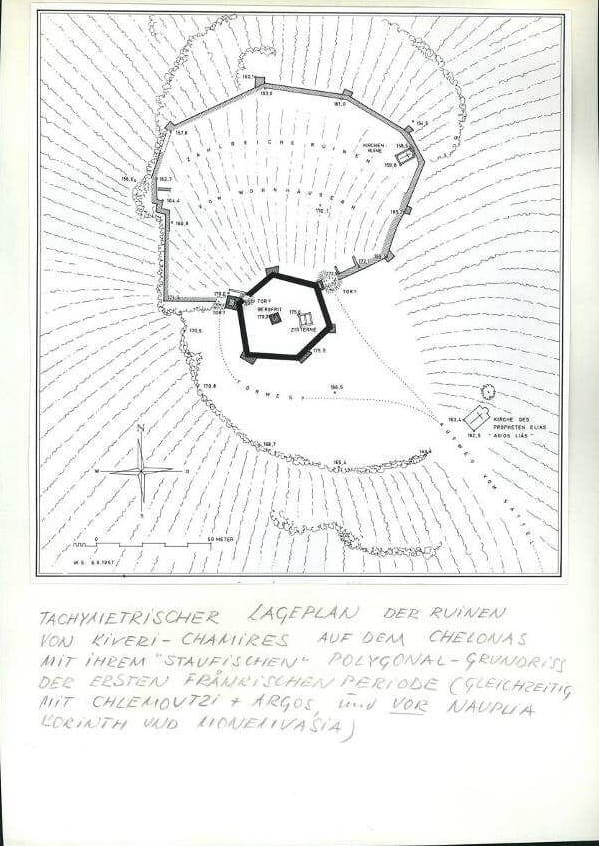
Inked plan of the ruins of Kiveri–Chamires, signed W.S., 5 August 1957, with the “Kirchenruine” in the outer ward and the church of Profitis Ilias below the redoubt. Plan W.S., 5.8.1957 (Schaefer papers, German Archaeological Institute, Athens; supplied by Visit Myloi)
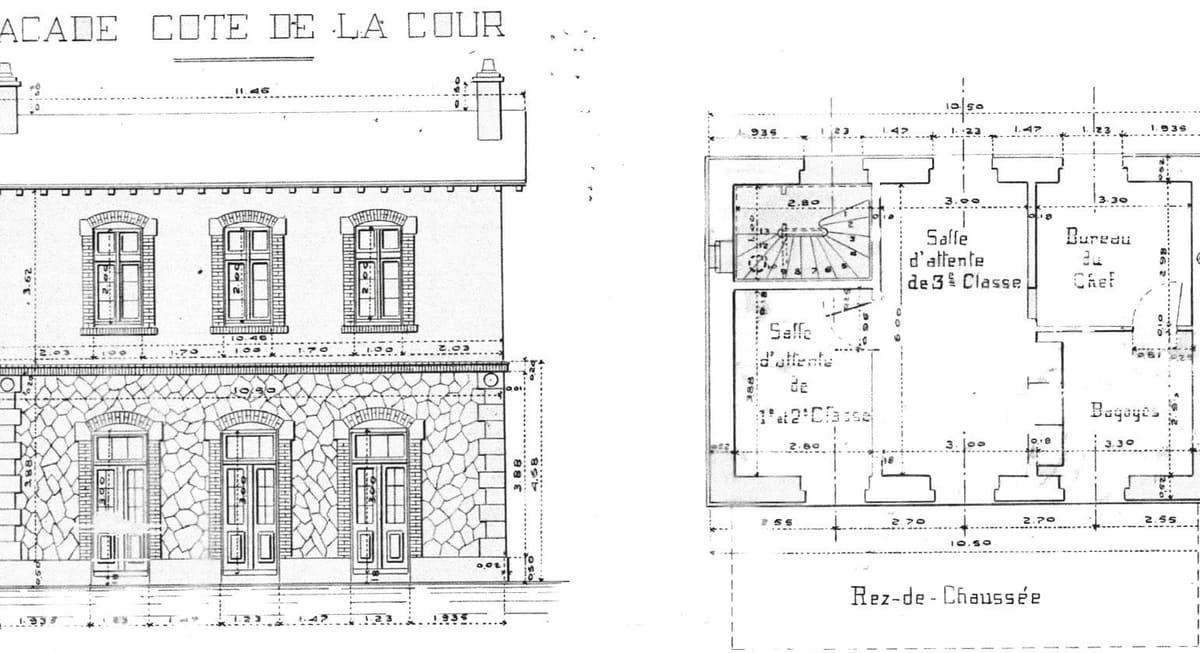
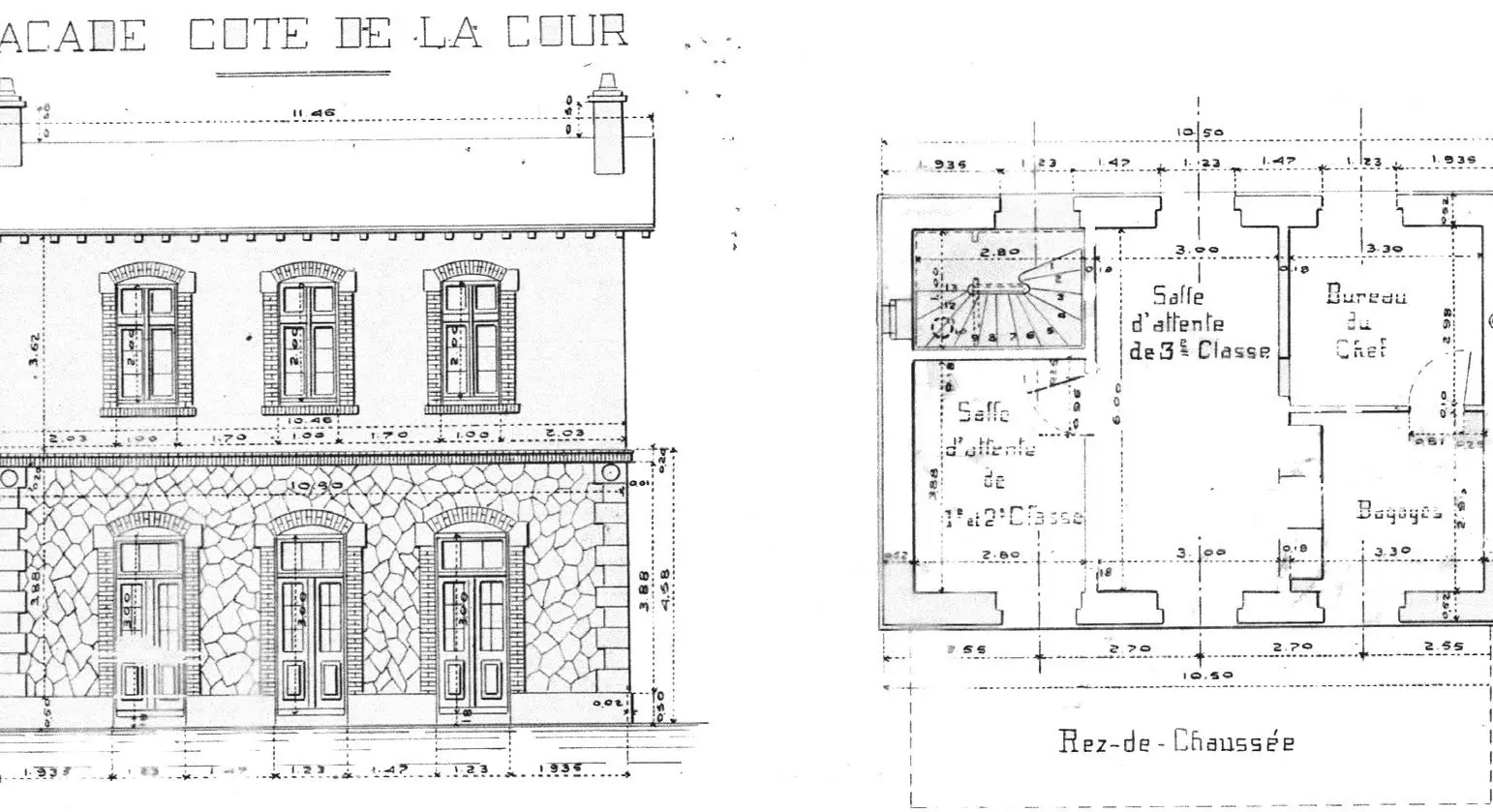
Original French drawing of the two-storey station building: courtyard façade and ground floor with waiting rooms for 1st/2nd and 3rd class, the station master's office and the luggage room. Railway archive (supplied by Visit Myloi)
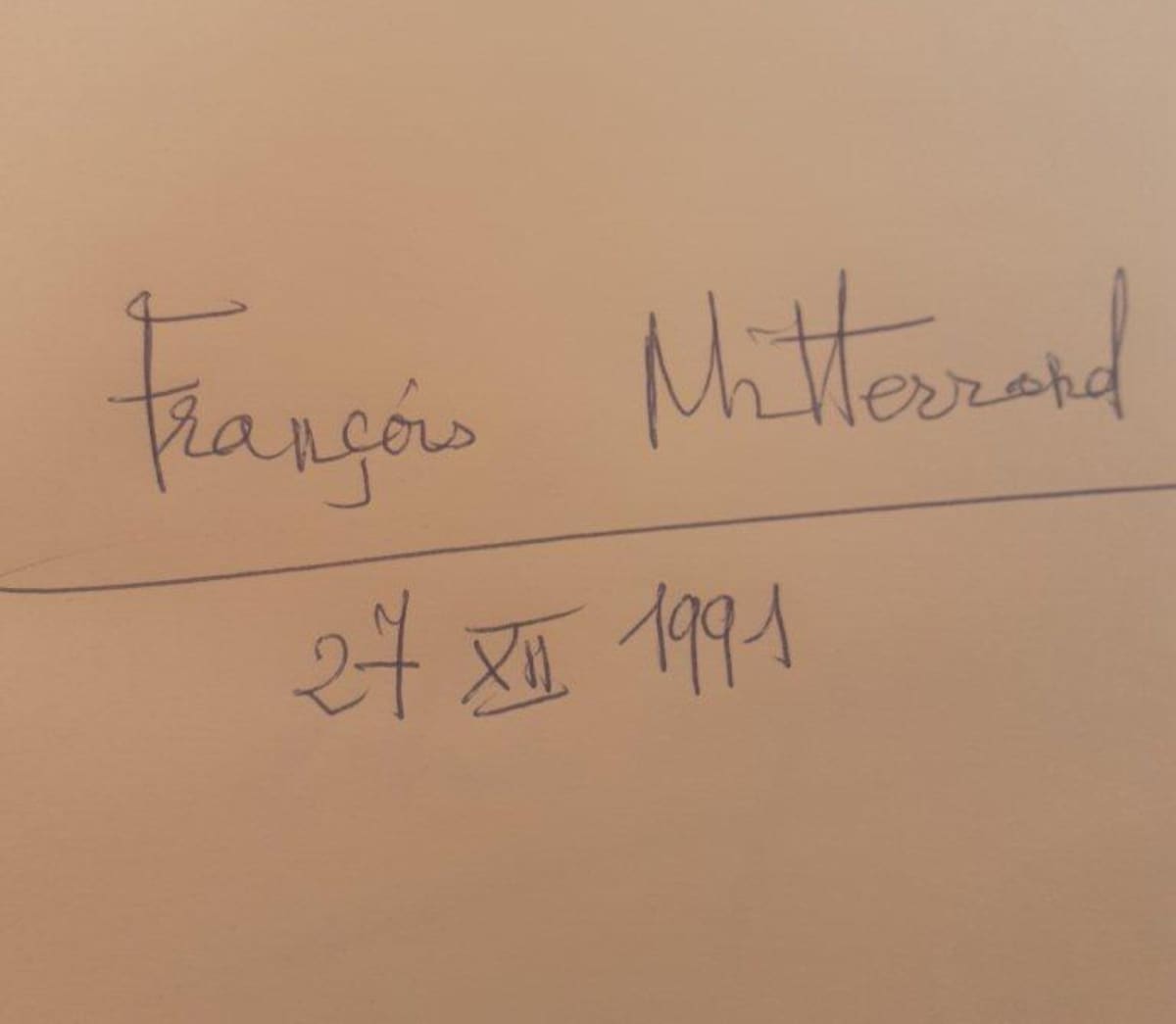
The signature Mitterrand left for his host on the day he left, 27 December 1991. Kotsonaros family collection, via the Argolic Archival Library of History and Culture (argolikivivliothiki.gr)