
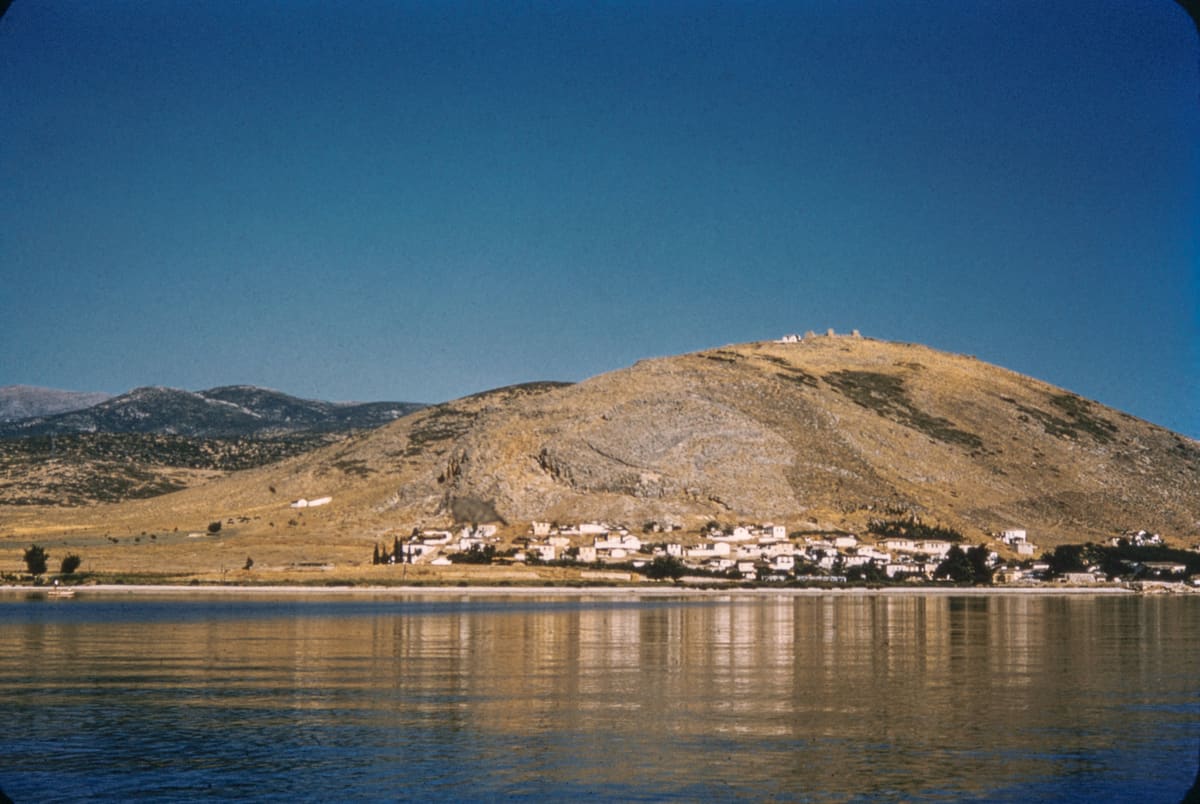
The First Greek Victory Against Ibrahim
On June 13, 1825, a decisive battle unfolded on the shores of Myloi during the Greek War of Independence. What began as a desperate defense against overwhelming odds became a lasting symbol of resilience and national pride. Two centuries later, we look back — not just to remember, but to retell the story. Who fought, what was at stake, and why does the name Myloi still echo through history?
One of the most significant victories of the Greeks during the War of Independence of 1821 was the triumph of a few hundred warriors over the thousands of Egyptians under Ibrahim, on June 13, 1825 (Old Calendar) at Myloi of Argolis. This victory is not particularly well-known, but as we will see at the end of this article, its importance was enormous.
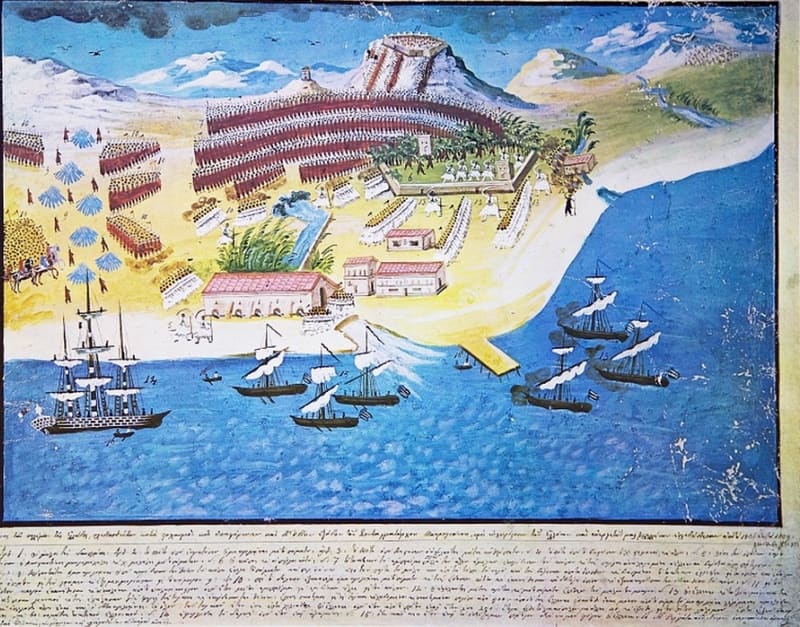
The greatest trial for the Greek Revolution was undoubtedly the intervention of the Egyptians under Ibrahim, whose army had been trained according to European standards. The inertia of the Greeks and the absolute chaos that prevailed after the civil wars gave the Egyptians the opportunity to land in the Peloponnese in the winter of 1824-1825.
Ibrahim’s Invasion and the Greek Crisis
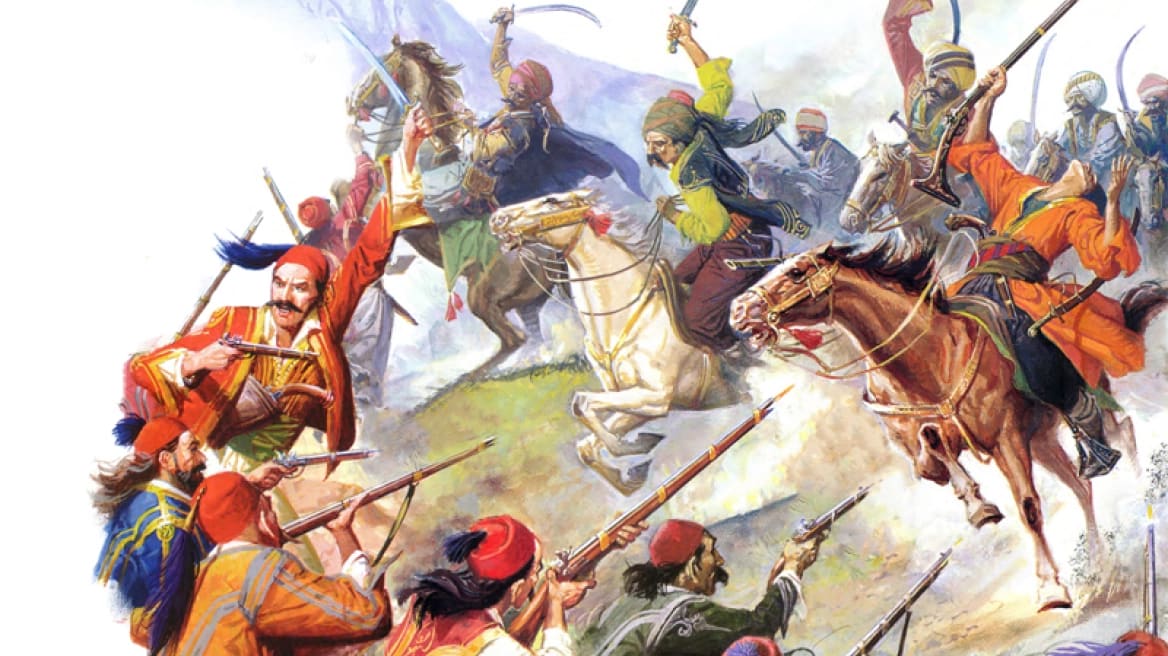
In less than five months, Ibrahim captured Sfaktiria, the Old Castle, and the New Castle. On May 20, 1825, Papaflessas fell heroically in battle at Maniaki, and the next day, the Egyptians invaded Arcadia. On May 23, they returned to the New Castle and Methoni, which they used as bases to seize and burn Kalamata and several towns in Messenia without resistance. Theodoros Kolokotronis decided to gather his forces at the passes of Makryplagi, where Messenia is separated from Arcadia. However, Ibrahim quickly, guided by local Turks and prisoners, suddenly appeared to the left of the Greek forces with 8,000 infantry, cavalry, and mountain artillery. Panic-stricken residents of the surrounding areas fled to save themselves. The Greek forces were reinforced by Yatrakos with 800 men from Mystras and later by Kanellos Deligiannis and Gennaios Kolokotronis with 3,000 men. The Greeks took positions on Mount Trampala and built tall and enclosed bastions. The Egyptians of Ibrahim were very formidable opponents.
The Battle of Trampala, fought primarily by Gennaios Kolokotronis and his men, was fierce. It lasted two days and three nights. The Egyptians lost around 700 men, and the Greeks 100. Yet Ibrahim managed to breach the key position of Trampala, opening the road to the center of the Peloponnese. After the defeat at Trampala, each Greek chieftain retreated with his men to a different location. Kolokotronis sent General Tsokris, his adjutant Fotakos, and others to inform the residents of Tripolitsa that they should evacuate the city after setting it on fire. Karachalios, Kolokotronis’ top warrior, was the first to arrive in Tripolitsa. However, he alarmed the townspeople with shouts that gave the impression that Ibrahim was already outside the walls. Terrified men and women fled half-dressed and barefoot, trying to escape. In the chaos, some children were separated from their parents, later found wandering the mountains or reaching Nafplio.
But Ibrahim was still far from Tripolitsa. First, he descended into the plain of Leontari, burning villages and capturing prisoners. On June 11, three days after the city had been evacuated, the Egyptians entered Tripolitsa. After stationing a garrison there, he advanced toward Argolis, and on the morning of June 12, he reached the outskirts of Nafplio with 6,000 men. Meanwhile, Kolokotronis’ failure to stop Ibrahim caused panic and despair among the Greeks. The Government, unprepared for Ibrahim’s lightning advance, had ordered Minister of War Metaxas and Makriyannis to go to Tripolitsa and fortify it. On reaching Achladokampos, they encountered terrified refugees who incorrectly told them that Tripolitsa had already fallen.
At the church and inn of Achladokampos, Makriyannis found food and ammunition meant for Kolokotronis. He immediately ensured they were delivered to him so they wouldn’t fall into enemy hands. He then took several families with him to Myloi near Nafplio, where there were provisions, ammunition, and supplies seized from ships intended to supply Ibrahim. The situation in Nafplio was dire. Its walls were damaged from the 1822 siege and the civil war, the water tanks were empty, food and ammunition were insufficient, and the cannons had fallen off their carriages. Refugees from Tripolitsa, Argos, and even Central Greece crowded inside and outside the city, causing supply and sanitation issues.
Rogue fighters roamed the streets seeking overdue pay, taking advantage of the chaos to loot and steal. Merchants tried to escape to the islands with their families and goods. Rumors circulated that Ibrahim had made deals with prominent Greeks like Mavrokordatos and Kolettis to hand over the city. The only institution operating efficiently in all this turmoil was Nafplio’s recently established hospital, run by the German philhellene Traubert. Orderly and clean, it treated many wounded soldiers. Regular infantry morale remained high, and many brave philhellenes were ready to fight for Greece. Despite internal divisions, the Government took measures to restore order in Nafplio. Refugees were relocated, supplies were replenished, water tanks were cleaned and filled. Minister of War Andreas Metaxas coordinated these actions successfully. Metaxas and Makriyannis decided to fortify and confront Ibrahim at Myloi of Lerna, then a small village of about 30 houses. It served as the port of Tripolitsa and supported its trade. Surrounded by streams, springs, marshes and the legendary Lake Lerna, the village provided excellent defensive cover for Nafplio. The government had gathered food and military supplies there for Kolokotronis, and the area could serve as a water source if Nafplio’s aqueduct was destroyed. Makriyannis took the initiative to fortify the area, building ramparts, securing the wall with loopholes and reinforcing the local stone tower (kouli), and making sure there was an underground water supply in case of siege.
As they worked on the fortifications, the French Admiral De Rigny, later known for the Battle of Navarino, visited the site and warned Makriyannis: ‘You are too few, they are many, and this position is weak. Ibrahim has cannons—you won’t last.’ Makriyannis calmly replied: ‘These positions may be weak, but God who protects us is strong.’ Two days after the Greek forces settled in Myloi, reinforcements began to arrive, though still limited: Konstantinos Mavromichalis with a few men, Hatzimichalis with his own small force, Dimitrios Ypsilantis with 15 bodyguards, the Hatzistefanis brothers and more fighters. Additionally, 33 ships formed the first naval support. Ypsilantis was appointed commander-in-chief, with Mavromichalis as his deputy. Though official records mention 250 defenders on June 13, the actual number was likely closer to 480. On the night of June 12, after resting his troops in Tripolitsa, Ibrahim set out with 5,000–6,000 infantry and 600 cavalry. At dawn on June 13, his vanguard reached Myloi undetected, as some Greek guards had left their posts to sleep. Makriyannis, who had dreamt of a man urging him to wake up, roused 50 men and drove the Egyptians back in a surprise attack.
Ibrahim soon arrived with the main force. After taking Argos, he surrounded Myloi. The Greeks received a final small reinforcement of Cretan fighters from two reconnaissance ships. The Egyptians completely encircled the position, except at the rear, which was covered by the sea. Mavromichalis and Hatzimichalis held a path toward Kiveri, while Makriyannis defended the walls, the tower and nearby areas. To prevent desertion, Makriyannis ordered the ships to move away from shore. Around 4:30 p.m., the Egyptians launched a heavy assault in three waves, hindered by the swampy terrain. Mavromichalis repelled three attacks with naval fire support. Meanwhile, Makriyannis and his men, fortified in the tower and surrounding houses, resisted fiercely. He instructed his men to target the enemy officers; many were killed, weakening the Egyptians’ momentum. The Greeks counterattacked with drawn swords, driving the enemy from the orchard and the tower. Ibrahim, observing through a telescope, sent reinforcements, forcing the Greeks to briefly retreat, but they reorganized and held their ground. Makriyannis nearly got captured while trying to retrieve the body of his fallen comrade. Luckily, fresh troops from Nafplio arrived, including the brave Olympus fighter Mitros Liakopoulos with 50 experienced men.
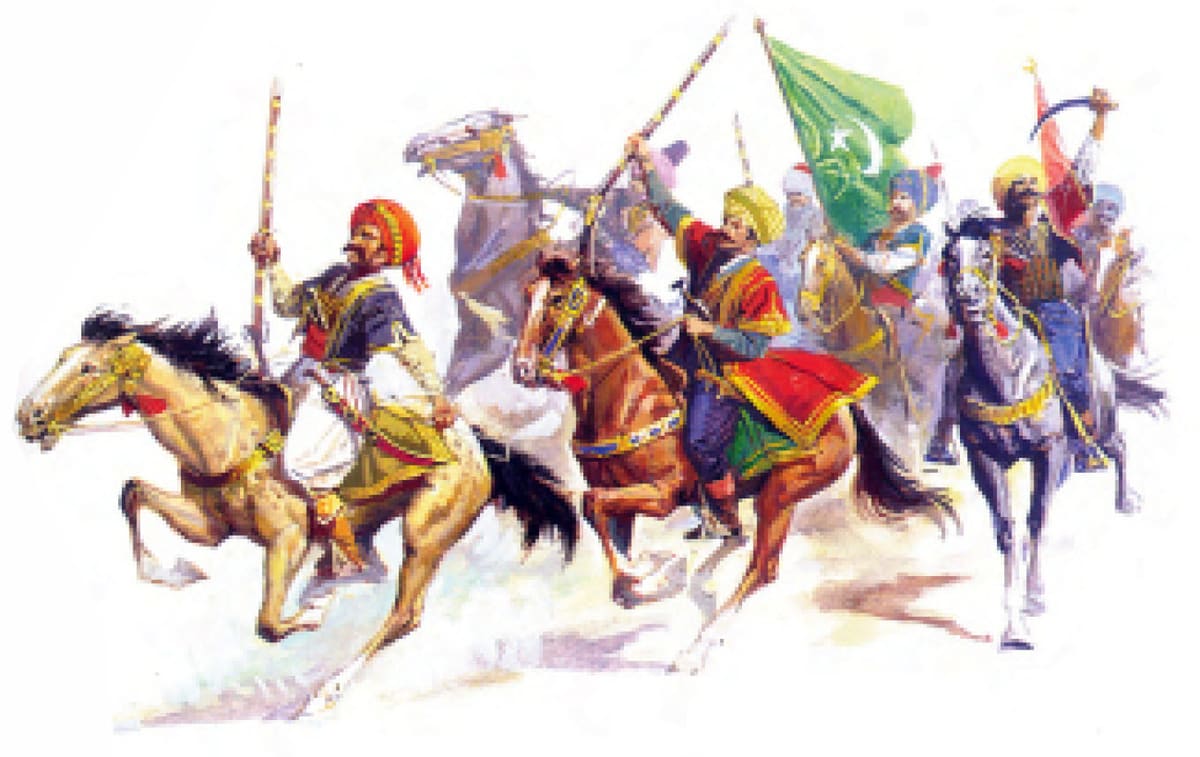
The Greeks then attacked from three directions—Liakopoulos from the left, Gikas from the right, and Makriyannis from the center. Their fierce charge succeeded. Although wounded and having dropped his sword, Makriyannis continued to lead without revealing his injury to maintain morale. As night fell, after a battle of three and a half hours, the Egyptians retreated toward Argos: Ibrahim’s first defeat. Greek casualties were minimal: four dead (including a philhellene) and five wounded, among them Makriyannis. He was later treated aboard the French flagship, receiving honors. Over 100 Egyptians were killed or wounded.
On June 14, no further battles occurred. On June 15, Egyptian forces gathered between Tiryns and Prophet Elias, signaling a possible attack on Nafplio. Their cavalry attempted to cut off water supply by occupying Aria but were pushed back by Greek reinforcements. Artillery fire from Palamidi forced the Egyptians to retreat and burn Argos and nearby villages.
The significance of the victory at Myloi is immense. Had Ibrahim won, Nafplio might have fallen. It was the first major Greek success after many defeats. As Nikos Giannopoulos wrote: ‘Essentially, a handful of desperate men disrupted his plans.’
Morale soared, and the battle underscored the importance of choosing strategic terrain. The government promoted Hatzimichalis to General, Liakopoulos to Lieutenant General, and the French philhellene Graillard—later the first commander of the Greek Gendarmerie—to Colonel. Dimitrios Ypsilantis gained fame, and the city of Ypsilanti, Michigan, was named in his honor after the 1829 Battle of Petra.
Who was who
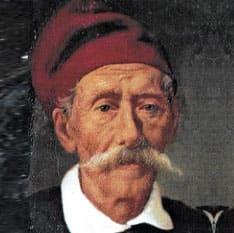
A Greek magnate from the Morea and the son of Ioannis Deligiannis. He was one of the main organizers of the Greek War of Independence.
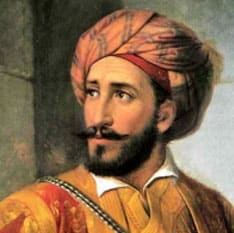
He fortified Myloi with vision and led brave resistance, inspiring his men with faith, courage, and refusal to surrender under siege.
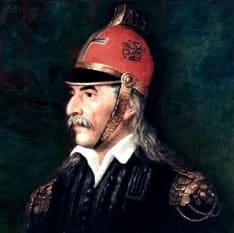
He led Greek forces in revolt, coordinated major defenses, and ordered the evacuation of Tripolitsa to resist Ibrahim’s campaign.
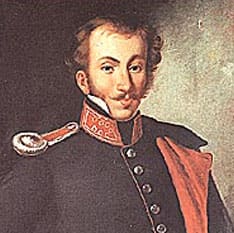
As commander-in-chief, he led reinforcements to Myloi, boosting morale and securing the first victory against Ibrahim’s troops.
He held the left flank at Myloi, repelling repeated enemy assaults with support from Greek ships and fearless counterattacks.
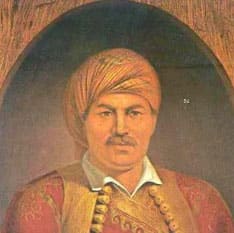
He brought Cretan troops to aid the Myloi defense, held his ground firmly, and later died fighting Ottoman forces in Crete.
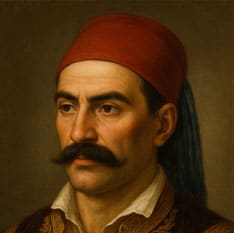
He organized Nafplio’s defense, secured supplies, managed chaos, and ensured readiness to confront the threat from Ibrahim.
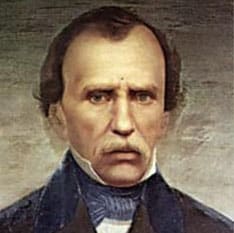
A Greek politician and fighter of the Greek War of Independence, he organized the defense during the battle.
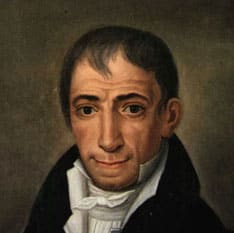
A French Philhellene, he supported the Greek defense at Myloi and became first commander of the national gendarmerie.
The opposing commander
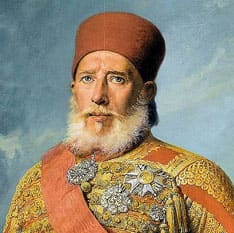
Led a powerful Egyptian force but failed to take Myloi; suffered his first defeat as Greek fighters resisted against all odds.
200 years later
On Sunday 15 June 2025 Myloi commemorated the 200th anniversary of the battle. The day began with a memorial service and the laying of wreaths at the monument to General Makriyannis, in memory of those who fell.
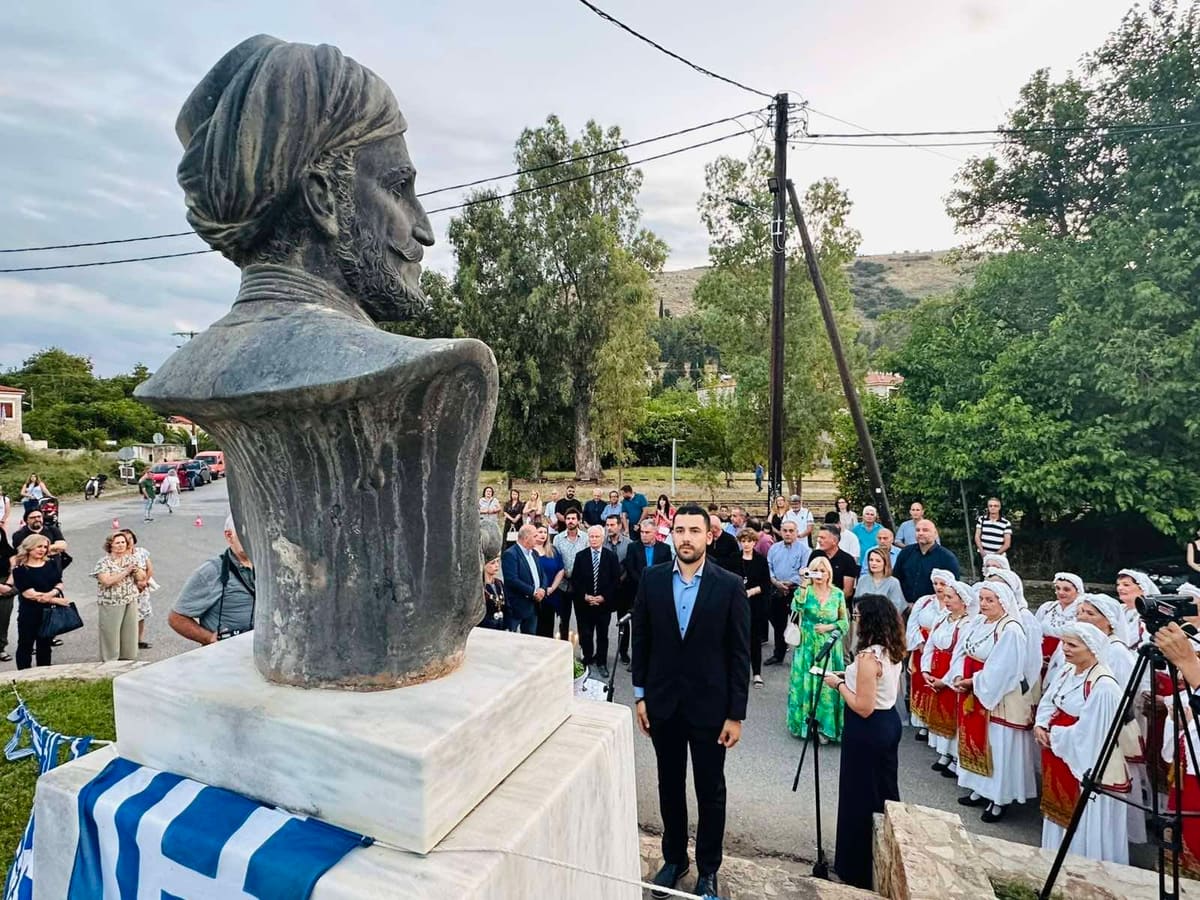
At the harbour of Myloi, Aristides Hatzis, professor of Philosophy of Law and Theory of Institutions at the National and Kapodistrian University of Athens, then spoke about the significance of the Battle of Myloi for the Greek Revolution and for the history of the Greek state. The evening ended with traditional dances by the Cultural Association of Myloi “Lernaia Hydra”, together with the group “Elliniki Paradosi”.
The commemoration was organised by the Municipality of Argos–Mykines and the Cultural Association “Lernaia Hydra”. Among those present were the mayor of Argos–Mykines, Giannis Maltezos, and the president of the Myloi community, Charalambos Kalantzis.
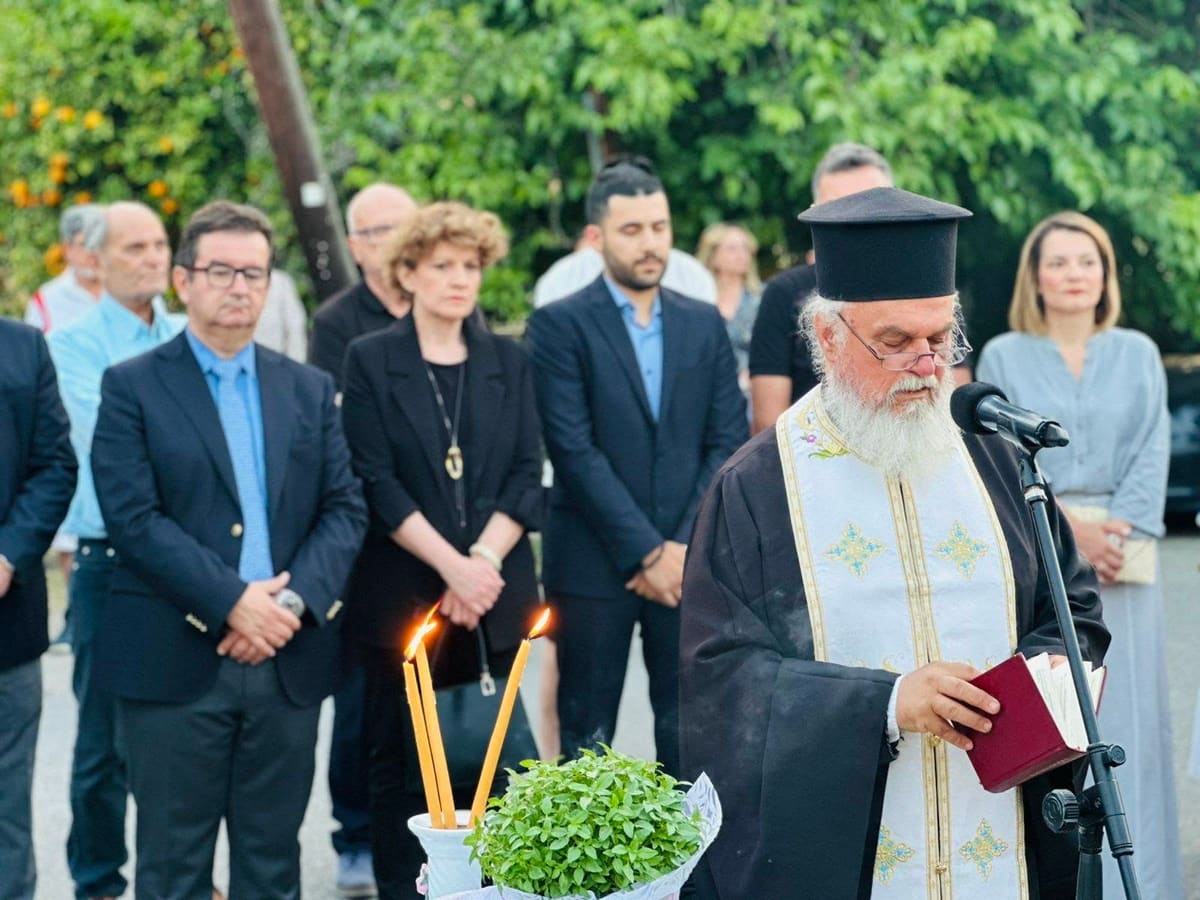
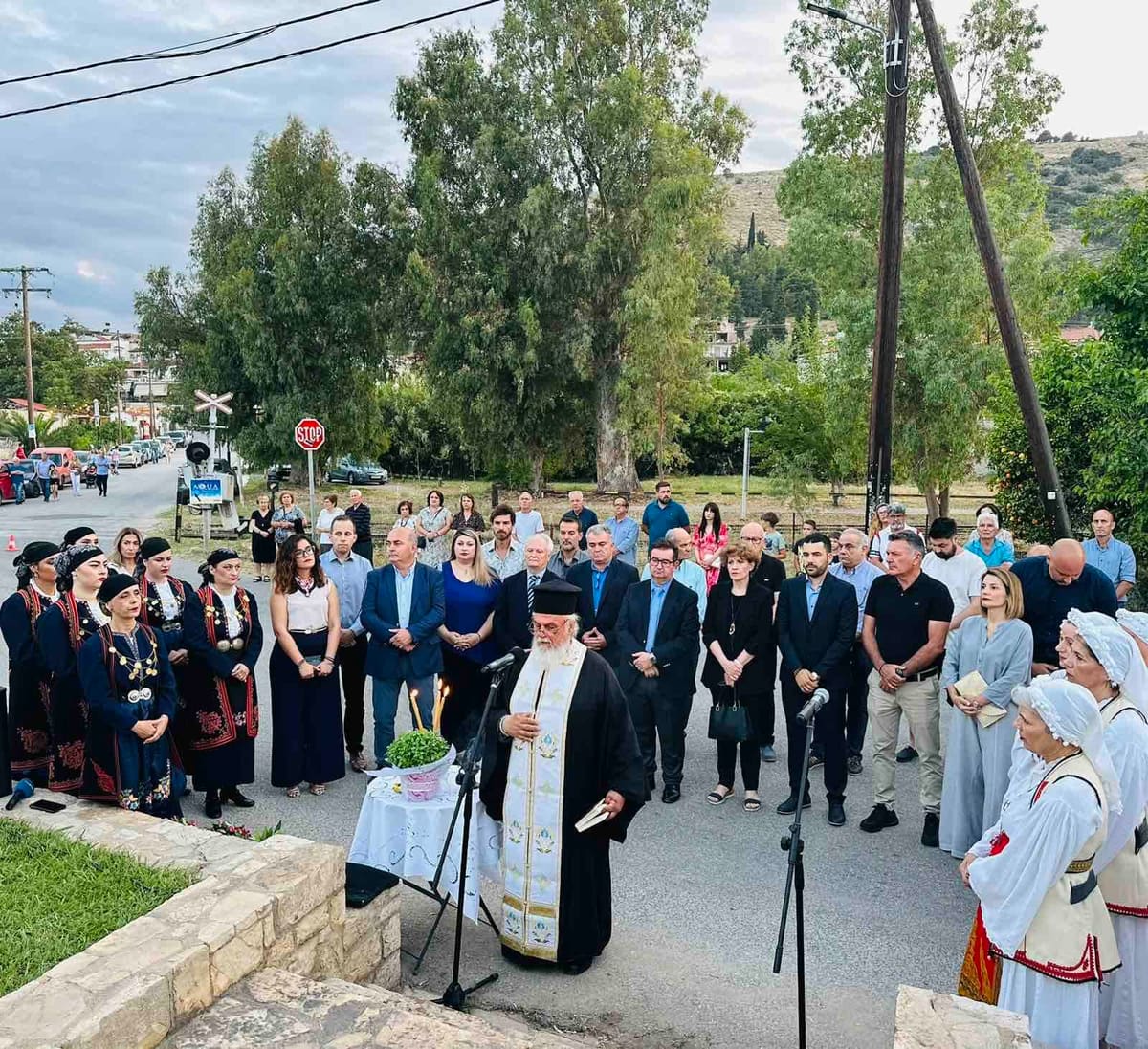
Source: Municipality of Argos–Mykines (Facebook), June 2025.
Sources
- HISTORY OF THE GREEK NATION, Vol. XII, Ekdotiki Athinon
- Nikos Giannopoulos, ‘1821 – The Battles of the Greeks for Freedom’, HISTORICAL QUEST, 2016
- Michalis Stoukas June 29, 2019
- Further background on Wikipedia: Greek War of Independence, Battle of the Lerna Mills