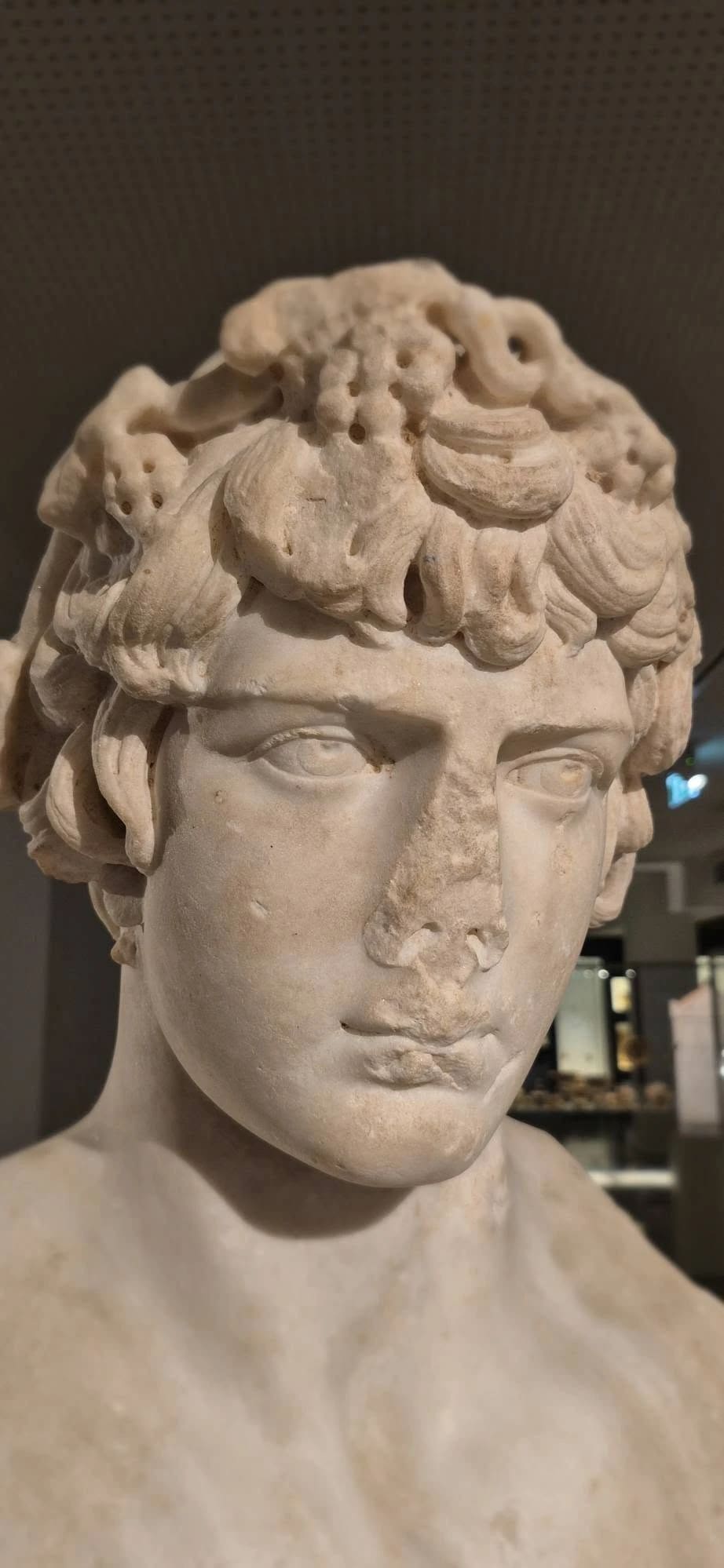
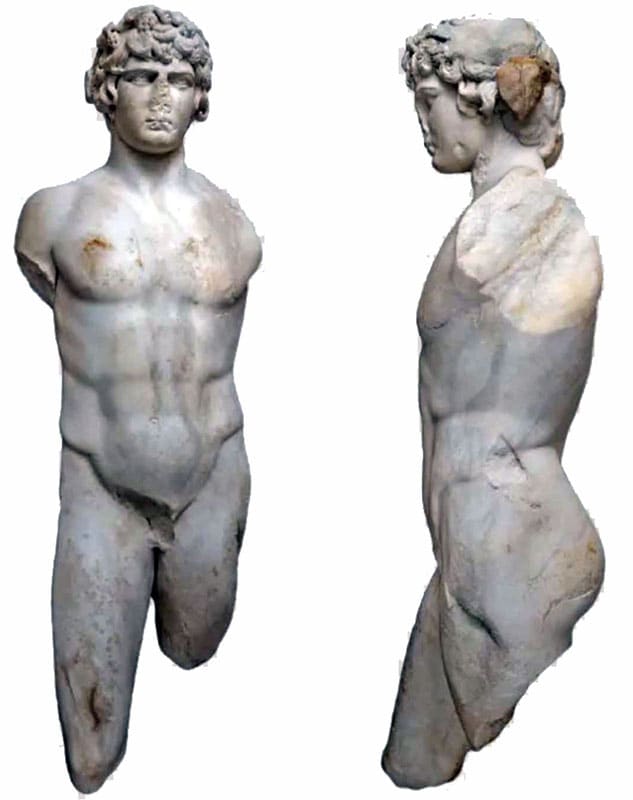
Tucked between the Gulf of Argolis and the mythical marshes of Lerna, the village of Myloi hides a secret whispered by marble and myth. In 1986, during routine excavation work near the village center, archaeologists made a breathtaking discovery: the nearly intact, life-sized statue of a beautiful young man. His name? Antinoös – a figure once worshipped as a god across the Roman Empire. And now, part of Myloi’s story forever.
Who Was Antinoös?
Antinoös was a young Greek from Bithynia (modern-day Turkey) and the beloved companion of Roman Emperor Hadrian. In 130 AD, during a journey through Egypt, Antinoös tragically drowned in the Nile under mysterious circumstances. Stricken by grief, Hadrian declared him a god. Temples were built in his name. Statues were raised across the empire. A star was named after him. To the Roman world, Antinoös became a symbol of beauty, youth, and divine mystery. In Myloi, his statue was part of a sacred space where locals may have worshipped him as a youthful version of Dionysus, the god of wine, rebirth, and the underworld.
The Discovery
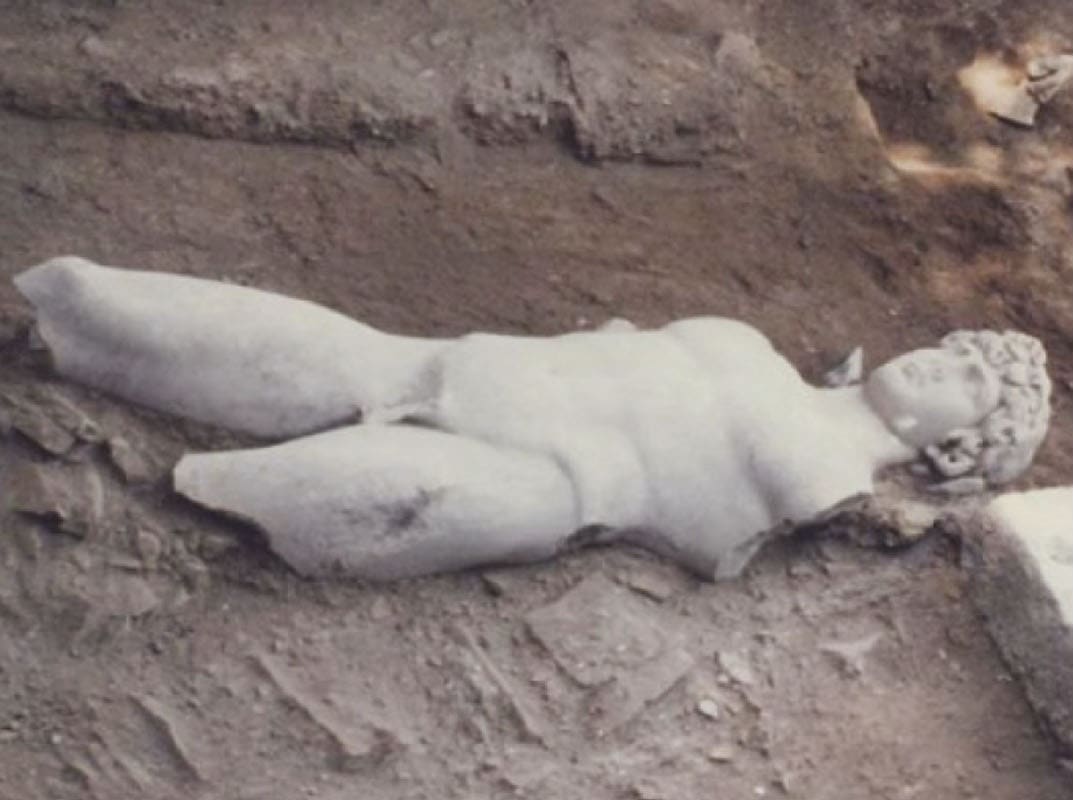
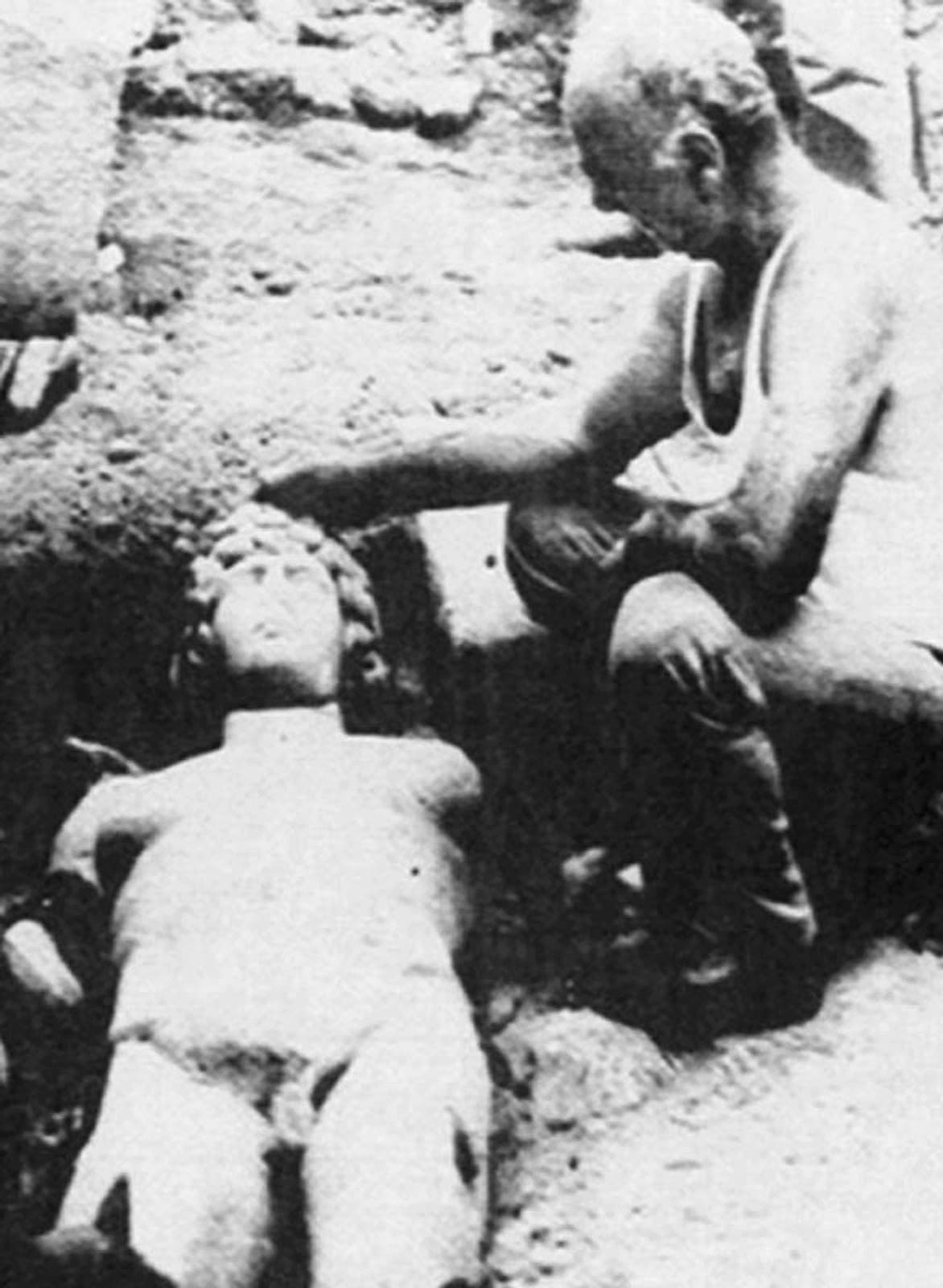
In the summer of 1986, Greek archaeologists were excavating a Roman site just outside the modern village, on a plot known locally as the Karagiannis property. While exploring the remains of a Roman-era sanctuary, buried beneath layers of soil and time, they uncovered a broken marble torso. What emerged from the earth was the hauntingly serene face of Antinoös, crowned with ivy – the symbol of Dionysus. He had been lying there undisturbed for nearly 2,000 years. The statue, slightly larger than life and masterfully sculpted, was likely the centerpiece of a small rural sanctuary dedicated to Demeter and Dionysus. His presence there was no accident. Antinoös had been worshipped in life, mourned in death, and immortalized in stone.
Myth and Mystery at Lerna
The statue was found just steps from the ancient lake of Lerna, one of Greece’s most myth-rich landscapes. According to legend, Lerna was the gateway to the underworld – and the home of the fearsome Lernaean Hydra. But it was also sacred ground to Demeter and Dionysus. Here, ancient Greeks celebrated mystery rituals believed to ensure fertility and renewal. In that mystical landscape, Antinoös – a youth who died young and was reborn as a god – fit perfectly. His presence was more than decorative. It was spiritual.
Where Is the Statue Now?
After its discovery, the statue was moved to the Archaeological Museum of Argos. For years the museum was closed for renovation and the statue was kept safely in storage. In 2026 the renewed museum reopened, and Antinoös is on view again, together with an exhibition about Lerna. More about the museum: Archaeological Museum of Argos (Ephorate of Antiquities of Argolida).
Why does this matter for Myloi?
Because this single statue connects a small Greek village to the vast tapestry of Roman religion, imperial politics, and timeless mythology. It reminds us that even the quietest places can hold stories of gods, emperors, and eternal youth. Want to learn more about Antinoös, the Roman sanctuary, or the ancient mysteries of Lerna? Visit our walking route through myth and history – starting right here in Myloi.
Face to face with Antinoös
Sometimes history suddenly comes to life. Some time ago I wrote an article for our village website about the marble statue of Antinoös, discovered here in Myloi in 1986. At the time the statue was safely tucked away in storage while the museum in Argos was being renovated, so I never got to see it myself.
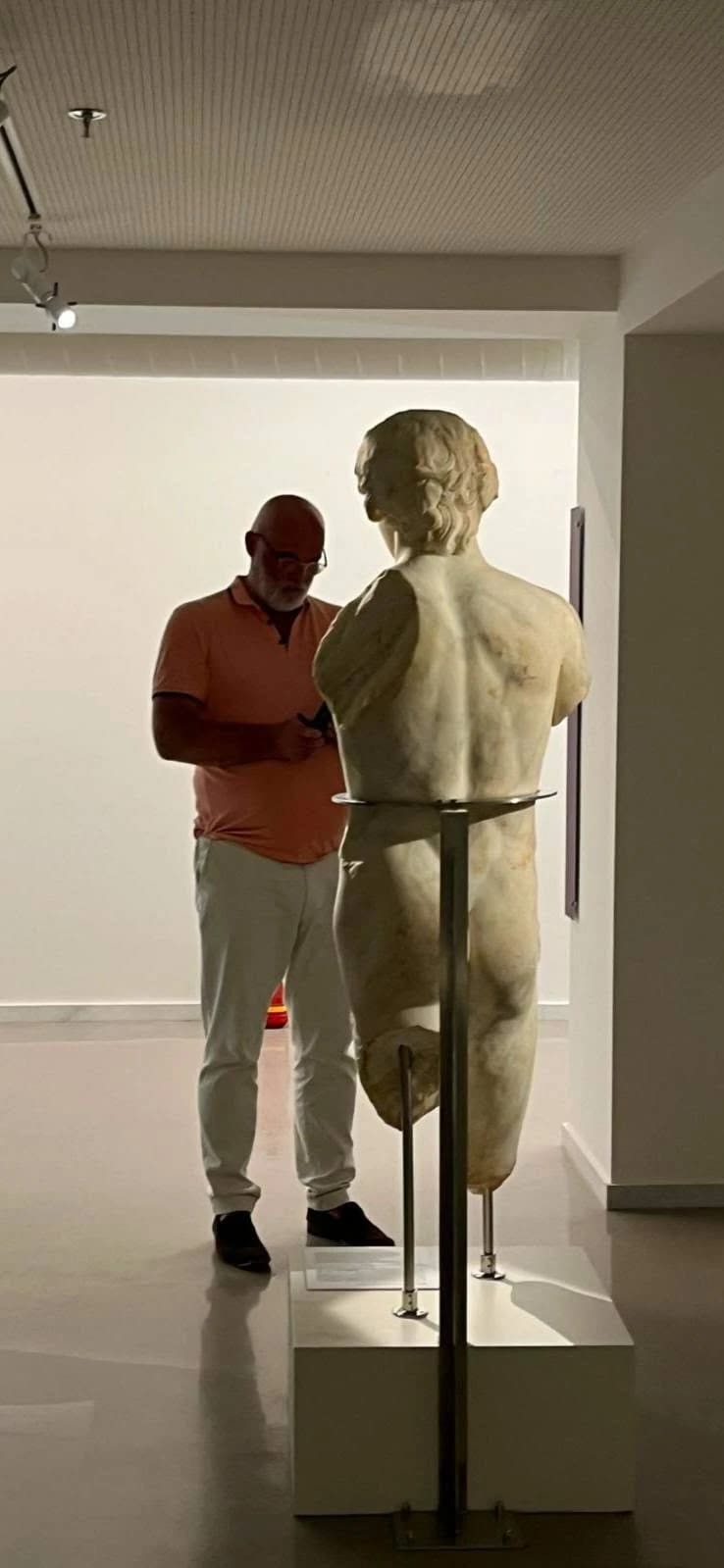
Today, visiting the newly reopened museum, I suddenly found myself face to face with Antinoös. Wow!
Johan Overtoom, editor of Visit Myloi