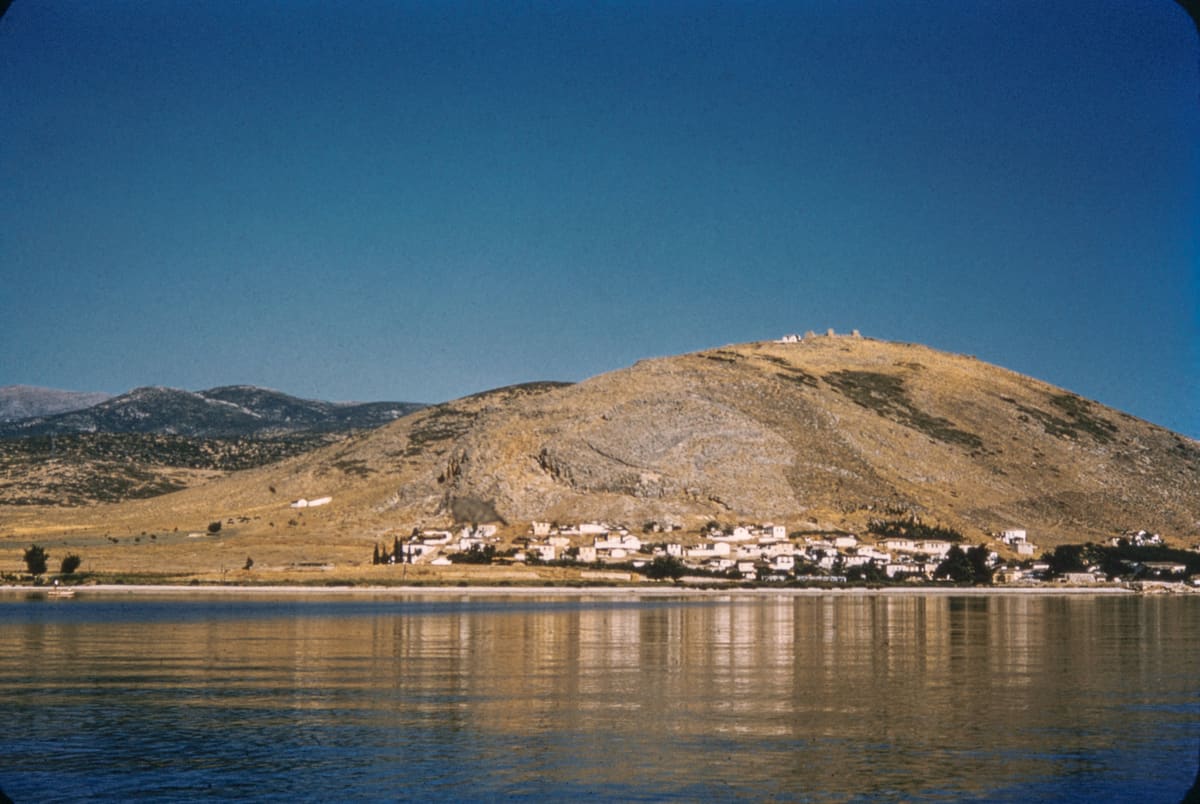
Myloi, 200 years ago: the battle broke out
How a few hundred defenders held the mills against Ibrahim Pasha on 13 June 1825.

Photo: Courtesy of Harvard Fine Arts Library, Digital Images & Slides Collection
History & Mythology
From the first farmers at the springs of Lerna to the Allied evacuation of 1941: the key moments, with their sources.
Farmers settle on a low rise by the springs, just south of today's village. The mound grows for thousands of years as new houses are built on the ruins of the old.
Source: J. L. Caskey, excavation reports in Hesperia (1954–1960)
A large two-storey building with a roof of baked clay tiles stands at the centre of Early Bronze Age Lerna. It burns down and is never rebuilt; later inhabitants respect the spot with a low mound.
Source: J. L. Caskey, Hesperia 1958; Ephorate of Antiquities of Argolida
The travel writer describes the sacred grove, the Lernaean mysteries of Demeter, the bottomless Alcyonian lake and, on Mount Pontinos, a ruined temple of Athena Saitis.
Source: Pausanias, Description of Greece 2.36.8–2.37.6
The Frankish castle of Kiveri on the summit of Pontinos, probably built in the 13th or 14th century, is first mentioned in the will of Gautier de Brienne, Lord of Argos and Nauplia.
Source: visitmyloi.gr, Lerna Castle (after A. Bon, La Morée franque, 1969)
Marie d'Enghien, Lady of Argos and Nauplia, sells her lordship, including the castle of Kiveri, to Venice. In the following century the castle falls into disuse.
Source: visitmyloi.gr, Lerna Castle
Ibrahim Pasha's army, advancing on Nafplio, attacks the fortified mills. A few hundred defenders under Makriyannis, Dimitrios Ypsilantis and Konstantinos Mavromichalis, supported from the sea, beat back the assault.
Source: Makriyannis, Memoirs; visitmyloi.gr, Myloi 200 years ago
On 4 August 1886 the metre-gauge line from Argos reaches Myloi. Myloi becomes the starting point of the line inland: the section to Tripoli opens on 1 February 1892 and the line later continues to Kalamata. The station area gets a locomotive shed, a goods warehouse, a café for waiting passengers and two station buildings, one for each of the railway companies of the time.
Source: E. Roussou, Restoration and re-use of the Myloi railway station (diploma thesis, Democritus University of Thrace, 2015), citing contemporary Argolid newspapers
During the evacuation of Greece, the headquarters of General Wilson and General Freyberg are both at Myloi. Wilson leaves the following night; Freyberg takes command of the remaining forces in the Peloponnese.
Source: Gavin Long, Greece, Crete and Syria (Australian official history, 1953), pp. 162–168
John L. Caskey leads the excavations of the American School of Classical Studies at Athens. In 1957 a protective roof is built over the House of the Tiles.
Source: Hesperia excavation reports; BCH chronique des fouilles 1957–1958
Although the line through Myloi had just been renovated, regular train services on the Peloponnese metre-gauge network are suspended. The station buildings remain, silent, beside the tracks.
Source: E. Roussou, Restoration and re-use of the Myloi railway station (diploma thesis, Democritus University of Thrace, 2015), citing contemporary Argolid newspapers
How a few hundred defenders held the mills against Ibrahim Pasha on 13 June 1825.
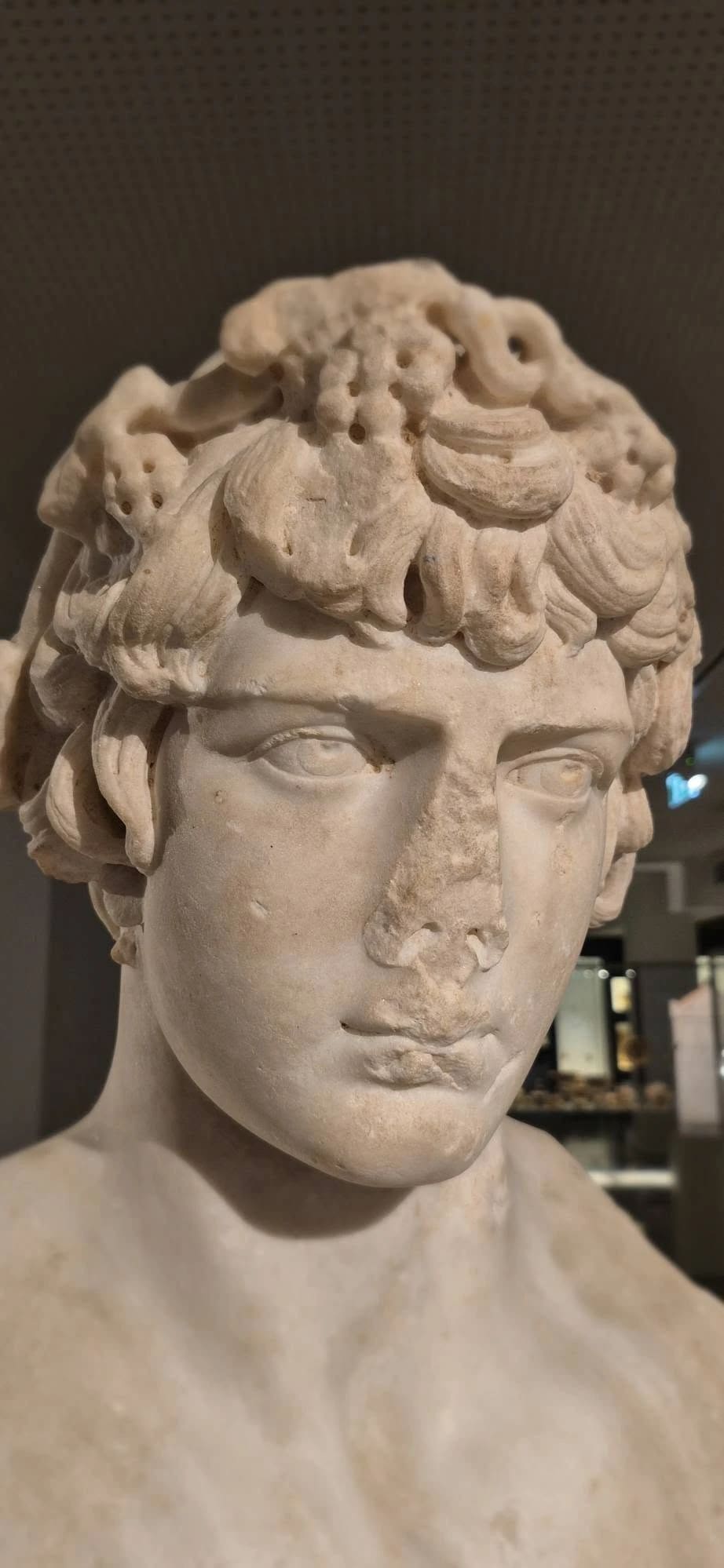
The statue of Hadrian's deified favourite, found near the village.

John L. Caskey and the rediscovery of Lerna.