Places
Myloi beach
16 events
Show on a map (opens in a new tab)
-
1687–1714
The Venetians expand the mills
After the Peloponnese came under Venice in 1687, the Venetians greatly expanded the mills of Lerna. They built connected vaulted granaries, fitted new grinding machinery and surrounded the complex with a stone dam with…
-
1700
Grain by boat, flour back to Nafplio
In his introduction to the Venetian cadastre of Argos, the engineer Francesco Vandeyk describes a castle on a high hill near the sea, called Anasiri, or by many 'Old Argos' or 'Helen's castle'. Below it, he writes, water…
-
1806
The gardens of the Kapudan Pasha and the mill dam
South of the mills Leake saw a stone dam 250 yards long along the beach, with two shorter cross walls, built to hold water for the mills. Next to it lay gardens full of orange and other fruit trees, which 'formerly…
-
1806
A ship from Smyrna unloads iron at the wharf
Leake found the southern mills close to the shore and to 'a small wharf where vessels load or disembark their cargoes'. A ship from Smyrna lay at anchor, unloading iron, and a row of storehouses stretched from the mills…
-
c. 1815
Ottoman frigates anchor off 'the Mills'
Pouqueville noted that the frigates of the Kapudan Pasha, the Ottoman admiral, had to anchor off the beach of Lerna, 'commonly called the Mills', and that ships calling there took on fresh water. A century after the…
-
1858
'A landing-place, with a few poor houses'
The English scholar W. G. Clark went by boat from Nafplio to Myloi in one hour and twenty minutes, partly rowing and partly sailing. He found 'a landing-place, with a few poor houses about it', a pebble beach, quaking…
-
October 1887
Smuggled silks found on the shore of Myloi
In the autumn of 1887 the justice of the peace and the gendarmerie of Argos heard that goods were being smuggled ashore at Myloi. They went to the beach and seized six large crates and a parcel of silk fabrics, neckties…
-
May 1889
A German traveller sails from Myloi to Nauplia
In May 1889 Georg Behrmann found someone on the beach at Myloi who understood German and helped him hire a sailing boat, steered by 'two cheerful, talkative Myliots', to Nauplia. He noted that he could also have taken…
-
1893
A bathing train from Argos to the sea at Myloi
In the summer of 1893 the people of Argos asked for a special bathing train. They wanted to swim at 'Almyro', 'only five minutes from Myloi station'. The train to Myloi was also becoming a train to the sea.
-
13 January 1927
'Skala': Myloi as the landing place of Tripoli
An Athens paper described Myloi as a village on the railway to Tripoli, 'well-watered, full of trees and pleasant', with tall eucalyptus trees along the beach where the boats lay. Besides its name from the many water…
-
1941–1943
The Italian garrison fortifies the coast: anti-tank ditch and barbed wire
Myloi had its own Italian garrison. The Italians took over the fortification of the village against an Allied landing: they dug an anti-tank ditch, laid barbed wire and set up an anti-aircraft unit and gun batteries…
-
13 July 1941
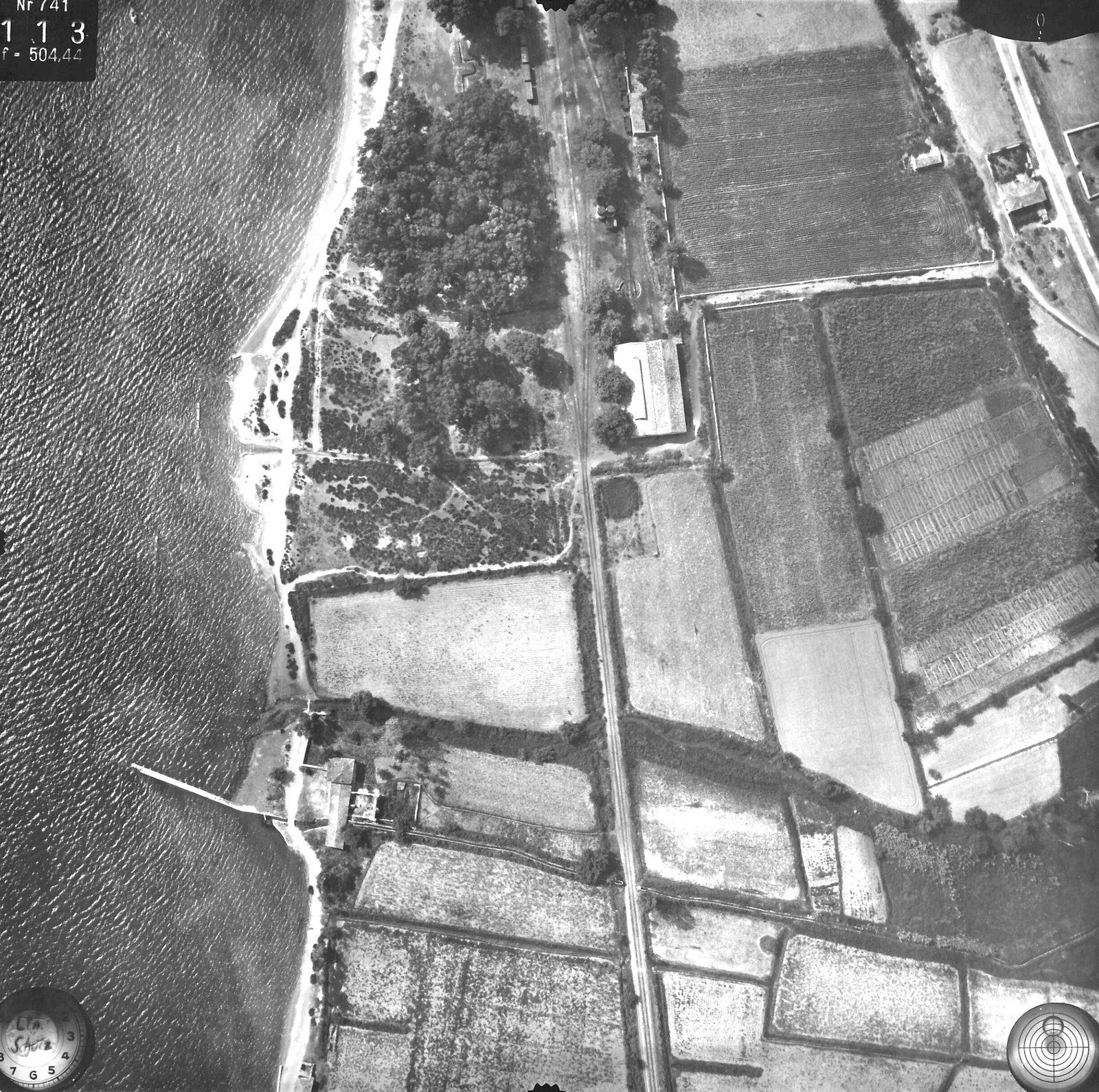
Aerial photo: a zigzag trench in the eucalyptus wood
In the eucalyptus wood by the station the photographs of 13 July 1941 show a zigzag trench. It was probably dug in April 1941, when Allied troops sheltered under these trees.
-
May 1945
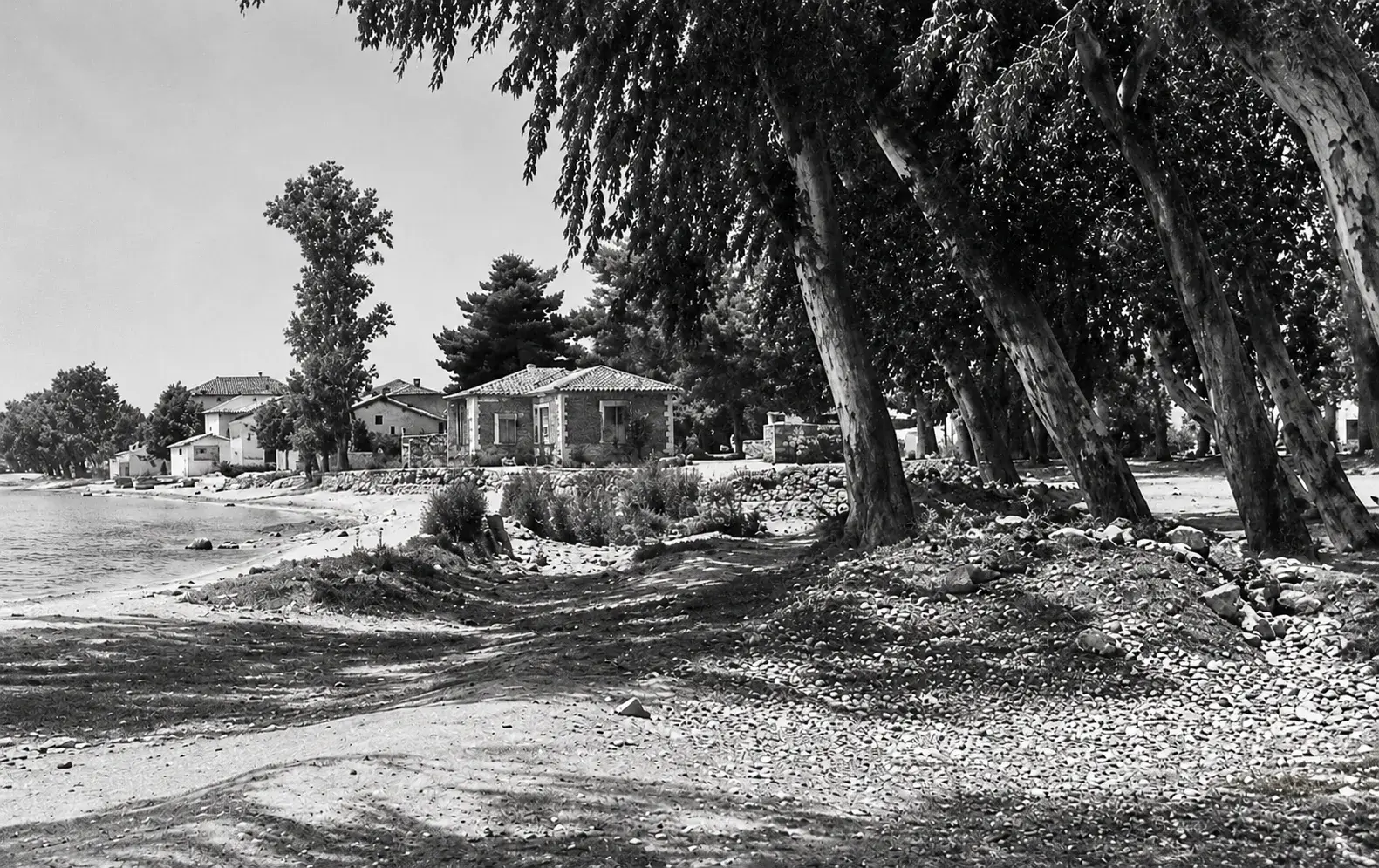
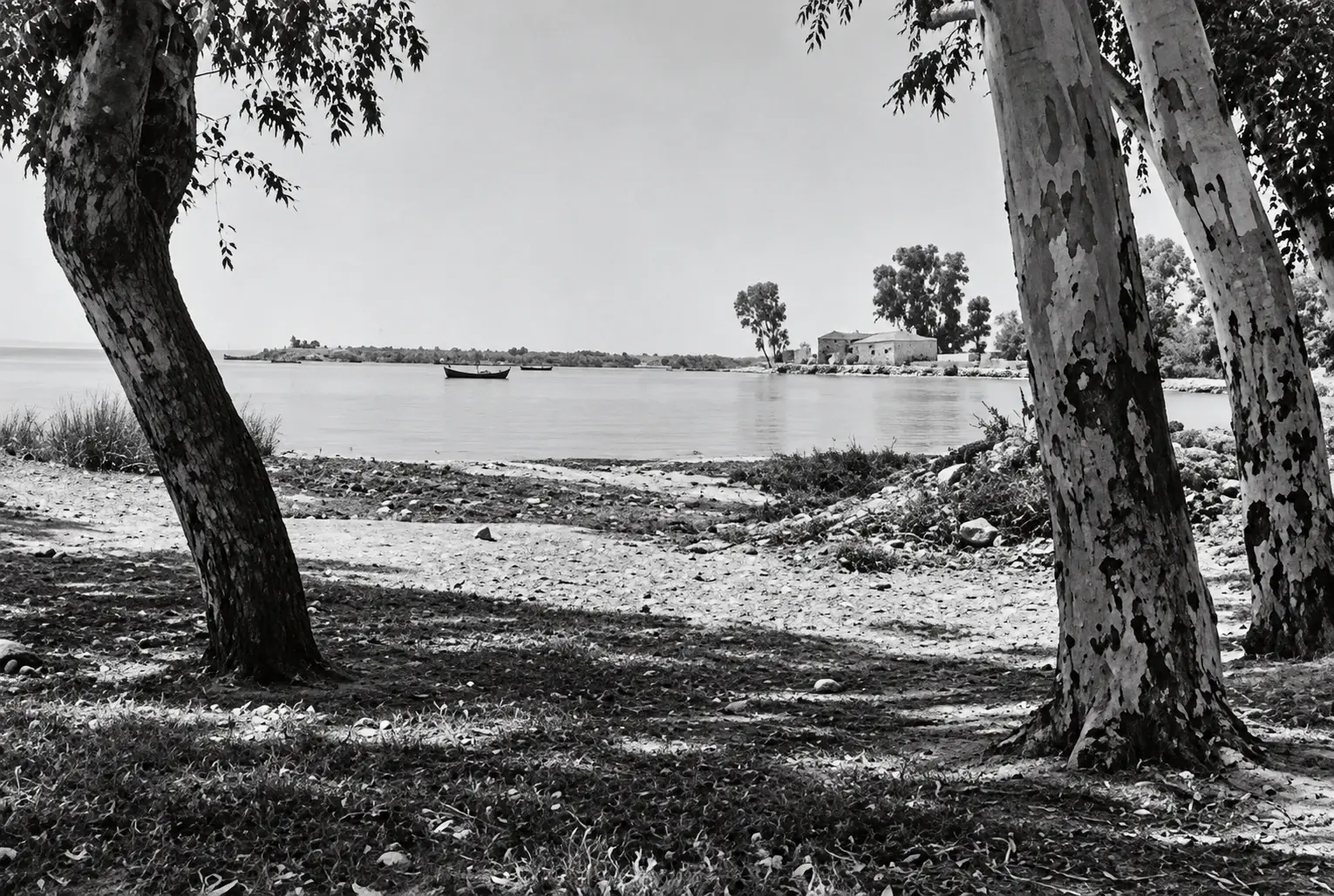
An Australian war photographer returns to the beach of 1941
In May 1945 the Australian war photographer V. J. Krauth travelled through the Peloponnese to record the places of 1941. At Myloi a resident showed him the beach and the row of eucalyptus trees under which Australian…
-
7 October 1950
First stone of the ice factory «Η Λέρνη»
Early in 1950 Anastasios Vasileiou bought the ruins of the old state warehouses on the beach of Myloi and levelled the ground. On 7 October 1950, after a blessing, he laid the first stone of the ice and cold-storage…
-
12 February 1958 – 22 June 1958
The ice factory «Η Λέρνη» runs into debt
On 12 February 1958 the "cold industry of Myloi «Η Λέρνη»" announced that it would start paying its creditors in June, and in May Vasileiou called thirteen creditors to a meeting at the factory on 22 June 1958. Work…
-
October 1998
Loukas Kouvaras, first mayor of Lerna
Kouvaras was elected first mayor of the new municipality of Lerna in 1998 and re-elected in 2002. He built the town hall in Myloi, laid out the beaches of Myloi and Kiveri and brought water and roads to the neighbouring…
People
- Francesco Vandeyk Venetian public engineer and mapmaker
- William Martin Leake British officer, topographer and traveller
- François Pouqueville French consul, traveller and historian
- William George Clark English scholar and travel writer
- Anastasios Vasileiou Industrialist, ice factory Lerni (1950–1958)
- Loukas Kouvaras Engineer, president of the community of Myloi, first mayor of Lerna
Pictures
Vertical aerial photo: railway line with eucalyptus wood, a large building beside the track and the pier. Reichsluftfahrtministerium (Sonderluftbildabteilung); DAI Athens Archive
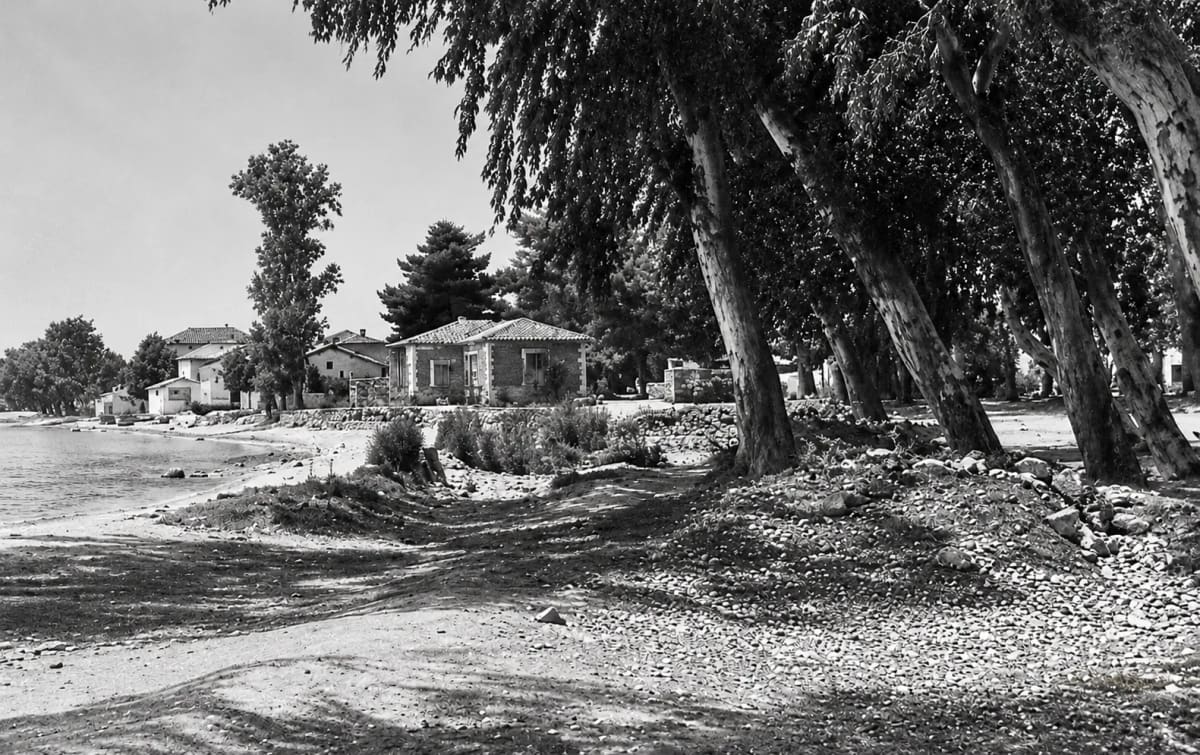
May 1945: the eucalyptus trees at Myloi under which Australian troops sheltered while waiting for evacuation in 1941 (digitally restored). Australian War Memorial 130831, photo V. J. Krauth · public domain
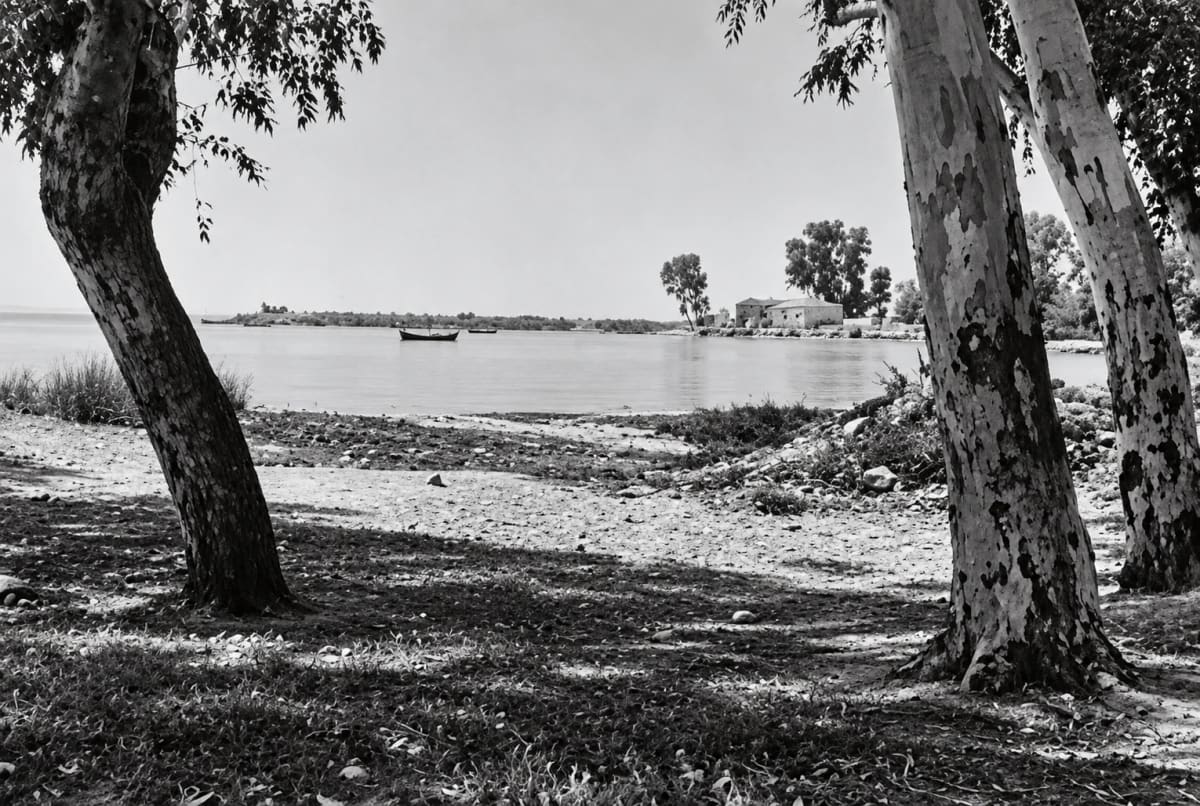
May 1945: the beach at Myloi from which, according to a local resident, Australians were evacuated in 1941 (digitally restored). Australian War Memorial 130887, photo V. J. Krauth · public domain