
Antiquity · Ancient Lerna
The House of the Tiles
2500 BC – 2200 BC Proven
At the centre of Early Bronze Age Lerna stood a large two-storey building roofed with baked clay tiles and stone slabs. Rows of seal impressions found inside show that goods were stored and checked here, so it probably had an administrative role. It burned down and was never rebuilt; later inhabitants covered the spot with a low mound and left it untouched.
Read the full story: The man who gave Lerna a face
- Threads
- Ancient Lerna
- Certainty
- Proven confirmed by primary sources
Pictures
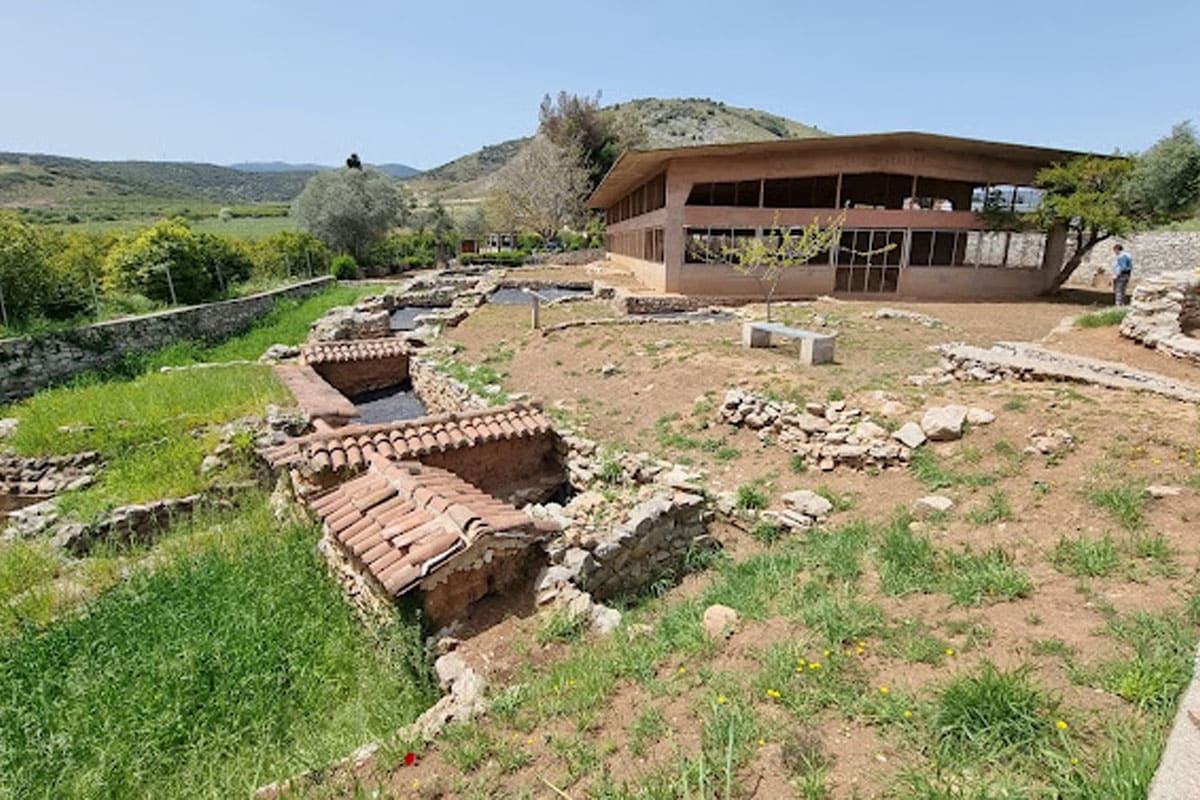
The archaeological site of Lerna with the protective roof over the House of the Tiles. Visit Myloi
Sources
- J. L. Caskey, Hesperia 27 (1958) and earlier Lerna reports in Hesperia
- Ephorate of Antiquities of Argolida, Archaeological site of Lerna Open (opens in a new tab)
Also in this period
-
6000 BC – 3200 BC
First farmers settle by the springs of Lerna
In the Neolithic, more than 6,000 years ago, farmers settled on a low rise beside the springs, just south of today's village. Each generation built on the ruins of the last, so the settlement mound of Lerna slowly grew.…
-
c. 1250 BC
Lerna is abandoned
Lerna stayed inhabited into the Middle Bronze Age. In the Mycenaean period the hill was used mainly as a cemetery and lived on only now and then, and around 1250 BC it was abandoned for good.
-
c. 700 BC
Hesiod tells of the Hydra of Lerna
Around 700 BC the poet Hesiod is the first to write about the Hydra, the many-headed water serpent of the marshes of Lerna, killed by Heracles. In the later version of the story two heads grew back for every one he…
-
c. 67
Emperor Nero tries to find the bottom of the lake
Beside the springs lay the Alcyonian lake, said to have no bottom; through it, the Argives believed, Dionysus went down to the underworld to fetch his mother Semele. Pausanias tells that the emperor Nero had ropes many…