
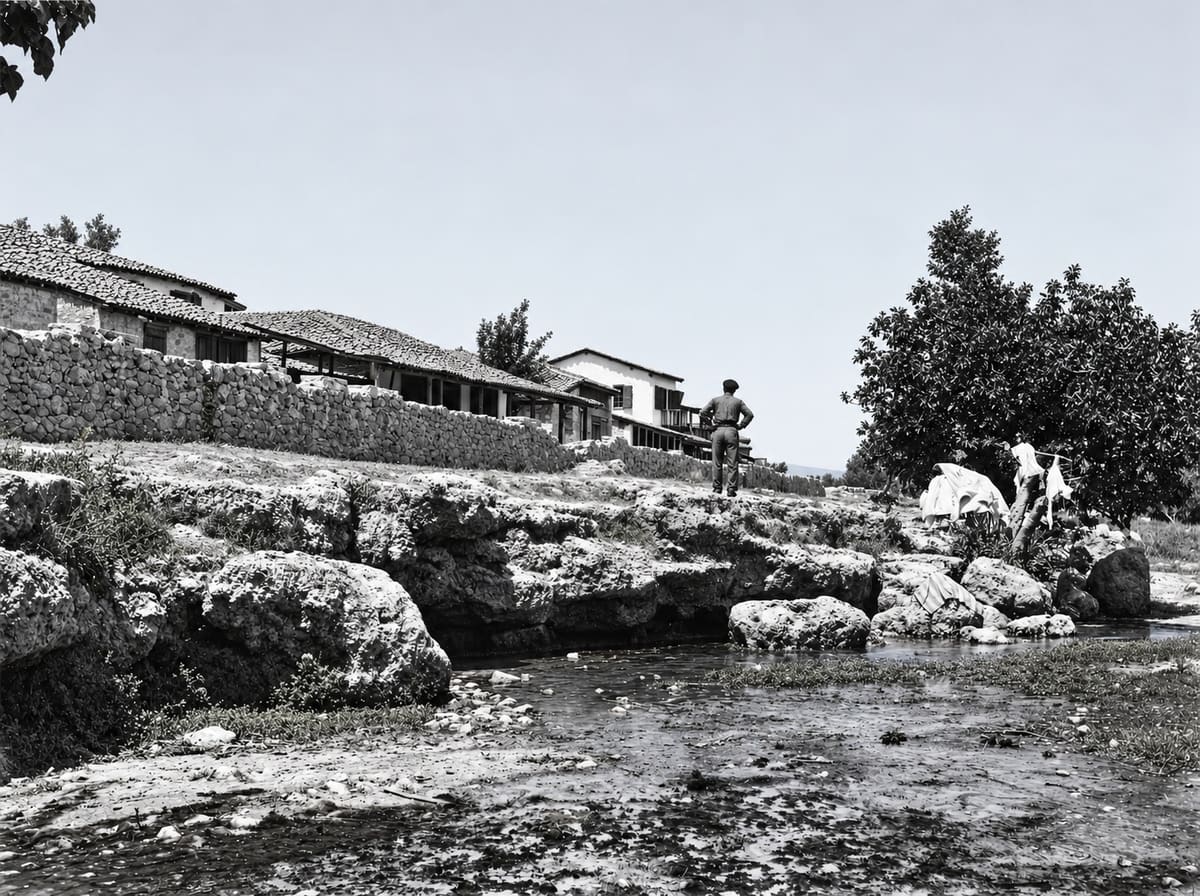
Around 1900 young men left many Greek villages. Between 1900 and 1920 roughly one in twelve Greeks left the country, most of them for America. Often a whole village followed the same route. From the island of Kythera they had been going to Australia since the 1880s. From Achladokampos, high above Myloi on the road to Tripoli, they went to the United States from the early twentieth century on; their brotherhood is still in Chicago.
Myloi did not empty. The village lay on the railway from Argos to Tripoli, had a small harbour and, according to the censuses, actually grew from 1879 until well into the twentieth century. Still, men left here too, not in groups but family by family. The Ellis Island passenger lists, which have survived, show two of those families. Each chose a different route.
Who is who
The Kouvalis family, from Kalamaki (the hamlet next to Myloi)
- Angelos Kouvalis already lives in Chicago, at 417 North Wells Street.
- Stavros Kouvalis (15) is his younger brother and follows him in 1911.
- Zacharia Mila (38) is Angelos's brother-in-law. He has been to Chicago before and travels with Stavros.
The Antoniou family, from Myloi
- Zachos Antoniou (23), son of Costas, goes to Lowell in 1912, returns home and leaves again in 1914.
- George Antoniou is his brother and lives in Eureka, California.
Route 1: Kalamaki – Chicago
The pioneer
The story begins with Zacharia Mila. In 1902 he leaves Kalamaki for Chicago, which makes him the earliest emigrant from Myloi and Kalamaki we know of. He works there for four years. In 1906 he returns to Kalamaki, to his wife Marigo.
Meanwhile Angelos Kouvalis lives in Chicago. He is Mila's brother-in-law, probably a brother of Marigo. He works, saves and pays for the passage of his younger brother Stavros. If that is right, Mila took his own wife's little brother with him in 1911.
April 1911: the crossing
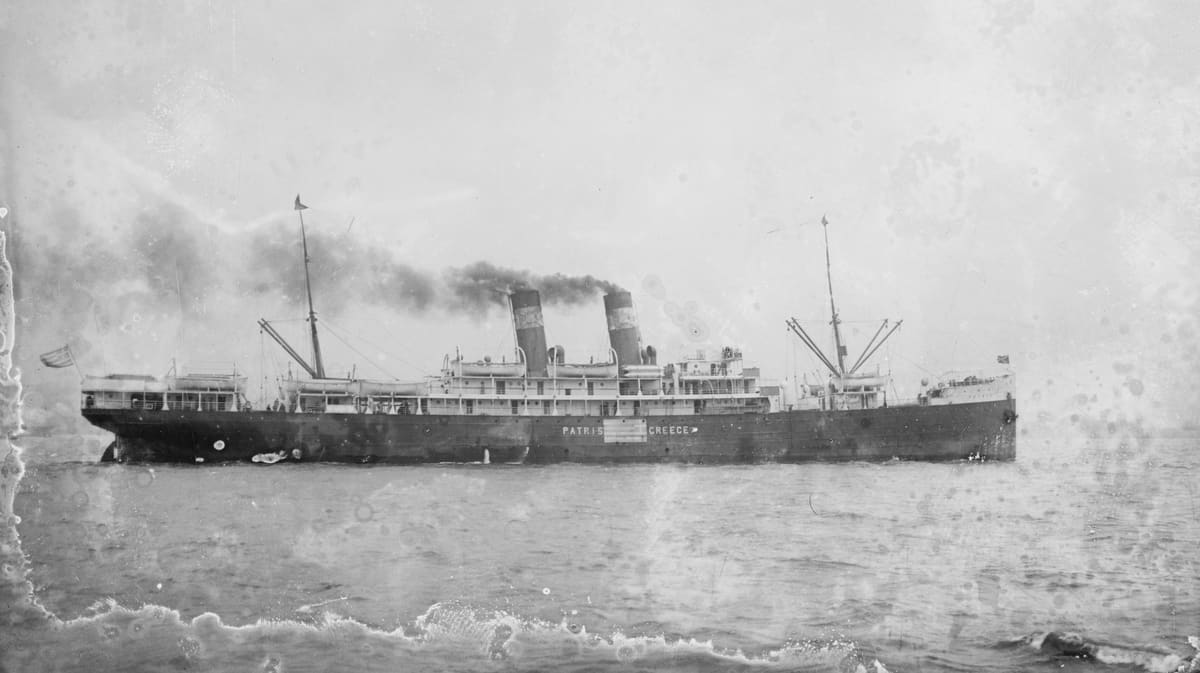
On 4 April 1911 Mila leaves for the second time, now with fifteen-year-old Stavros. They sail from Piraeus on the Patris, the first ship of a Greek line with a direct service to New York, with a Greek crew and Greek food on board. Twenty days later, on 24 April, they sail into New York.
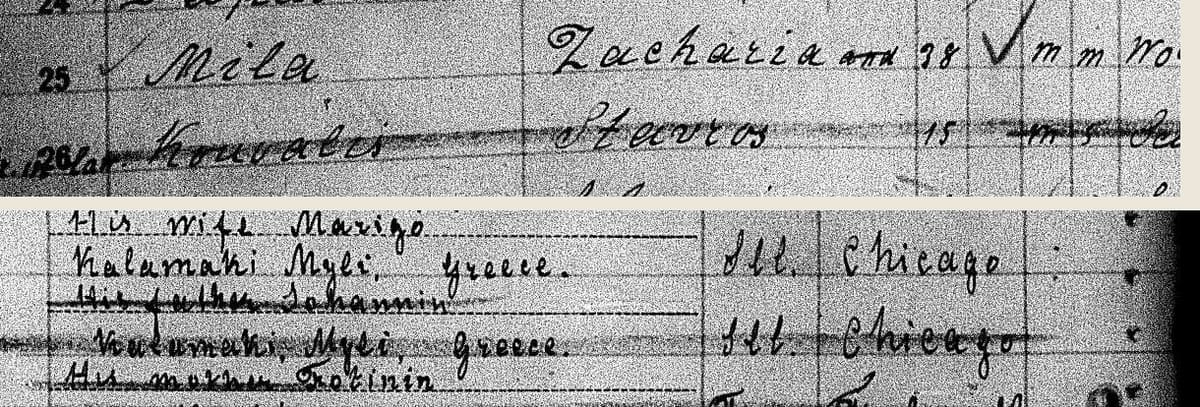
The passenger list records their journey. For Mila: 38, married, cannot read or write, pays his own fare, 32 dollars in his pocket, "previously in the US: 1902–1906, Chicago". For Stavros: scholar, father Ioannis in Kalamaki, "paid by his brother". Both have the same destination: Angelos Kouvalis, 417 N. Wells Street, Chicago.

Chicago, 1911
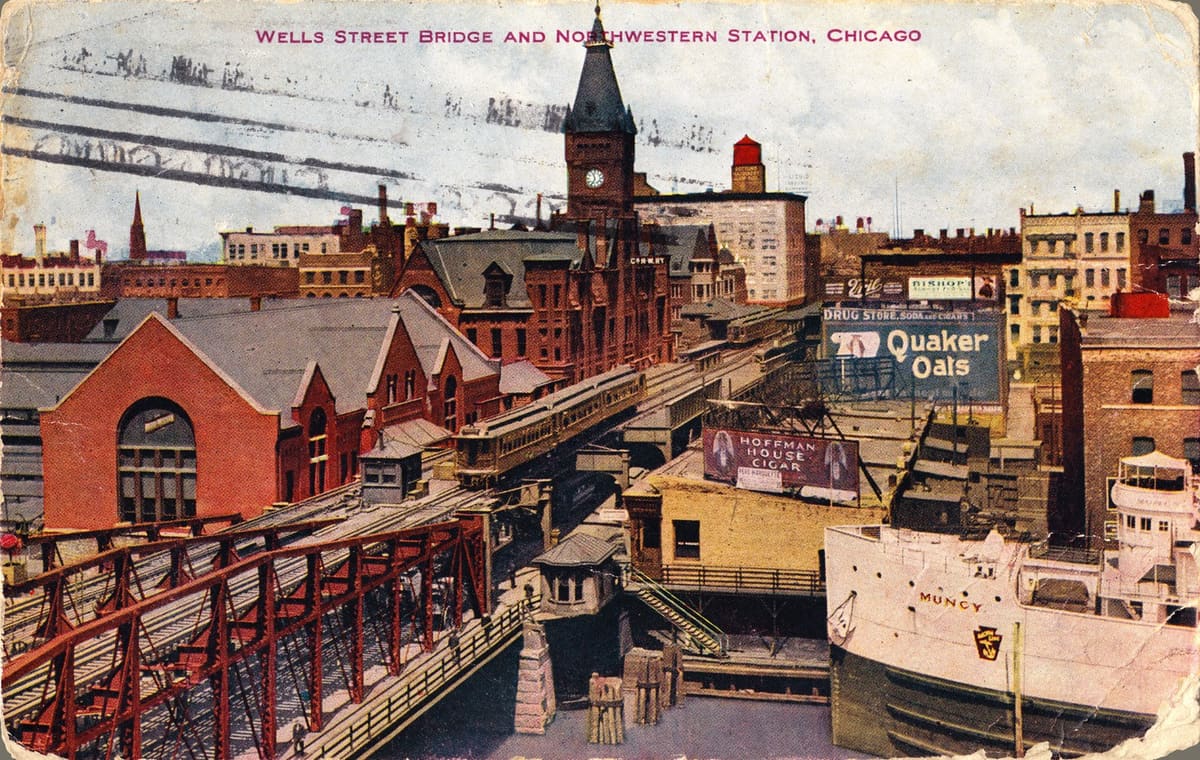
Angelos's address was close to the river, in the area where Chicago's first Greeks had lived around 1880. By 1911 there were many thousands, most of them from the Peloponnese.
We know what their lives were like from a Hull House study of 1908, which counted 1,467 Greeks. The men were mostly labourers, peddlers, waiters or cooks. Those who did well worked their way up from peddler to fruit stand and finally to an ice-cream parlour, and only then sent for their wives. Until then the men lived together and sent money home.
Boys of Stavros's age often came with someone from their village. They worked as bootblacks or at a fruit stand, often twelve hours a day or more. Stavros was better off than many: he went to his own brother.
The name Kouvalis never disappeared from Chicago.
Route 2: Myloi – Lowell – Eureka
August 1912: to the mills
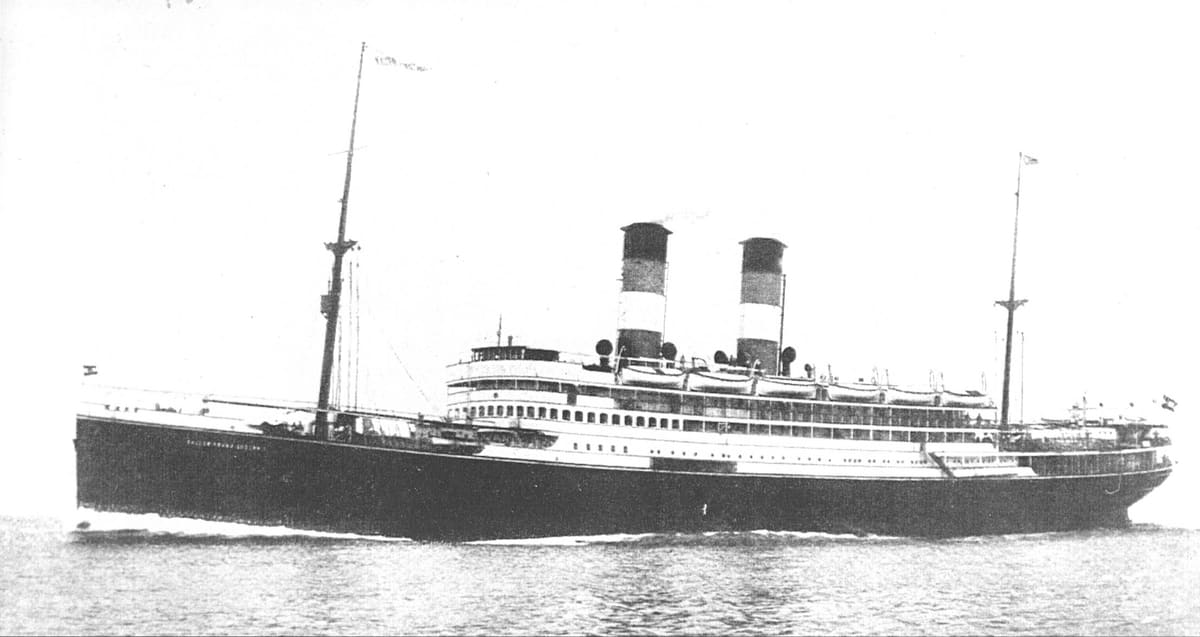
Zachos Antoniou from Myloi, 23 and a farmer, leaves Patras on 19 August 1912. He travels in steerage on the brand-new Kaiser Franz Josef I, the largest passenger ship of Austria-Hungary. Twelve days later he is in New York. The list spells his village "Milous", just as you say στους Μύλους ("to Myloi") in Greek.
He goes to a cousin in Lowell, Massachusetts, a textile town where thousands of Greeks worked in the mills.
Back home, and away again
He does not stay long. In October 1912 the Balkan Wars break out and thousands of Greek emigrants go home to fight. We do not know whether that is why Zachos returned, but by 1914 he is back in Myloi.
On 26 May 1914 he leaves again, this time on the Pannonia. The list says: "previously in the US: 1911–1912, Lowell". This time he goes further than ever, to his brother George Antoniou in Eureka, California, a lumber town on the Pacific among the giant redwoods. He arrives on 16 June. Six weeks later the First World War breaks out in Europe.

What the lists do not tell
The passenger lists tell us who went, when, on which ship and to whom. They do not tell us what happened next. Did Stavros Kouvalis become a cook, a waiter or a factory worker? Did Zacharia Mila ever return to Marigo? Did Zachos Antoniou stay in California?
Do you have family who went "to America", or stories, letters or photos of these families? Let us know.
In short
- 1902–1906: Zacharia Mila works in Chicago
- April 1911: Mila and Stavros Kouvalis on the Patris to Chicago, to Angelos Kouvalis
- August 1912: Zachos Antoniou on the Kaiser Franz Josef I to Lowell
- 1912–1914: Zachos back in Greece
- June 1914: Zachos on the Pannonia to his brother George in Eureka, California
Sources
- New York, Passenger Arrival Lists (Ellis Island), 1892–1925, National Archives (NARA) microfilm T715, via FamilySearch and the Statue of Liberty – Ellis Island Foundation: Patris, arrived 24-04-1911, list 1, lines 25–26; Kaiser Franz Josef I, arrived 31-08-1912, list 62, line 27; Pannonia, arrived 16-06-1914, list P1, line 10.
- Grace Abbott, "A Study of the Greeks in Chicago", American Journal of Sociology 15 (1909), no. 3, pp. 379–393: archive.org. On Clark and Kinzie Streets: Greektown Chicago, Greektown Master Plan (2019), historical overview.
- On the ships: Greek Shipping Hall of Fame (National Greek Line, Patris); Wikipedia, SS Kaiser Franz Joseph I and RMS Pannonia.
- On Chicago: Encyclopedia of Chicago, "Greeks". On Lowell: National Park Service, "The Acre". On Eureka: Timber Heritage Association.
Photos: Bain News Service (Library of Congress), a postcard of c. 1909 and an unknown photographer of c. 1912 (Wikimedia Commons). All public domain. The people in the period photos are not the emigrants from Myloi. The passenger lists are US government records (NARA).