
Story · The House of the Tiles
The House of the Tiles
Under a big roof by the springs of Lerna lies one of the oldest houses in Greece. Kostas takes you inside.
A house more than 4000 years old
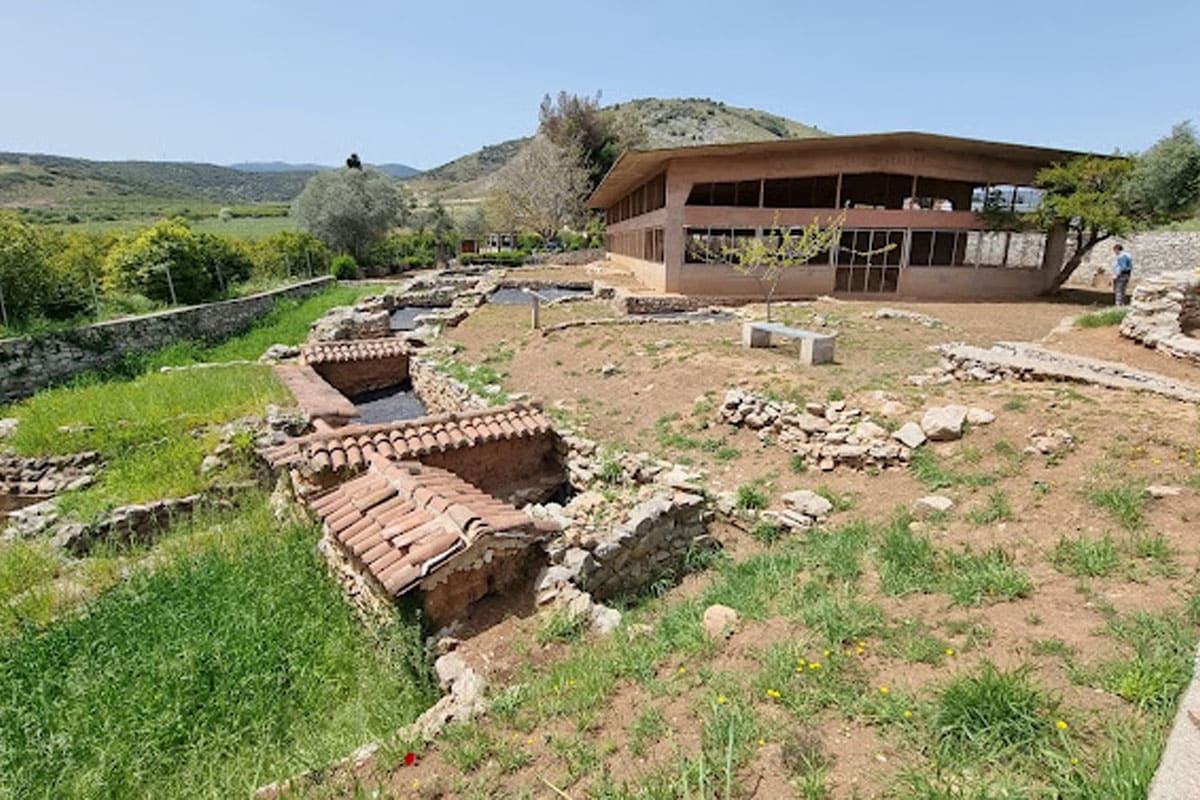
Just outside Myloi, close to the springs of Lerna, a big roof stands in the middle of a field. Underneath lies something very special: the remains of a house that was built more than 4000 years ago, somewhere between 2500 and 2200 BC.
Archaeologists call it the House of the Tiles. At about the same time, the Egyptians were building their great pyramids. That's how old it is!
Why is it called that?
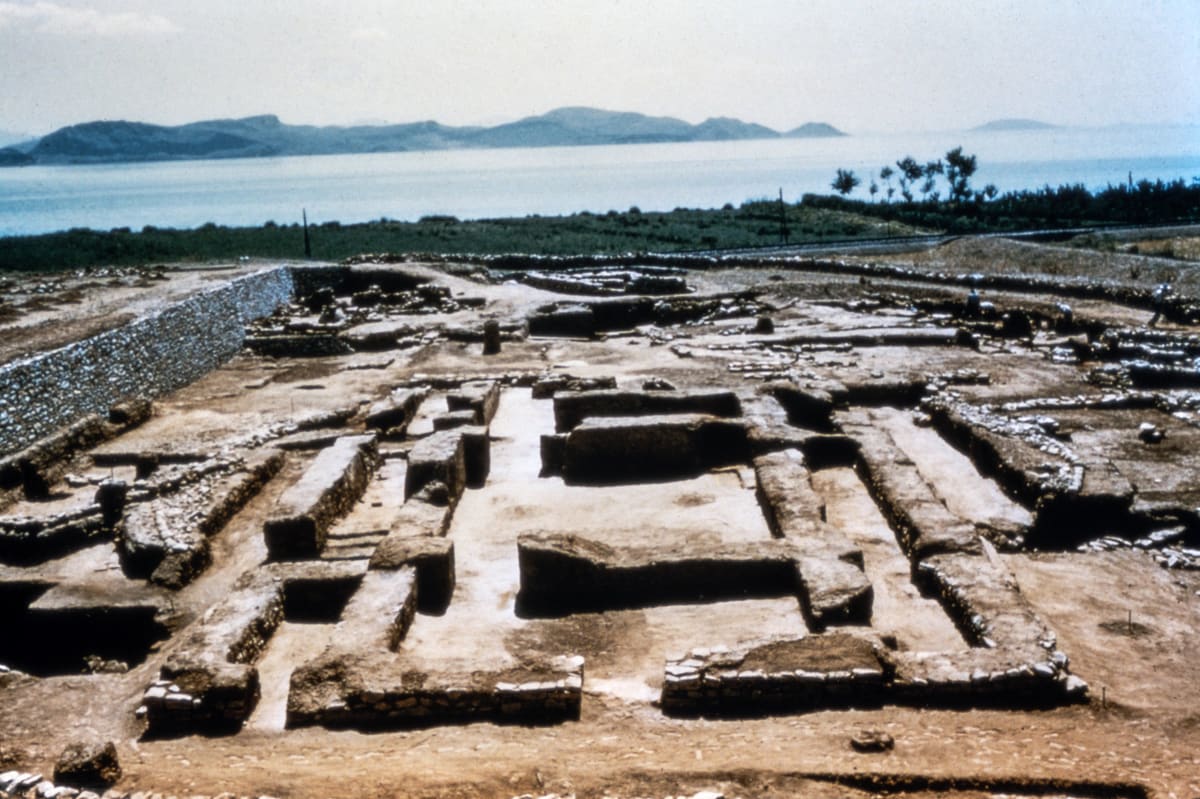
When the archaeologists started digging, they found a huge number of pieces of roof tiles in the ground. They lay among the remains of the collapsed house. The roof had been made of baked clay tiles and flat stones.
That's how the house got its name. Making roof tiles was hard work: you had to shape the clay, let it dry and then bake it in a kiln.
Big, with two floors
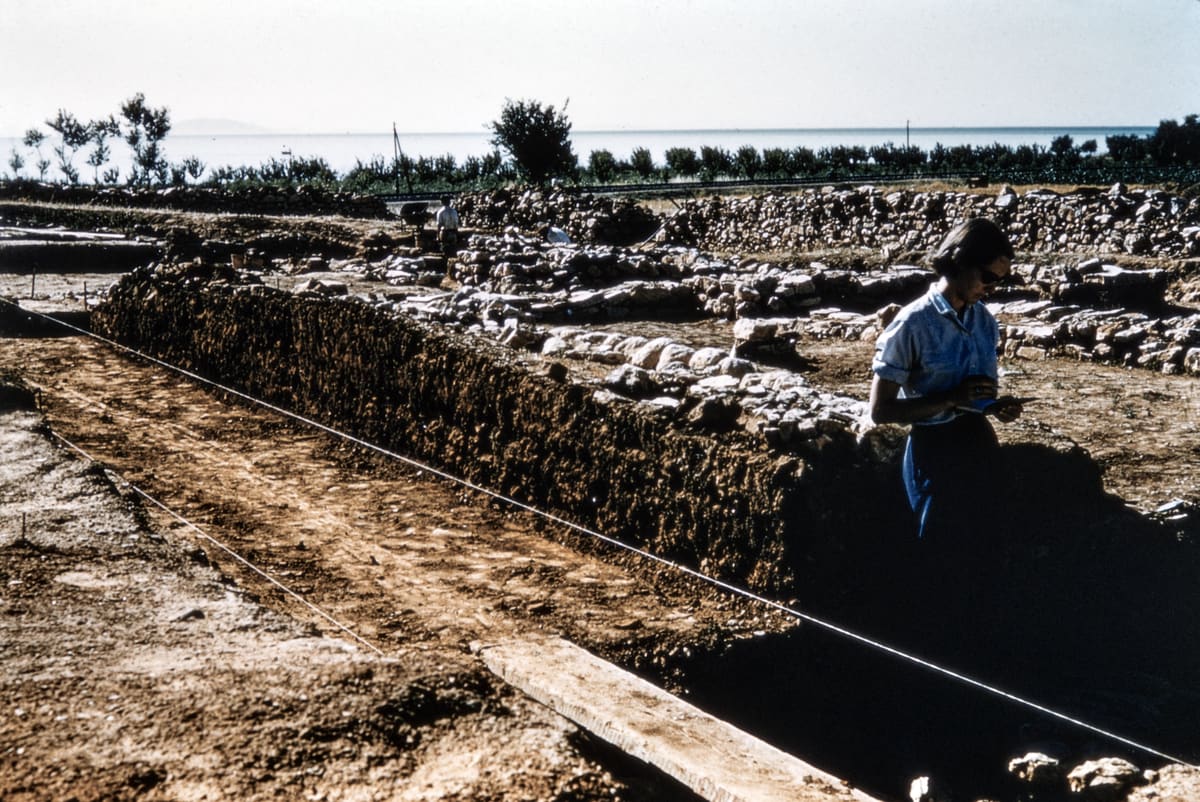
For its time, the House of the Tiles was very big: about 25 metres long and 12 metres wide. It had two floors.
The bottom of the walls was made of stone. On top, the builders used bricks of clay that were not baked but dried in the sun. Narrow corridors ran along the sides. That's why archaeologists call a building like this a ‘corridor house’.
Seals of clay
In two small rooms that you could only enter from outside, the archaeologists found something special: more than 140 pieces of clay with the print of a stamp in them. The prints had been made with about 60 different seals.
People used them to close jars and chests. They pressed a lump of wet clay over the opening and stamped their seal into it, just like a signature. If the clay was broken, you knew: someone has been at it!
Try it yourself: roll a little ball of clay, press it flat and push a button or a coin into it. That's your seal.
Fire! And a mound on top
One day, around 2200 BC, the House of the Tiles burned down. The roof collapsed and the house was never rebuilt.
Strangely enough, that fire was good news for the archaeologists. The flames baked the clay seals rock-hard. That's why they survived for thousands of years.
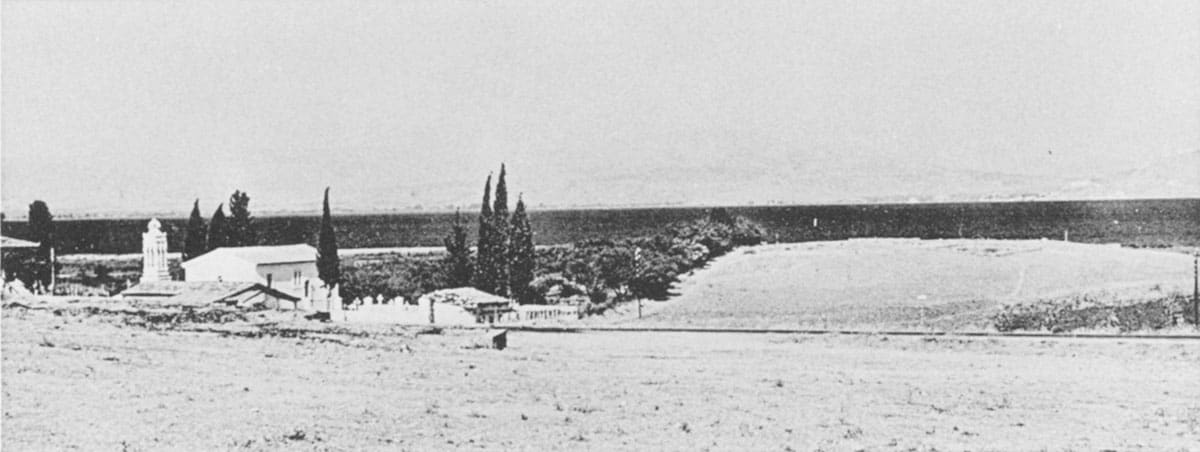
After the fire, people did not build on this spot again. Over the ruin they made a low, round mound with a ring of stones around it. Why? Nobody knows for sure. Perhaps they thought it was a special place.
Digging and protecting
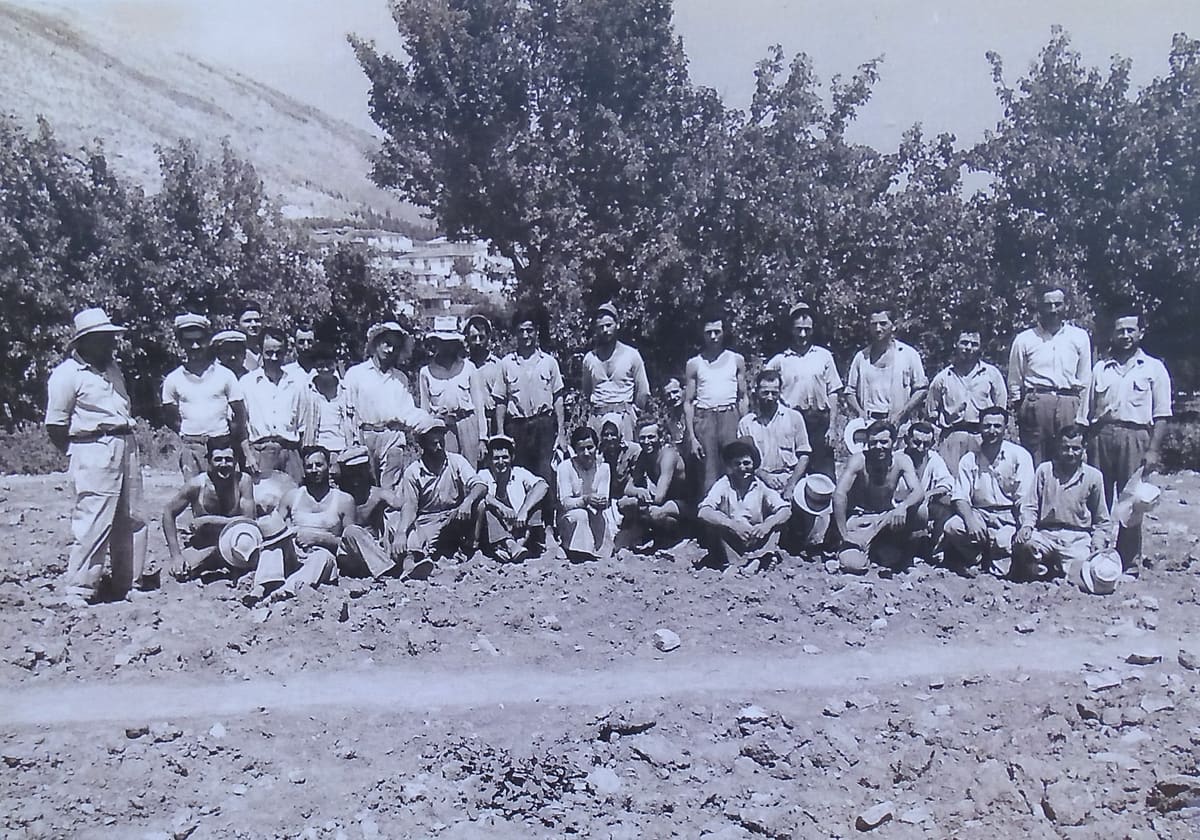
For six summers, from 1952 to 1957, the American archaeologist John Caskey led the excavations at Lerna for the American School of Classical Studies at Athens. In June 1958 he came back for a few more weeks. In the photo you can see the team of 1954: about forty people took part.
From 1954 to 1957, Caskey and his team spent the summers living in Myloi itself, in two small rented houses at the edge of the village. There was no electricity and no running water: a donkey and its driver fetched the water from the spring.
Walls of unbaked clay wash away when it rains. That's why a big protective roof was built over the house in 1957. Thanks to that roof, you can still see the old walls today.
Kostas: You can really visit the House of the Tiles, close to the springs of Lerna. Go with a grown-up, and check the opening hours first. Can you spot the walls of dried clay?
Take the House of the Tiles quiz!
Do you know all about the House of the Tiles? Click the right answer.
-
About how old is the House of the Tiles?
Answer
More than 4000 years
-
Why is it called the House of the Tiles?
Answer
Lots of pieces of roof tile lay in the ground
-
How many floors did the house have?
Answer
Two
-
What did people use the clay seals for?
Answer
To close jars and chests
-
Why did the clay seals survive so well?
Answer
The fire baked them hard
-
What did people make over the house after the fire?
Answer
A low, round mound