
Story · The monster of Lerna
The Hydra of Lerna
On the edge of Myloi, water bubbles up out of the ground. The ancient Greeks said that a monster once lived here. But what is a story, and what really happened?
Watch out: the stories about Poseidon and the Hydra are myths. Those are stories that the ancient Greeks told each other. For every chapter you can see whether it's a myth or really happened.
Water from the ground
Just south of Myloi, at the foot of Mount Pontinos, water comes up out of the ground all year round: the springs of Lerna. In the old days there was a big marsh here with reeds and pools of water.
The old photo below shows five children on the bank of the water. It was taken some time between 1940 and 1955.

How the springs came to be
Long ago, the land around Argos was bone dry. King Danaus sent his daughters out to look for water. One of them was called Amymone.
On the way, Amymone got into trouble, but the sea god Poseidon came to rescue her. He struck a rock with his trident, and water gushed out: the springs of Lerna. According to the story, they have never dried up since.
The monster in the marsh
According to the myth, the Hydra lived in the marsh of Lerna: a huge, poisonous water serpent with lots and lots of heads.
The Greek writer Apollodorus says she had nine heads. One of them was immortal: that head could never die. In the drawing, it's the golden head.
Heracles and Iolaos
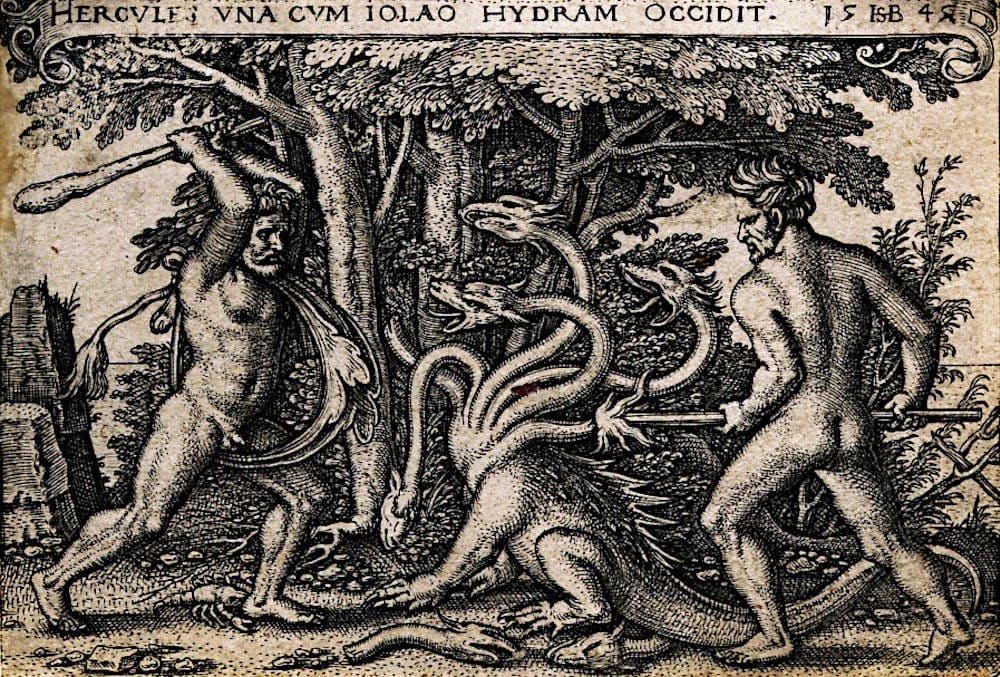
King Eurystheus gave the strong hero Heracles twelve difficult tasks. The second one was: defeat the Hydra! Heracles drove the monster out of its lair with burning arrows and knocked off its heads with his club. But for every head that came off, two new ones grew!
Luckily Heracles had help from his nephew Iolaos. He burned each neck shut with a torch, so that no new heads could grow. Finally Heracles chopped off the immortal head and put a heavy rock on top of it.
Below you can see how an artist drew the fight in 1545, almost 500 years ago.
What archaeologists found
On a low hill by the springs, people lived a very long time ago, already in the Stone Age. Each time, they built new houses on top of the remains of the old ones. That's how a hill full of layers grew, just like a cake.
The most famous building is the House of the Tiles. It is more than 4000 years old: it dates from about 2500 to 2200 BC. The roof was made of baked roof tiles and stone slabs. At some point the house burned down and was never rebuilt.
Between 1952 and 1958, the archaeologist John Caskey dug everything up. Now there is a big roof over the old house, so you can visit it.
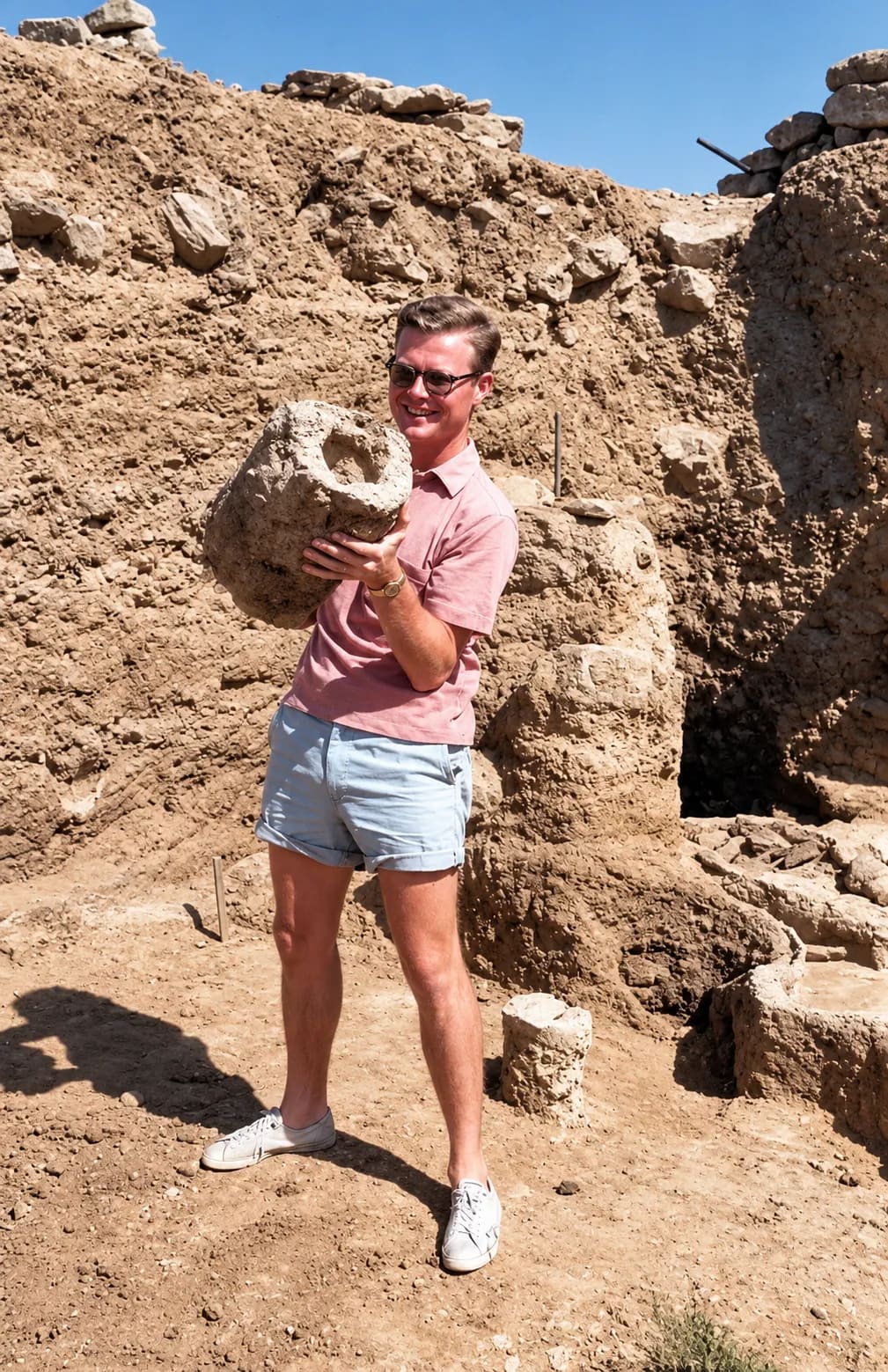
Kostas: The Hydra never really existed, but the springs and the House of the Tiles do! You can visit both of them, just outside Myloi. Do take a grown-up with you.
Take the Hydra quiz!
Do you know everything about the monster of Lerna? Click on the right answer.
-
How many heads did the Hydra have, according to Apollodorus?
Answer
Nine
-
What happened when Heracles knocked off one of the Hydra's heads?
Answer
Two new heads grew
-
Who helped Heracles in the fight?
Answer
His nephew Iolaos
-
According to the myth, what did Poseidon strike the rock with?
Answer
With his trident
-
About how old is the House of the Tiles?
Answer
More than 4000 years
-
Did the Hydra really exist?
Answer
No, it's a myth
More to do with the Hydra
-
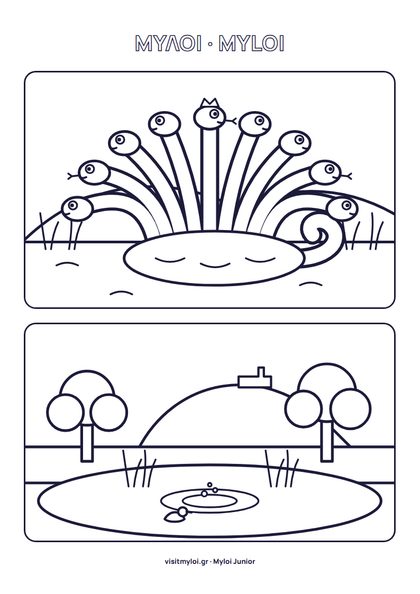
Colouring pages · pdf
Two Hydra colouring pages
The Hydra with her nine heads, and Heracles and Iolaos with a club and a torch.
-
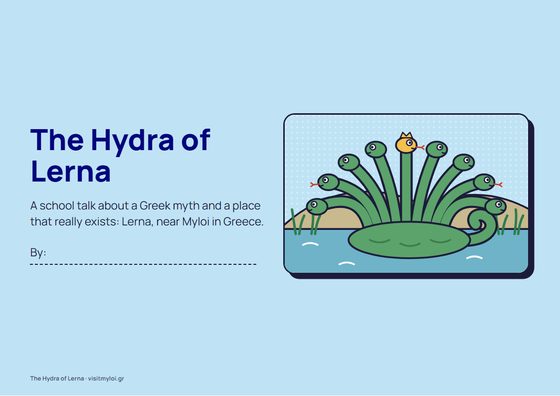
School talk kit · pdf
School talk: the Hydra of Lerna
A cheat sheet and slides for the interactive whiteboard, ready to use.